The Difference Between Safe Gun Handling and Training Rigidity
What to Know
- A police sergeant's discomfort with pointing a mechanically inert training pistol at another person highlights how deeply ingrained firearms-safety rules can sometimes override an objective assessment of actual risk.
- Purpose-built training pistols, chamber-blocking systems and carefully controlled dry-fire environments can remove ballistic hazards while allowing more realistic decision-making and movement-based training.
- Using D.R.A.W. School's Training Circle as a case study, the story makes the case that firearms training should prioritize perception, judgment and skill transfer to real-world encounters rather than relying primarily on traditional live-fire drills.

Editor's note: This is the third installment in a three-part series. Check out Part 1 and Part 2.
Recently, during a remedial firearms training session, I asked an observing Sergeant to perform a head-to-head stoppage-clearance drill with me using GLOCK P-series training pistols.
Prior to beginning the drill, I explained in detail why the training pistol was mechanically inert and showed him the specific features that made it incapable of firing a projectile. Then, when I asked him to raise the training pistol to center mass on me as the instructor, the Sergeant displayed visible discomfort. When I asked what he was feeling, the following conversation ensued.
- Sergeant: "I have to admit that, uhhh, I’m really uncomfortable with this kind of training."
- Keith: "OK. What aspect of this training are you uncomfortable with?"
- Sergeant: "You’re asking me to point a gun at you. (Looks down at the pistol and laughs nervously.) I really don’t like this kind of training."
- Keith: "O.K. What don’t you like about it?"
- Sergeant: "I don’t know, it… it just feels wrong, and I don’t want to be a part of something that’s unsafe."
- Keith: "O.K., so tell me what you think is unsafe about this?"
At this point, I once again locked the slide to the rear and showed him that the breech face lacked the opening necessary for a firing pin to protrude and strike a primer. I again showed him the solid barrel, which made the loading and discharge of a projectile physically impossible. I then asked him once more what, specifically, made the exercise unsafe. He struggled to answer, but ultimately remained silent. That awkward silence ensued for at least thirty seconds. I didn’t break the silence, nor did I want to. I wanted to give him enough silence to work through the answer himself. Finally, I formed a “finger gun” with my thumb and index finger and pointed it at him. The exchange continued as follows:
- Keith: "Is this unsafe? Does this make you uncomfortable?"
- Sergeant: "Of course not, (laughs) no."
- Keith: "And why not?"
- Sergeant: (Chuckles) "Because that can't hurt me."
- Keith: "That's precisely my point, Sarge. Tell me what it is about this training pistol that could hurt you. It’s completely inert, by its very design and manufacture. In fact, I’ll tell you what. I’ll give you $1,000 cash right now if you can chamber a round and get it to fire. You put a hole into that target (pointing at a “Q” target) with that pistol (pointing at the P-series GLOCK), and you get a thousand bucks. Simple as that. And it’s as easy as me making a bet with you that I am a thousand percent certain I’ll never have to pay out. It’s the easiest thousand dollars I get to keep."
Needless to say, the head-to-head exercise ran its course, along with several other drill variations, and the sergeant left the training session several hours later saying it was one of, if not the most, impactful training experiences he had ever attended.
I want to make perfectly clear that this was not an isolated conversation. I have had variations of this exchange often enough with police officers, firearms instructors and experienced shooters that the reaction has become familiar over the past two or so years. The particulars change, but the underlying discomfort is remarkably consistent. Once a training device looks, feels and handles like an operational firearm, some people find it extremely difficult to separate the deeply conditioned rule against pointing a firearm at another person from an independent assessment of what the device is actually capable of doing. Even after its mechanical inertness and complete ballistic safety has been demonstrated and personally verified, the emotional weight of the familiar safety rule can continue to override the contextual information directly in front of them.
When Safety Rules Override Risk Assessment
That is where safety education can cross a subtle line between durable learning and doctrinal rigidity. The Sergeant knew the rule so well that the rule initially displaced an independent assessment of the absence of an actual hazard. When I asked him specifically what component of the exercise was unsafe, he could not identify one. His discomfort was genuine, but the discomfort itself had become evidence of danger. The object looked like a firearm, the muzzle was oriented toward another person, and the familiar rule therefore asserted itself before contextual analysis could occur.
That distinction sits at the center of everything I have been examining throughout this series. In Part One, I argued that the traditional rules of firearms safety remain indispensable but should represent the beginning of professional understanding rather than its endpoint. In Part Two, I examined how range commands, procedures and predictable training architecture can gradually become embedded as tactical assumptions. Part Three brings those arguments together by asking a more difficult question: What happens when technology deliberately removes the ballistic hazard and a rule it was designed to control, yet professional training culture remains reluctant to acknowledge that the problem itself has changed?
This is precisely where institutional inertia becomes more than an organizational phenomenon. It can become an individual cognitive phenomenon as well. Rules that have been repeated thousands of times acquire tremendous authority. They become automated and habitualized, which is one reason they work so well. The student no longer has to conduct a lengthy risk analysis every time a firearm appears. The rule provides a fast, conservative behavioral answer. The difficulty arises when the automated, habitualized rules becomes so dominant that contradictory contextual information is no longer allowed to modify the conclusion.
The Einstellung effect provides a useful framework for understanding what can happen. Bilalić, McLeod and Gobet (2008) demonstrated that familiar solutions can become cognitively dominant enough to interfere with recognition of alternative solutions, even when those alternatives are available, and are in some cases better. Expertise can deepen that entrenchment because successful experience reinforces the frameworks through which future problems are interpreted (Zhang, Harrington, & Sherf, 2022). In firearms training, “never point a gun at another person” can become not merely a rule governing a known ballistic hazard, but the lens through which every gun-shaped training device is evaluated regardless of its mechanical condition.
That does not mean the Sergeant was wrong to be cautious. Quite the opposite. His discomfort created an opportunity to do exactly what professional firearms instruction should encourage: stop, examine the problem and determine what risk actually exists. The mistake would have been ending the analysis with, “It feels unsafe, therefore it is unsafe.” Professional judgment should be able to move one step further and ask why.
The Difference Between Caution and Cognitive Entrenchment
That question becomes particularly relevant to the second and third traditional gun-safety rules. My version of Rule No. 2 instructs the shooter to keep the finger off the trigger and off the trigger guard until the target has been positively identified and the decision to fire has been made. My Rule No. 3 requires the firearm to remain pointed in a safe direction while recognizing that the operational environment determines what the safest direction actually is (Critical Dynamics, n.d., D.R.A.W. School 2014.). Neither formulation weakens the underlying safety principle. Both make the cognitive requirement more explicit. Trigger-finger placement should be governed by perception and decision, while muzzle orientation should be governed by an ongoing assessment of foreseeable ballistic consequences.
The difficulty is that conventional live-fire training severely limits how realistically we can practice either problem. On a firing line, the target has already been designated, the backstop has already been selected, and the direction of fire has already been established. The shooter may be told exactly when to begin, how many rounds to fire and when to stop. Under those circumstances, Rule No. 2 can gradually become little more than a positional habit. Keep the finger indexed until the gun reaches some predetermined point in the presentation, then move it to the trigger. Rule No. 3 can become equally simplified. Keep the muzzle downrange. Those habits are essential within the live-fire environment, but neither necessarily teaches the officer how to determine when the conditions justifying trigger contact have emerged or how to continuously solve a muzzle-management problem in a three-dimensional environment.
Beyond Ballistic Spectacle
I recently had the opportunity to examine those problems firsthand while attending an advanced firearms instructor training with Law Enforcement D.R.A.W. School. Over the years, I have attended, observed and been invited to more firearms training programs than I can reasonably count. Some have been absolutely exceptional. Others have been little more than what I have been known to call, admittedly inelegantly, “ballistic masturbation sessions.” They are impressive displays of ammunition consumption, speed, equipment, noise and instructor performance that look terrific on video and social media but do comparatively little to diagnose or develop the learner.
These drills can have tremendous immediate experiential, or transactional, value. They are exciting, physiologically arousing and highly engaging, and they can leave students feeling as though something significant has occurred. But excitement should not be confused with learning, and engagement should not be mistaken for transfer. A training session can be memorable without being transformative. There is an enormous difference between demonstrating how well an instructor can shoot and teaching someone else to perform. One creates spectacle. The other creates capability.
D.R.A.W. School was very different. What immediately interested me was not how much ammunition was fired, but how much meaningful training occurred before ammunition ever appeared. The curriculum traces its development to 2013 and expanded substantially in 2014, eventually growing into an instructor-development system used by agencies around the country. Its early public descriptions emphasized a departure from conventional firearms training, including the deliberate integration of human movement, cognition, dry practice and live-fire verification rather than treating the firing line as the only meaningful training environment (Griffith, 2016; Law Enforcement D.R.A.W. School, n.d.-a).
What struck me while experiencing it was how closely many of those practices paralleled concepts I had independently incorporated into the NeuralTac framework years later. D.R.A.W. School was years ahead of its time, functioning as a forward-thinking pioneer in firearms instruction and applying training concepts that much of the profession is only now beginning to examine seriously. The similarities were not superficial. NeuralTac emphasizes that the learner should progressively move from responding to artificial instructional cues toward perceiving, interpreting and acting upon meaningful information in the environment. It distinguishes safety invariants from administrative controls, instructional scaffolds and operational principles. It seeks controlled uncertainty rather than theatrical chaos, and it treats transfer as something that must be deliberately designed into training rather than simply assumed. D.R.A.W. School’s Dry-Fire Training Circle is an unusually clear example of those ideas being put into operational practice with he highest degree of safety.
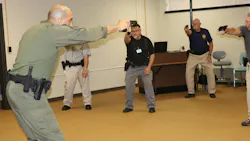
Before any of that training could occur, however, something else had to happen. The dry-fire training environment had to be made mechanically safe. This was not accomplished by an instructor simply announcing that everyone’s firearms were unloaded. There were specific, mandatory procedures governing the installation of disabling safety devices, the removal of ammunition, weapon condition, verification and the absolute adherence to an ammunition-free training environment. Compliance was not optional. Students understood that violating those controls could mean being removed from the course. I saw occasional reminders, as one would expect in any intensive training program, but nobody in the course I attended crossed the line that required dismissal. What impressed me was that the safety protocol was not treated as a ceremonial recitation of four familiar sentences. It was engineered into the environment.
Engineering Safety Into the Training Environment
Central to that system is a safety system called BarrelBlok, a device originally developed by D.R.A.W. School founder Jason Speller because the training he wanted to conduct could not be performed with the level of safety and mechanical fidelity he wanted using the available tools. The design was so unique that Speller ultimately patented the magazine-and-barrel-block design. When properly installed, the chamber component physically occupies and blocks the chamber and prevents a live cartridge from being chambered. On the other end, a highly visible, brightly-colored visual safety indicator protrudes from the muzzle. Companion magazine inserts, called MagBloks, allow normal magazine and slide manipulations without having to introduce dummy cartridges into the weapon and without inducing slidelock (Speller, 2015; Griffith, 2016). RifleBlok applies the same general principle to rifle and carbine platforms. This allows officers to train with their actual duty weapons, actual sights or optics, actual lights, actual holsters, actual slings and actual equipment relationships while mechanically preventing a cartridge from entering the chamber. When installed, the officer’s firearm is transformed into a completely safe, inert training prop.
Although BarrelBlok itself is a proprietary training product, the safety principle it embodies is not proprietary. The broader instructional objective is to mechanically separate an advanced dry-training environment from the possibility of live discharge.
For transparency, I have no financial relationship with Law Enforcement D.R.A.W. School, BarrelBlok or GLOCK, receive no compensation from any of them, and have no financial interest in the sale or promotion of their training programs or products. I do, however, use BarrelBlok systems, GLOCK P-series training pistols, and GLOCK T-series Simunition-based training pistols in my own training programs because I have found each useful for specific instructional applications. I have chosen to focus on D.R.A.W. School, BarrelBlok and GLOCK training pistols here because each is contextually relevant to the safety and instructional concepts examined in this article. Together, they provide practical, readily available examples of different training systems can increase safety and eliminate ballistic consequences, while retaining other elements necessary for realistic, context-rich training, decision-oriented training. Their inclusion reflects my independent professional assessment of the training methodologies and equipment, not a commercial affiliation, financial interest or paid endorsement.
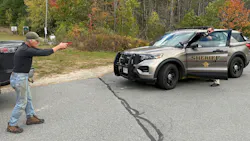
That distinction is central to the argument I made in Part One. Inert training ammunition, including dummy rounds or “snap caps,” does not render an operational firearm inert and safe. The firearm remains mechanically capable of accepting a live cartridge if one is accidentally introduced. A chamber-blocking device such as BarrelBlok changes the mechanical system itself. This is more than semantics. There is also an important distinction between the training systems themselves: the GLOCK P-series removes live-fire capability at the platform level, while BarrelBlok introduces an engineering control into an otherwise operational platform. Both alter the ballistic risk in ways that dummy ammunition alone does not, but they accomplish that objective differently.
How the Training Circle Changes the Learning Problem
The 2011 U.S. Army fatality involving an M2 .50-caliber machine gun remains an especially sobering example of why the distinction is absolutely critical. A live round became mixed with dummy ammunition during training, was eventually chambered and fired, killing a soldier. The weapon did not know that the exercise was supposed to involve inert ammunition. It simply chambered and fired the compatible cartridge presented to it (Peaster, 2011). Dummy ammunition changes what we intend to place into the weapon. A purpose-built inert gun or properly installed chamber-blocking system changes what the weapon is mechanically capable of doing. Those are not equivalent layers of protection. The distinction between the two is what Speller set out to design when developing BarrelBlok. A higher level of training required a higher level of safety.
The NIOSH hierarchy of controls provides a useful way to think about this distinction. Occupational safety practice has long recognized a hierarchy of controls in which eliminating, substituting or engineering out a hazard is generally preferable to relying exclusively on administrative rules and perfect human compliance. NIOSH specifically places engineering controls above administrative controls because they act on the hazard itself rather than depending solely upon continuous correct human behavior (National Institute for Occupational Safety and Health, 2024). A chamber-blocking device does not eliminate the need for administrative controls. It adds an engineering control so those administrative controls are no longer the only barrier between human error and a live discharge. A command saying, “Do not allow a live round into this firearm,” is an administrative control. Physically blocking the chamber so a live round cannot enter attacks the problem at a different level entirely. That of engineering.
That engineering solution is what makes the training circle concept possible. Students can work in a circle with instructors and other officers occupying the interior and exterior space. Every student sees essentially the same event but from a different visual angle. Students are not simply staring at a two-dimensional silhouette that has already been designated as the thing to aim at or shoot. The officer must perceive another live human being, recognize movement, process orientation and determine what the visual information means. The geometry is three-dimensional and continuously changing. The instructor can alter the equation simply by changing position, posture, movement or behavior.
The progression is particularly important. Early repetitions can still use verbal or audible cues while students are acquiring and practicing the mechanical sequence. Once the movement becomes sufficiently stable, those artificial cues can be removed. Now the student must react to what the eyes perceive rather than what the ears have been conditioned to hear. There is no buzzer that automatically means “draw.” There is no shouted command that preauthorizes a reaction like a trigger press. The relevant movement of another person becomes the sole stimulus. That distinction may appear small, but from a motor-learning perspective it changes what is being learned and how information is being processed by the brain.
Traditional square-range drills frequently separate perception from action. The target is already known, the direction is already known, the number of rounds is known, and the decision to fire has effectively been made before the exercise begins. Research on police firearms performance suggests that visual attention and motor performance should not be treated as independent systems. Vickers and Lewinski (2012) found meaningful differences in gaze behavior between elite and less experienced police shooters, while Olma, Sutter and Sülzenbrück (2024) demonstrated that training emphasizing tactical gaze control, visual attention and situational awareness can improve performance in dynamic shoot/don’t-shoot tasks. Di Nota and Huhta (2019) similarly argue that police motor performance is inseparable from the perceptual and decisional environment in which that movement occurs.
The Training Circle turns those principles into something tangible and meaningful. Rule No. 2 is no longer merely “keep your finger off the trigger until ready to shoot.” The officer must determine when the visual information justifies moving the finger toward the trigger at all. Some repetitions terminate without that occurring. The absence of a preauthorized shooting response is important because it prevents every draw from becoming a rehearsed chain that inevitably ends in a trigger press. The officer learns that perception governs the sequence rather than the sequence outrunning perception.
Rule No. 3 becomes equally important. In a Training Circle, there is no permanent “downrange.” People surround the exercise. Bodies move. Angles change. The student must continuously understand where the muzzle is in relation to everyone else and to the problem being solved. This initially makes some traditional instructors extremely uncomfortable because there may be moments in properly controlled drills when an inert weapon is intentionally oriented toward another participant. Yet that is precisely why the dry-fire environment has been mechanically rendered incapable of producing a ballistic event before the exercise ever begins.
The irony is that I observed better muzzle discipline emerge from that dry-fire environment, not worse. Students could no longer satisfy the rule simply by keeping a muzzle pointed toward the berm. They had to understand what muzzle management actually meant. They had to perceive other people, recognize changing angles and physically experience how their own movement altered muzzle orientation. The environment required continuous awareness rather than geographic compliance. That is exactly what I meant in Part One when I argued that safe direction is a problem that must be continuously solved.
The Training Circle also makes the two-way arc of fire from Part Two more concrete. If an instructor occupies the center of the circle as the problem being addressed, the student cannot consider only the person immediately in front of the muzzle. There are officers on the opposite side. That forces recognition of background, foreground and potential crossfire relationships. It also creates an opportunity to build rapid discrimination among people occupying the same environment, something that becomes critically important when several armed officers converge on a chaotic event. The goal is not merely faster shooting. It is faster visual recognition coupled with disciplined restraint and environmental accountability.
This is where the Training Circle begins to resemble force-on-force training, albeit without projectile markers being launched between participants. Functionally, it preserves several of the most important informational elements of force-on-force. Another human being moves, provides visual information, changes position and creates uncertainty. The officer must perceive and respond rather than execute a known course against a piece of cardboard. What it does not provide is ballistic consequence. Nobody is struck by a marking projectile and nobody receives the immediate physical feedback that comes from being hit. That distinction makes the Training Circle neither inferior nor superior to projectile-based force-on-force. It makes it a different, highly-effective training tool.
Different Training Tools for Different Outcomes
The comparison with GLOCK’s training pistols illustrates this well. GLOCK’s P-series Practice pistols duplicate the general dimensions, weight, balance and operating characteristics of service pistols while being incapable of firing live ammunition. The R-series adds an automatically resetting trigger and supports simulator or laser-based applications. GLOCK’s T-series, by contrast, is specifically designed to fire FX, FOF and other training ammunition for reality-based tactical exercises (GLOCK Ges.m.b.H., n.d.; GLOCK, Inc., n.d.). The T-series therefore preserves projectile consequence. The P- and R-series deliberately eliminate it by design.
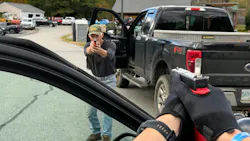
The firearms-training profession already accepts contextual exceptions to traditional muzzle-orientation rules whenever officers use Simunition, FX or comparable force-on-force systems against role players. In those environments, gun-shaped training weapons are deliberately oriented toward other human beings because specific equipment, ammunition, protective gear, environmental controls and safety protocols have changed the conditions under which the exercise occurs. The debate, therefore, is not whether a firearm-like training device may ever intentionally be oriented toward another human being. We have already answered that question in the affirmative. The more useful question is under what engineered conditions that behavior is permissible. None of this eliminates the obligation to comply with agency policy, manufacturer instructions and the specific safety protocols governing the training system being used.
That difference opens training opportunities that are not necessarily appropriate with a projectile-firing platform. Close-contact weapon retention, grappling, entangled positioning, grounded work, equipment-interference problems and high-repetition interpersonal drills can require officers to operate at distances where launching even reduced-energy marking ammunition introduces risk that adds nothing to the particular learning objective. Simunition and other FX systems remain enormously valuable when projectile consequence, use of cover, exposure and adversarial feedback are the instructional priorities. The mistake is assuming that one platform represents a universally higher level of realism. Realism is not a single variable. The better question is whether the training system preserves the information and constraints required for the capability we are trying to develop.
Addressing the Training-Scar Argument
At this point, I can almost hear the objection from some firearms instructors: “You are repeatedly allowing officers to point gun-shaped objects at people. Aren’t you creating a training scar that could eventually carry over to a live firearm?” That is not a frivolous concern, and dismissing it would be intellectually dishonest. Human-factors research has long recognized action slips in which the intended goal is correct but an automated behavior produces the wrong action. One variation, commonly called a capture slip, occurs when a stronger, more familiar action sequence effectively captures behavior from the less familiar action the person actually intended to perform (Norman, 1981, 2013). Closely related are mode errors, in which a person performs an action appropriate for one system condition while failing to recognize that the system is actually operating in another. In firearms training, where the consequences of confusing an inert training state with an operational state could be catastrophic, those possibilities deserve serious attention.
In fact, let me conduct something of an accusation audit and state the criticism more aggressively than most critics probably would: If we repeatedly allow officers to orient inert firearms toward other human beings, could we condition them to do the same thing later with a loaded duty weapon when they did not intend to? Could a deeply practiced training sequence capture behavior during a moment of distraction, fatigue or stress? Could an officer temporarily lose awareness of whether the weapon in his hand is an inert trainer or an operational firearm? The answer is that poorly designed training, without proper decision-making components, can absolutely create unwanted transfer and mode confusion. That possibility should not be minimized merely because I happen to believe strongly in the value of inert training systems.
But that is not an argument against inert training. It is an argument for designing the training environment and outcomes correctly. The solution to a potential mode error is not to pretend that different modes do not exist. It is to make the distinction between them unmistakable. A GLOCK P-series pistol is not an operational pistol that somebody believes to be unloaded. It is a purpose-built training device mechanically incapable of firing a projectile. A properly configured firearm with a BarrelBlok or RifleBlok system establishes another deliberately controlled training condition. Live ammunition is excluded, firearm status is physically verified through an established procedure, instructors inspect the equipment, transitions between dry-fire and live-fire environments are deliberate, and the behavioral rules change only after the equipment state has been positively changed and verified. When the program transitions back to a live-fire training, that transition itself becomes an instructional event rather than an informal equipment swap.
This distinction is important because professional competence should include contextual discrimination, not merely context-independent habit. We already expect officers to differentiate among numerous equipment states and operational conditions. A holstered duty pistol, a pistol undergoing armorer inspection, a T-series force-on-force gun, a P-series inert trainer and an operational firearm mechanically blocked for dry practice do not present identical hazards. Treating them as though they do may feel conservatively safe, but it does not necessarily teach the officer to recognize which hazards actually exist. The objective is not to create casualness around firearms. It is to create extraordinarily disciplined recognition of condition, context and consequence.
That is also why the D.R.A.W. School safety architecture is so important. The program does not casually blur dry-fire and live-fire. It does the opposite. It creates deliberate boundaries between them. Equipment condition is changed, ammunition status changes, the environment changes, safety procedures are repeated, and the transition is explicitly acknowledged before training continues. From a human-factors perspective, those distinctions are not administrative inconveniences. They are safeguards designed to reduce the likelihood of precisely the kind of capture and mode errors critics skeptical of this type of training should be concerned about. If we are worried that habitual behavior can override conscious intention, the answer should be to design stronger discriminative cues and more reliable system boundaries, not to eliminate the training problem that officers ultimately need to learn to solve.
The more important question, then, is not whether training creates habits. All training creates habits. The question is which habits we are creating, what information activates them, and whether our officers are learning when those behaviors should, and should not, be expressed.
For some objectives, a Training Circle can therefore provide meaningful interpersonal and competitive pressure without adding projectile impacts, electronic-control-device exposures or the contact injuries possible in other high-intensity training modalities. That does not make those other methods unnecessary. They train different problems. NeuralTac approaches this through representative learning design: preserve the perception-action relationships that govern the desired performance while controlling unnecessary risk and complexity. Pinder and colleagues (2011) described representative learning design in similar terms, emphasizing the need for practice environments to preserve information that actually regulates action.
The D.R.A.W. School system then does something equally important. It transitions from dry-fire practice to live-fire. Dry-fire is not treated as a replacement for live-fire training, nor should it be. Dry-fire is where greater movement, manipulation, visual recognition and decision processes can be built and corrected at extremely high repetition with zero ballistic risk or ammunition cost. Live-fire then adds recoil, report, cycling, projectile accountability and measurable ballistic outcome. The result is a stair-step progression in which the student can first solve the movement and perceptual decision-making problems and then demonstrate that the solution survives the transition to firing an actual, live weapon.
I watched the transition firsthand with the thirteen officers in the course I attended. When students moved from the dry-fire environment to live-fire, there was a deliberate changeover and another safety briefing. Training modes were not allowed to bleed casually into one another. Equipment status changed, so behavior and controls changed with it. What stood out to me was how little ammunition was necessary to reveal the effect of the learned processes. Officers were faster, more accurate and, importantly, more disciplined in their handling, an observation consistent with much of the mechanical and perceptual work having already been developed before the first live round was fired. Live-fire became a verification and refinement environment rather than the only place learning was expected to occur. Live-fire directly validated motor skills and decision-making processes that were introduced through dry-fire.
I also have no interest in pretending that I sailed through the D.R.A.W. School program because of my own experience. I did not. When I encountered the required qualification course, I failed it the first time. Then I failed it again. Only after adjusting what I was doing did I meet the higher standard set by the curriculum. I include that because firearms instructors are often particularly susceptible to protecting professional identity. It is easy to admire “challenging” training when someone else is struggling with it. It becomes a much better diagnostic when the instructor himself is forced to confront a performance gap. The course demanded both speed and accuracy, but more importantly, it required me to solve the problem at the appropriate speed rather than simply shoot faster or slower according to habit.
That experience is one reason I am increasingly impatient with ballistic spectacle masquerading as instruction. Training is not improved merely because more ammunition is fired, a drill looks difficult or an instructor can perform it at breathtaking speed. Soderstrom and Bjork (2015) distinguish performance during practice from durable learning, a distinction that should haunt every serious firearms instructor. The objective is not to produce a dramatic 15-second demonstration. It is to change what the student can reliably perceive, retain, and transfer to perform later, under changed conditions that most often result in higher physiological-aroused states.
The Training Circle also allows instructors to introduce problems involving protective equipment and atypical threat presentations without turning the lesson into a shooting demonstration. The 2016 Dallas ambush provides a sobering example of why those problems deserve attention in contemporary police training. DART Police Officer Brent Thompson moved toward and engaged the attacker, who was wearing body armor. Federal accounts indicate Thompson struck the gunman three times before the attacker returned fire and killed him at close range (Bureau of Justice Assistance, 2020; Federal Bureau of Investigation, 2017). We cannot know that different firearms training would have changed the outcome, nor should responsible instructors engage in counterfactual speculation or retrofit certainty onto an event that unfolded under extraordinary conditions. What the incident does demonstrate is that officers may confront threats whose equipment changes the effectiveness of conventional responses introduced and familiarized in training. Training should develop visual recognition and adaptability when expected outcomes fail to materialize, without reducing that problem to a simplistic formula.
The larger question is why training systems like these remain unfamiliar or controversial to so many instructors. Some resistance is completely understandable. Agencies are conservative with firearms training because the consequences of error are severe. New equipment requires policy, instructor education, inspection procedures, storage systems and clear transitions between inert and live training environments. Those concerns are legitimate. But there is another force at work as well.
Why Change Remains Difficult in Firearms Training
The Einstellung effect describes the tendency for a familiar solution to interfere with recognition of an alternative, even when the alternative may better solve the current problem (Bilalić, McLeod, & Gobet, 2008). Expertise can deepen that problem by creating cognitive entrenchment around methods that have historically produced success (Zhang, Harrington, & Sherf, 2022). Firearms instructors are not exempt. In fact, the professional authority surrounding firearms safety may make us especially vulnerable because challenging the application of a familiar rule can be mistaken for challenging safety itself.
The sergeant in my opening example provides a useful practical illustration of the kind of cognitive entrenchment Einstellung research describes. He was not indifferent to evidence. Once we worked through the problem, he understood the distinction. What initially controlled his reaction, however, was not a fresh analysis of the mechanical system in his hands. It was an extraordinarily well-learned rule colliding with an unfamiliar context. “Never point a gun at another person” arrived cognitively before “What is this particular device mechanically capable of doing?” His training provided the answer before his analysis had fully defined the problem.
That is precisely why I am reluctant to characterize this phenomenon as mere stubbornness. It is more interesting, and more consequential, than that. Effective safety rules are intentionally designed to become cognitively efficient. We want them retrieved rapidly and applied with little deliberation. The paradox is that the very efficiency that makes a rule protective in one environment can make it resistant to contextual modification and superior learning in another. The professional task is therefore not to weaken the rule, but to develop sufficient understanding beneath it that the student knows which elements are invariant and which depend upon the conditions actually present.
In Unlocking the Brain Code, I described the institutional version of this problem: “When the same drills, range commands, and lesson structures are repeated across generations, they become normalized. Familiarity becomes equated with legitimacy” (Hanson, 2026, p. 25). Later, addressing instructional inbreeding, I wrote that “What begins as a practical framework gradually solidifies into ritual” (Hanson, 2026, p. 61). Neither observation is an argument for abandoning traditional practice merely because it is traditional. It is an argument for understanding why a practice exists well enough to recognize when technology or context has changed the underlying problem.
D.R.A.W. School encountered that resistance early. Public accounts of the program from 2016 describe Speller acknowledging that challenging conventional training methods was not initially popular (Griffith, 2016). A decade later, the BarrelBlok concept has moved far beyond a single instructor school. In 2025, the Norwegian Armed Forces awarded a contract for force-wide fielding of approximately 75,000 BarrelBlok, RifleBlok and MagBlok systems after select Norwegian units had reportedly used the devices since 2021 (Paulsen, 2025). That adoption does not validate every element of D.R.A.W. School’s training methodology, nor should equipment adoption ever substitute for empirical evaluation. It does, however, demonstrate that mechanically creating safe, realistic dry-fire environments is hardly an eccentric concept confined to one school.
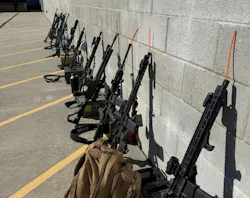
This is where D.R.A.W. School and NeuralTac intersect most clearly for me. D.R.A.W. School did not need NeuralTac terminology in 2014 to recognize problems that learning science helps explain today. It reduced dependence on artificial start cues. It created high-repetition dry-fire practice before live-fire. It linked information such as visual recognition to movement. It progressively increased complexity. It permitted errors to occur in a deliberately-designed, safe dry-fire environment where they could be immediately diagnosed and corrected without any same ballistic consequence. It then required the developed capability to survive transition into live-fire training. Those are not gimmicks. They are examples of thoughtful and carefully designed, well thought-out instructional architecture.
The most important lesson may still be the simplest. Advanced safety requires more, not less, discipline. A Training Circle cannot exist safely because everyone promises to be careful. It exists because firearm status is deliberately changed, ammunition is controlled, equipment is verified, behavioral expectations are explicit, and violations have consequences. The school reports an exemplary safety history across its programs, and the procedures I personally observed were among the most deliberate I have encountered. Higher-level training did not require relaxing safety. It required thinking about safety more precisely.
That returns me once again to the Sergeant and the inert GLOCK training pistol. His initial discomfort was not evidence that the exercise was unsafe. It was evidence of how deeply a foundational safety rule had been learned. The next level of professional development required something more difficult: separating the emotional familiarity of the rule from an analytical assessment of the actual system. The goal was not to teach him that muzzle discipline was no longer of concern. It was to teach him to identify precisely what muzzle discipline is protecting against, determine whether that hazard actually existed in the training environment, and then apply the appropriate behavioral standard to the condition in front of him.
If a verified purpose-built training pistol cannot discharge a projectile, or if an operational firearm has been appropriately configured for a controlled dry-fire exercise with a chamber-blocking device, professional instructors should be capable of understanding what risk remains, what risk has been removed and which behavioral controls are still necessary. Otherwise, the rule itself has become more important than the hazard it was created to manage.
A beginner needs rules. A professional needs the rules and the reasoning underneath them. An instructor should be able to go further still and design an environment in which predictable human errors are anticipated, critical hazards are engineered out where possible, meaningful perceptual information controls action, and live-fire is used to validate rather than substitute for learning. That is the progression I have argued for throughout this three-part series.
The objective has never been to make firearms training less safe. It is to become sophisticated enough about safety that we stop confusing familiarity with risk control, and sophisticated enough about learning that we stop confusing noise with instruction. The firing line will always have an important place. So will live ammunition. So will force-on-force training. But none should become the unquestioned definition of serious firearms training simply because they are familiar. The question is not how impressive the exercise looks or how much ammunition disappears. The question is what the officer actually learned, whether that learning transfers to the operational environment, and whether we created the safest environment capable of developing it. That is where better training begins.
Author's note: If there are other products, systems or training methodologies within the firearms-training ecosystem that offer instructional value comparable to those discussed in this article, I would genuinely like to know about them. My interest is not in defending a particular brand or methodology, but in identifying tools that improve safety, increase training fidelity and expand what instructors can meaningfully develop in their students. If something belongs in that conversation, I would welcome the opportunity to evaluate it for possible inclusion in my own training programs.
References
Barnett, S. M., & Ceci, S. J. (2002). When and where do we apply what we learn? A taxonomy for far transfer. Psychological Bulletin, 128(4), 612-637.
Bilalić, M., McLeod, P., & Gobet, F. (2008). Why good thoughts block better ones: The mechanism of the pernicious Einstellung effect. Cognition, 108(3), 652-661.
Bureau of Justice Assistance. (2020, September 4). Fallen Officer Brent Thompson. U.S. Department of Justice.
Critical Dynamics, Inc. (n.d.). Five rules for safe gun handling [Training handout].
Di Nota, P. M., & Huhta, J. M. (2019). Complex motor learning and police training: Applied, cognitive, and clinical perspectives. Frontiers in Psychology, 10, 1797.
Federal Bureau of Investigation. (2017). Law enforcement officers killed and assaulted, 2016: Summaries of officers feloniously killed. U.S. Department of Justice.
GLOCK Ges.m.b.H. (n.d.). Training and instruction: Practice and reset pistols.
GLOCK, Inc. (n.d.). G17T Gen5 FX/FOF.
Griffith, D. (2016, May 4). 21st-century firearms training. Police Magazine.
Hanson, K. A. (2026). Unlocking the brain code: Exposing the limitations of traditional firearms training and high-liability instruction through neuroscience, psychology, and human performance research. Applied Threat Science Publications.
Law Enforcement D.R.A.W. School. (n.d.-a). Advanced handgun instructor.
Law Enforcement D.R.A.W. School. (n.d.-b). Safety: BarrelBlok.
National Institute for Occupational Safety and Health. (2024, April 10). Hierarchy of controls. Centers for Disease Control and Prevention.
Norman, D. A. (1981). Categorization of action slips. Psychological Review, 88(1), 1–15. https://doi.org/10.1037/0033-295X.88.1.1
Norman, D. A. (2013). The design of everyday things: Revised and expanded edition. Basic Books.
Olma, J., Sutter, C., & Sülzenbrück, S. (2024). Blended police firearms training improves performance in shoot/don’t shoot scenarios: A systematic replication with police cadets. Frontiers in Psychology, 15, 1495812.
Paulsen, J. (2025, October 8). BarrelBlok awarded contract by the Norwegian Armed Forces. ConcealedCarry.com.
Peaster, R. (2011, June 1). From BBs to bullets. The United States Army. https://www.army.mil/article/58680/from_bbs_to_bullets
Pinder, R. A., Davids, K., Renshaw, I., & Araújo, D. (2011). Representative learning design and functionality of research and practice in sport. Journal of Sport & Exercise Psychology, 33(1), 146-155.
Simunition. (n.d.). FX training system. General Dynamics Ordnance and Tactical Systems-Canada Inc.
About the Author
 Keith Hanson
Keith Hanson
Contributing Editor Keith Hanson is a career law enforcement professional with extensive experience across operational and instructional domains, specializing in firearms instruction, tactical operations training, and counterterrorism tactics. With a strong background in neuroscience and psychology, Keith is a co-creator and senior program architect of NeuralTac™, which combines neuroscience, combat psychology, neuropsychology, kinesiology, and educational sciences, drawing from the latest research in human performance, to produce advanced high-liability instructional frameworks for law enforcement agencies, contract security firms, and other armed professionals. It also aims to develop and foster advanced-level master trainers within those organizations. Additionally, as a certified Force Science analyst and certified cognitive/forensic interviewer, Keith serves as a court-recognized expert witness on use-of-force matters and provides consultation on legal strategies. He is the author of "Unlocking the Brain Code: Exposing the Limits of Traditional Firearms Instruction and High-Liability Training Through Neuroscience, Psychology, and Human Performance Research."
You can email Keith: [email protected]
And visit his LinkedIn page: https://www.linkedin.com/in/keithhanson1973/