Are Firearms Instructors Creating Better Shooters or Just Better Performers?
What to Know
- Effective firearms training requires distinguishing between performance and learning, because a shooter who succeeds under constant coaching may not retain or apply the skill independently under real-world conditions.
- Police training should develop automatic firearm mechanics while preserving active perception, decision-making and adaptability, using concepts from open-loop and closed-loop motor control.
- Drawing on motor-learning and police performance research, instructors should reduce dependency on constant feedback, introduce realistic variability and stress progressively and measure whether skills endure when coaching, predictability and familiar range conditions are removed.
More on OFFICER.com
Why Forgetting Can Make Firearms Training More Effective
- Research suggests forgetting is not always a flaw in human memory and might help police officers and firearms students retrieve the right information and make better decisions under pressure.
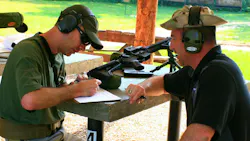
Spend enough time on a firearms range, and you will eventually see a familiar sequence play out. A shooter performs a drill, the instructor sees a problem and immediately provides a correction. The shooter fires again. Another correction follows. The group tightens. The time improves. The instructor is satisfied, the student is happy, and everyone walks away believing that learning has occurred.
Maybe it has. Maybe, however, the learning was merely an illusion.
Perhaps that is because there is another possibility that we do not discuss nearly enough. The student may simply have become better at performing while the instructor was standing there providing the information needed to control the movement.
Performance Is Not the Same as Learning
That distinction matters because performance and learning are not the same thing. I have written about this repeatedly because I believe it represents one of the most consequential blind spots in modern firearms and high-liability training. We are exceptionally good at measuring what students can do while they are being trained. We are considerably less disciplined about determining whether they can still do it later, under different circumstances, without coaching and while confronting the perceptual and physiological conditions under which the skill will actually be needed.
Motor-learning science gives us another useful way to examine that problem through the concepts of open-loop and closed-loop motor control. These terms sound technical, but the underlying idea is straightforward. Some movements happen too quickly for the brain to use feedback to correct them while they are occurring. Those movements must largely be planned before they begin and then executed. Other movements last long enough for sensory information to be received, evaluated, and used to modify the action while it is still underway.
The distinction traces back to foundational work in motor learning, including Jack Adams' closed-loop theory and Richard Schmidt's later schema theory. Adams emphasized the role of sensory feedback and comparison processes in correcting movement, while Schmidt addressed an important limitation of a purely feedback-dependent model: Humans routinely perform rapid movements that are essentially finished before meaningful feedback could possibly be used to change them (Adams, 1971; Schmidt, 1975). Modern motor control is considerably more sophisticated than either early theory, but the basic distinction remains useful. Skilled movement depends on a constantly changing relationship between predictive, feedforward control and sensory feedback. This is a relationship that matters enormously in police training.
Consider something as basic as presenting a handgun. As proficiency develops, much of the movement becomes increasingly feedforward. The officer does not consciously calculate the location of every joint or supervise each muscle contraction. The nervous system has developed a motor representation that allows larger components of movement to be initiated and executed with decreasing conscious effort. Di Nota and Huhta describe how early learners initially acquire motor skills as smaller component "chunks," which can eventually be concatenated into larger sequences requiring less mental effort as proficiency develops (Di Nota & Huhta, 2019).
That is exactly what we want. An officer facing a rapidly evolving threat cannot afford to consume limited attentional resources consciously managing every mechanical element of operating a firearm. The mechanics should increasingly take care of themselves.
Automatic Mechanics, Not Automatic Decisions
But here is where we can get ourselves into trouble.
If we misunderstand automaticity, we can begin treating the entire response as something that should become automatic. Perceive a stimulus. Draw. Fire. Repeat often enough, and the sequence becomes fast, smooth, and difficult to interrupt.
That may produce a beautifully orchestrated drill or example of skill performance, but it can also produce a terrible police officer.
The mechanics of operating the firearm may benefit enormously from automaticity. The decision governing those mechanics cannot be permitted to become disconnected from ongoing sensory information. Police encounters do not stop changing simply because an officer has initiated a motor response. A hand that appeared to be reaching for a weapon may become visibly empty. A person holding an apparent threat may drop it. Another person may suddenly enter the background. The officer may move, the subject may move, or circumstances may change the justification for the action entirely.
The motor system therefore has to do two seemingly contradictory things exceptionally well. It has to act quickly without waiting for conscious supervision of every mechanical detail, while simultaneously remaining sensitive to environmental information that may require the action to change or stop.
That is the real relationship between open-loop and closed-loop control in defensive performance.
The rapid mechanical components of an action may be largely open-loop or feedforward once initiated. The larger perception-action system surrounding those components must remain closed to information from the world. It must continue sensing, comparing, evaluating, and updating.
Di Nota and Huhta describe an elegant neurological version of this process. When a movement is prepared, the brain generates predictive information concerning the expected sensory consequences of the movement. Incoming sensory information is then compared against those predictions. When predicted and actual outcomes match, the motor representation is reinforced. When they differ, subsequent motor planning can be recalibrated. Learning, in other words, involves more than issuing commands to muscles. It involves prediction, sensation, comparison, and correction (Di Nota & Huhta, 2019).
We can see this easily during firearms training. A shooter presents the pistol expecting a particular visual relationship with the target. What actually appears provides information. Grip pressure produces tactile information. Body position produces proprioceptive information. The target provides knowledge of results. Recoil and recovery create another stream of sensory information. The learner is constantly comparing what was expected with what occurred.
That is closed-loop learning, even when portions of the actual movement are executed too quickly to be corrected in real time.
The same thing occurs in defensive tactics. An initial movement may occur rapidly enough that it is predominantly feedforward. Once physical contact occurs, however, the environment becomes extraordinarily information-rich. Pressure changes. Resistance changes. Balance changes. The other person's movement changes. Position changes. The officer must perceive those changes and modify behavior accordingly. A rigid motor response that cannot adapt to changing resistance may work beautifully with a cooperative training partner and fall apart immediately against someone behaving differently.
This is why I become concerned whenever instructors describe a defensive skill as an automatic response without explaining what, precisely, they intend to automate.
We should absolutely seek automaticity in appropriate mechanical components. We should be much more cautious about creating automatic behavioral responses to complex stimuli.
Police researchers have made the same point from another direction. Di Nota and Huhta warned that without carefully investigated and validated training methods, officers may encode ineffective stimulus-response tendencies rather than develop the critical thinking required for changing encounters. Their model of police motor learning treats situational awareness and decision-making as inseparable from physical skill because perception determines which motor action should be selected in the first place (Di Nota & Huhta, 2019).
Recent firearms research reinforces the point. Olma, Sutter and Sülzenbrück studied training approaches that specifically emphasized situational awareness, visual attention and tactical gaze behavior rather than concentrating exclusively on traditional marksmanship. Their 2024 research with experienced police officers found improvements in response measures during dynamic shoot/don't-shoot scenarios, and a later systematic replication with police cadets again found advantages for the perceptual-attentional intervention over a more traditional firearms-control condition (Olma et al., 2024a, 2024b).
That should cause us to reconsider what we mean when we say someone is good with a firearm.
If I can train a student to manipulate a firearm quickly but the student cannot efficiently extract relevant information from the environment, I have developed only part of the capability. If the shooter can produce an extraordinarily fast response but cannot inhibit it when the situation changes, speed becomes a liability. If the shooter can perform only when an instructor tells him what went wrong, I have produced instructor dependency rather than independent competence.
Why Feedback Can Become a Crutch
This brings us to another dimension of the feedback problem: the difference between intrinsic feedback and augmented feedback.
Intrinsic feedback comes from the performer's own sensory system. The shooter sees, feels, and hears information associated with the movement. Vision provides information about the target and firearm. Proprioception provides information about body position and movement. Tactile sensation provides information about physical contact and pressure. The resulting target impact provides information about the outcome.
Augmented feedback is information added by someone or something else. It may come from an instructor, video review, electronic training device or another external source. In motor-learning terminology, instructors frequently provide knowledge of results, information about what happened, or knowledge of performance, information about how the movement was performed. Both can be enormously useful. The question is not whether feedback should be provided. The more important questions are when, how frequently, in what form, and for how long.
Motor-learning research has repeatedly demonstrated that feedback capable of improving immediate practice performance does not necessarily improve learning to the same degree. Winstein and Schmidt found that reducing the frequency of knowledge-of-results feedback could improve later motor retention, even though more frequent feedback could make acquisition performance look better (Winstein & Schmidt, 1990). Research supporting the "guidance hypothesis" similarly suggests that feedback can become detrimental when performers learn to rely on external guidance rather than developing their own error-detection processes (Winstein et al., 1994).
That does not mean instructors should adopt some simplistic rule that less feedback is always better. Motor learning rarely gives us rules that are convenient. Wulf, Shea and Matschiner found that frequent feedback could benefit the acquisition of a complex motor task, particularly before learners reached higher levels of expertise (Wulf et al., 1998). More broadly, reviews of motor learning show that the effectiveness of feedback depends on task complexity, learner experience, attentional demands, and how feedback is structured (Wulf et al., 2010).
The lesson for firearms instructors is not "stop coaching." The lesson is to stop confusing successful coaching with successful learning.
If I tell a shooter exactly what went wrong after every repetition, I may make today's target look considerably better. But if the shooter never has to recognize the error independently, predict its cause, or determine what to change, I may be removing precisely the cognitive work needed to develop a robust internal feedback system.
This is one reason I frequently prefer questions to declarations when the learner has developed enough competence to answer them.
Open-ended questions that probe attentional control, What did you feel? What happened compared with what you expected? What would you change on the next attempt? What prompted you to choose and perform function A as opposed to function B?
Those questions force the student back into the loop. Instead of the instructor becoming the error-detection system, the student begins learning to become one.
That principle sits comfortably within the NeuralTac framework. NeuralTac is not about eliminating instruction or pretending students can discover everything by themselves. It is about deliberately designing training around how humans actually acquire, stabilize, retrieve, and adapt skill. As I have argued in Unlocking the Brain Code, high-liability instruction has historically been exceptionally good at measuring visible outcomes while often paying insufficient attention to the cognitive architecture supporting those outcomes (Hanson, 2026).
From a NeuralTac perspective, the objective is therefore not simply to build faster motor programs. It is to create a more capable perception-action system.
Mechanical actions that benefit from automaticity should become increasingly efficient and less cognitively expensive. At the same time, the learner must become better at extracting meaningful information, comparing actual outcomes with intended outcomes, recognizing errors, inhibiting inappropriate responses, and modifying behavior when circumstances change.
Put another way, we want automatic mechanics without an automatic officer. Stress makes this distinction even more consequential.
Testing Adaptability Under Stress and Uncertainty
Research involving police officers consistently shows that acute stress can affect attention, perception, decision-making and motor execution. Anderson and colleagues reviewed evidence that high physiological arousal can contribute to deterioration in skilled motor performance, particularly as task complexity increases (Anderson et al., 2019). Baldwin and colleagues documented substantial physiological activation during actual general-duty police encounters, especially around high-priority events, weapons, and use-of-force circumstances (Baldwin et al., 2019). Arble, Daugherty and Arnetz likewise found that different police performance domains can respond differently to physiological arousal, reinforcing the reality that "performance under stress" is not a single uniform phenomenon (Arble et al., 2019).
Firearms research makes the implications more concrete. Oudejans found that reality-based practice under pressure could reduce degradation of police handgun performance under pressure (Oudejans, 2008). Nieuwenhuys and Oudejans later reported that police officers who trained under anxiety showed benefits that remained evident at a four-month retention test, suggesting that appropriately designed pressure exposure can contribute to durable performance under demanding conditions (Nieuwenhuys & Oudejans, 2011).
This should not be interpreted as permission to simply make training more stressful. More stress is not automatically better training. Stress that overwhelms the learner can interfere with the very processes we are trying to develop. The challenge is to introduce representative pressure progressively and purposefully so that perception, motor execution, and decision-making learn to coexist under increasingly realistic demands.
That distinction is central to NeuralTac. Stress is not decoration. It is not something we add to a drill simply to make students uncomfortable or to prove that the instructor can make them fail. If stress is included, it should serve a learning objective.
A shooter who has not yet developed a functional motor representation does not need chaos. The learner initially needs opportunities to establish relationships among intention, movement, and outcome. The instructor helps the student recognize relevant information and correct meaningful errors. As competence improves, however, the scaffolding should begin to disappear. Feedback can become less immediate. The learner can be asked to diagnose performance before the instructor speaks. Practice conditions can become more variable. Decisions can become less predictable. Eventually, the student must demonstrate that the skill survives when familiar cues and constant coaching are no longer available.
Smith and Boolani's 2024 field trial involving a non-anticipatory random-action target system illustrates the broader value of reducing predictability. Their small feasibility study found promising changes in shooting accuracy and commission and omission errors when experienced shooters had to respond to targets whose presentation location and exposure characteristics could not simply be anticipated. The sample was small and the authors appropriately cautioned against overgeneralization, but the training logic is important. A learner who always knows what is coming can begin solving the drill rather than solving the perceptual problem the drill was supposedly designed to represent (Smith & Boolani, 2024).
That problem is everywhere in firearms training. The shooter knows what target or targets to shoot at. The shooter knows when to start shooting and when to stop. The shooter knows how many rounds to put into each target. The shooter begins to adapt his performance based on what the instructor’s commands predicts what will be required next. As a result, a short-term neurological adaptation to task performance develops; our performance gets faster, and we fall into the trap of outcome biases and then congratulate ourselves for building what we falsely believe to be automaticity.
But what did we actually automate?
If the environment did most of the thinking for the student, we may have trained a highly efficient answer to a question that real life will never ask in exactly the same way.
The better goal is adaptable automaticity. The officer should possess efficient motor programs, but those programs must remain subordinate to information. Perception should govern action. Action should produce new information. New information should update perception. That updated perception should determine whether the current action continues, changes, or stops. That is the loop.
It also explains why qualification cannot be our sole definition of competence. Qualification usually tells us whether an officer can produce specified outcomes within a known testing environment. That has legitimate administrative and evaluative value. It does not necessarily tell us whether the officer has developed the closed-loop perceptual, cognitive and motor processes required to regulate those skills under changing conditions.
I am not suggesting that every firearms session become a scenario exercise or that fundamentals no longer matter. Quite the opposite. Strong fundamentals are what allow attention to migrate away from conscious mechanical supervision and toward meaningful information in the environment. The more cognitive bandwidth an officer must spend consciously operating the firearm, the less bandwidth remains available for situational awareness, communication, threat discrimination, and decision-making.
But fundamentals should be a foundation, not a destination.
A NeuralTac-informed progression therefore asks more of training as proficiency increases. Can the learner execute without constant coaching? Can the learner recognize an error before the instructor identifies it? Can the skill survive modest contextual change? Can the student distinguish relevant from irrelevant information? Can the performer interrupt an initiated response when the environment changes? Can the same basic motor capability be expressed under different perceptual and physiological conditions?
Those questions tell us considerably more about learning than another clean target produced while an instructor talks the shooter through every repetition.
There is also an ethical dimension to this. High-liability instructors do not simply teach movements. We shape future behavior. Every repetition has the potential to strengthen relationships between perception, decision, and action. That means we should be extraordinarily careful about what relationships we create.
Just because something is fast doesn’t automatically make it good. Similarly, something that becomes autonomic is not necessarily good. Determining the quality of training program or of a training curriculum should not be based heavily on the quantity of the feedback. And more stress is not automatically a beneficial attribute.
What matters is whether the training develops a learner who can function independently when the instructor, the familiar range commands and the predictable drill architecture are gone.
The nervous system does not operate as a simple collection of memorized techniques. It predicts. It acts. It senses. It compares. It detects error. It adapts. Under skilled conditions, much of that process becomes extraordinarily fast, but it never becomes irrelevant.
That is ultimately what open-loop and closed-loop motor control can teach us about firearms and defensive-tactics training. We need the speed that comes from well-developed feedforward motor programs, but we also need the adaptability that comes from a functioning feedback system. We need movements that can occur without constant conscious supervision, but we need an officer who remains perceptually engaged with the world those movements are intended to affect.
The objective is not to create an officer who responds automatically. The objective is to develop an officer whose mechanics are sufficiently automatic that the officer remains free to think, perceive, decide, and adapt. That difference may be only a few words on paper.
On the street, however, it can be everything.
References
Adams, J. A. (1971). A closed-loop theory of motor learning. Journal of Motor Behavior, 3(2), 111-149. https://doi.org/10.1080/00222895.1971.10734898
Anderson, G. S., Di Nota, P. M., Metz, G. A. S., & Andersen, J. P. (2019). The impact of acute stress physiology on skilled motor performance: Implications for policing. Frontiers in Psychology, 10, 2501. https://doi.org/10.3389/fpsyg.2019.02501
Arble, E., Daugherty, A. M., & Arnetz, B. (2019). Differential effects of physiological arousal following acute stress on police officer performance in a simulated critical incident. Frontiers in Psychology, 10, 759. https://doi.org/10.3389/fpsyg.2019.00759
Baldwin, S., Bennell, C., Andersen, J. P., Semple, T., & Jenkins, B. (2019). Stress-activity mapping: Physiological responses during general duty police encounters. Frontiers in Psychology, 10, 2216. https://doi.org/10.3389/fpsyg.2019.02216
Di Nota, P. M., & Huhta, J. M. (2019). Complex motor learning and police training: Applied, cognitive, and clinical perspectives. Frontiers in Psychology, 10, 1797. https://doi.org/10.3389/fpsyg.2019.01797
Hanson, K. A. (2026). Unlocking the brain code: Exposing the limits of traditional firearms instruction and high-liability training through neuroscience, psychology, and human performance research. Applied Threat Science Publications.
Nieuwenhuys, A., & Oudejans, R. R. D. (2011). Training with anxiety: Short- and long-term effects on police officers' shooting behavior under pressure. Cognitive Processing, 12(3), 277-288. https://doi.org/10.1007/s10339-011-0396-x
Olma, J., Sutter, C., & Sülzenbrück, S. (2024a). When failure is not an option: A police firearms training concept for improving decision-making in shoot/don't shoot scenarios. Frontiers in Psychology, 15, 1335892. https://doi.org/10.3389/fpsyg.2024.1335892
Olma, J., Sutter, C., & Sülzenbrück, S. (2024b). Blended police firearms training improves performance in shoot/don't shoot scenarios: A systematic replication with police cadets. Frontiers in Psychology, 15, 1495812. https://doi.org/10.3389/fpsyg.2024.1495812
Oudejans, R. R. D. (2008). Reality-based practice under pressure improves handgun shooting performance of police officers. Ergonomics, 51(3), 261-273. https://doi.org/10.1080/00140130701577435
Schmidt, R. A. (1975). A schema theory of discrete motor skill learning. Psychological Review, 82(4), 225-260. https://doi.org/10.1037/h0076770
Smith, M. L., & Boolani, A. (2024). Feasibility of a non-anticipatory, random-action target system to improve shooting performance: A brief field trial. Sports, 12(11), 305. https://doi.org/10.3390/sports12110305
Winstein, C. J., Pohl, P. S., & Lewthwaite, R. (1994). Effects of physical guidance and knowledge of results on motor learning: Support for the guidance hypothesis. Research Quarterly for Exercise and Sport, 65(4), 316-323. https://doi.org/10.1080/02701367.1994.10607635
Winstein, C. J., & Schmidt, R. A. (1990). Reduced frequency of knowledge of results enhances motor skill learning. Journal of Experimental Psychology: Learning, Memory, and Cognition, 16(4), 677-691. https://doi.org/10.1037/0278-7393.16.4.677
Wulf, G., Shea, C. H., & Matschiner, S. (1998). Frequent feedback enhances complex motor skill learning. Journal of Motor Behavior, 30(2), 180-192. https://doi.org/10.1080/00222899809601335
Wulf, G., Shea, C., & Lewthwaite, R. (2010). Motor skill learning and performance: A review of influential factors. Medical Education, 44(1), 75-84. https://doi.org/10.1111/j.1365-2923.2009.03421.x
About the Author
 Keith Hanson
Keith Hanson
Contributing Editor Keith Hanson is a career law enforcement professional with extensive experience across operational and instructional domains, specializing in firearms instruction, tactical operations training, and counterterrorism tactics. With a strong background in neuroscience and psychology, Keith is a co-creator and senior program architect of NeuralTac™, which combines neuroscience, combat psychology, neuropsychology, kinesiology, and educational sciences, drawing from the latest research in human performance, to produce advanced high-liability instructional frameworks for law enforcement agencies, contract security firms, and other armed professionals. It also aims to develop and foster advanced-level master trainers within those organizations. Additionally, as a certified Force Science analyst and certified cognitive/forensic interviewer, Keith serves as a court-recognized expert witness on use-of-force matters and provides consultation on legal strategies. He is the author of "Unlocking the Brain Code: Exposing the Limits of Traditional Firearms Instruction and High-Liability Training Through Neuroscience, Psychology, and Human Performance Research."
You can email Keith: [email protected]
And visit his LinkedIn page: https://www.linkedin.com/in/keithhanson1973/