Same Gun, Different Lessons: Why Firearms Training Shouldn't Be a One-Size-Fits-All Proposition
What to know
- Military firearms training is designed for broad operational readiness, not individual mastery, with most service members rarely engaging in combat roles.
- Civilian self-defense training varies widely in quality, and consumers should scrutinize instructor credentials and demand transparency to avoid dangerous misinformation.
- Responsible firearm ownership requires ongoing practice, legal understanding, and disciplined training to minimize errors and ensure safety in high-stakes situations.
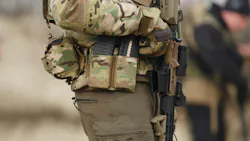
EDITOR’S NOTE: In Part One of this article, we discussed three operational domains wherein firearms training is vital. They were: Target, Sport, Recreational & Hunting; Duty (Law Enforcement and Private/Contract Security); Competition. In this week’s part we’re going to discuss Combat (Military) as well as Self- and Home-Defense. There are obvious crossovers between Duty (in Part One) and Combat. Self- or Home-Defense applies to virtually anyone who carries or owns a sidearm for the stated purpose.
4. Combat (Military)
This category encompasses members of the United States armed forces, including Active Duty, Reserve, and National Guard components. Military firearms training exists within a fundamentally different operational and legal framework than any civilian or recreational discipline. Service members are trained under the premise that, at some point during their careers, they may be required to engage in armed conflict, conduct security operations, or operate in unstable environments both abroad and domestically. These missions can range from conventional warfare and counterinsurgency to force protection, peacekeeping, humanitarian assistance, and domestic support during critical incidents or large-scale emergencies.
A defining characteristic of this discipline is the variability of context. Military personnel frequently operate outside U.S. borders under rules of engagement that differ significantly from domestic legal standards governing civilian or law enforcement use of force. These rules are mission-dependent, politically constrained, and subject to rapid change. Accordingly, military firearms training is structured to meet broad institutional readiness requirements rather than to cultivate individualized mastery across a wide range of weapons, environments, and tactical problem sets.
From a training and learning perspective, it is critical to understand how limited and uneven firearms exposure actually is for most service members. Initial entry training typically provides basic familiarization with a small number of standardized weapons systems, followed by qualification against relatively low minimum performance thresholds. These standards establish baseline competency rather than durable proficiency or mastery. Research examining training, performance, and learning in large institutional systems consistently demonstrates that skills acquired during academy or initial training phases degrade rapidly without deliberate reinforcement and ongoing practice (O’Neill et al., 2018). When firearms skills are revisited infrequently, both motor performance and cognitive recall decline in predictable ways.
This degradation is not a reflection of individual motivation or professionalism. It is a direct consequence of how human learning functions. Skills that are not consolidated through repeated, contextually relevant practice are highly susceptible to decay, particularly when months or years separate training exposures. In large organizations with competing mission demands, firearms training is often episodic rather than continuous. As a result, many service members retain only a generalized familiarity with weapons systems long after initial qualification.
Compounding this reality is the occupational structure of the modern military. The majority of service members transition into occupational specialties that do not require the routine carrying or operational use of firearms. These roles include logistical, technical, administrative, medical, intelligence, and support functions. Only a relatively small subset of personnel serve in what are commonly classified as combat arms roles. Widely accepted estimates place this group at approximately ten percent of total military personnel, meaning that the vast majority of service members will never engage in direct combat or employ firearms operationally in real-world engagements (Bledsoe, 2023).
It is essential to explicitly exclude elite, top-tier military units from this general characterization. Special mission units and special operations forces such as Delta, Navy SEALs, MARSOC, and comparable organizations operate under fundamentally different selection, training, and sustainment models. These units undergo rigorous screening, continuous high-frequency training, and mission-driven performance validation that bears little resemblance to conventional force training pipelines. Firearms proficiency within these organizations is not episodic or qualification-based, but continuously reinforced, contextually varied, and directly tied to operational outcomes. As such, they represent statistical and methodological outliers and should not be used as representative examples when discussing “military training” in the aggregate.
Understanding these distinctions is critical. Exposure to military firearms training, in and of itself, does not imply frequent use, high proficiency, or real-world combat experience. Qualification does not equal readiness, and familiarity does not equal mastery. Military firearms instruction is designed to support force-wide readiness across diverse mission requirements, not to produce universal gunfighters. Any attempt to generalize military firearms training outcomes without accounting for occupational role, training frequency, and unit type risks serious misunderstanding of both the training and the capabilities it produces.
5. Self-Defense and Home Defense
More on OFFICER.com
Officer Virtual Academy: Backup & Secondary Weapons Selection
- This course in the Officer Virtual Academy discusses the concerns and pros and cons of secondary weapons, and it reviews considerations for off-duty weapons.
As it relates to training in tactics, techniques, and methodologies for the lawful use of deadly force, the current state of the civilian firearms training marketplace is deeply uneven and, in many cases, profoundly problematic. Over the past several years, there has been a marked increase in instructors offering courses marketed as “tactical training,” “residential clearing,” “defensive shooting,” “active shooter response,” and “church security,” frequently under the banner of entry-level NRA or USCCA instructor credentials. In other cases, observed firsthand by the author, such instruction has been offered with no identifiable instructor credentialing at all, relying instead on unverified claims of prior military experience as a substitute for instructional qualification.
The marketing language in these programs is uniformly confident. The implied expertise is expansive. The actual depth of competence, however, routinely fails to justify either.
During a recent conversation with an instructor candidate of mine, whom I will refer to as “Alex,” another concern was articulated succinctly and accurately.
Like many industries, trends or 'scenes,' firearms training suffers from second-hand-itus. It's a bunch of trainers, training other trainers, picking up tips and tricks they themselves did not develop, and passing this, mostly unvetted, information on to the next guy. And thus the cycle goes, with all the insiders—surrounded by trees, but not necessarily
Alex’s observation closely mirrors what I have seen repeatedly across the country and exposes a deeper structural problem: a concept I like to call ‘instructional inbreeding’. Credentials originally designed to certify safe range operation and basic instructional competence are increasingly treated as blanket authorizations to teach far beyond their intended scope. Entry-level instructor certifications are leveraged to justify instruction in high-risk, high-liability subject matter that demands far more than surface familiarity or inherited technique. Within this closed-loop ecosystem, instructors are often produced by the same instructional lineage that trained them, replicating methods, language, and drills without meaningful scrutiny or external validation.
In this environment, repetition is routinely mistaken for rigor, and lineage is substituted for legitimacy. Techniques persist not because they have been examined, tested, and shown to be effective within a given context, but because “that’s how it’s always been done” or because they originate from a respected name within the circle. Confidence grows through reinforcement and familiarity, while accountability steadily erodes. The absence of challenge, cross-disciplinary input, or empirical examination allows weak assumptions to calcify into doctrine.
The result is a training culture that is dense with activity yet remarkably thin on critical evaluation. Many instructors are surrounded by drills, techniques, and inherited practices, but lack a coherent framework for understanding why those methods exist, what specific problems they were designed to solve, or whether they remain appropriate outside the narrow contexts in which they were first encountered. In a discipline where errors carry legal, moral, and potentially irreversible human consequences, this kind of recursive, inbred, second-hand instruction is not merely inefficient. It is dangerous.
Properly dissecting this discipline would require far more space than is available here. The intersection of civilian defensive training, legal standards, human performance under stress, and instructional accountability deserves a dedicated examination, and I will address it in detail in a future article. For present purposes, it is sufficient to state that the gap between what is being marketed and what is being responsibly taught is often substantial.
More on OFFICER.com
TitanX Review: Radically Improved Dry Fire Device Could Change Police Officer Training Approach
- The TitanX dry fire device was designed for realistic training scenarios, and it is the perfect rehearsal tool for police officers.
As with other disciplines discussed previously, this is not a blanket indictment of all instructors operating in the self-defense and home defense space. There are outstanding professionals working in this domain who understand the limits of their experience, the boundaries of their credentialing, and the seriousness of the material they teach. These instructors tend to be disciplined, conservative in their claims, and committed to ongoing education. Unfortunately, they are often overshadowed by louder, more confident voices whose qualifications do not withstand scrutiny.
That reality places a burden on the consumer. Anyone seeking training for personal or home defense should demand transparency. Ask to see credentials. Ask about continuing education. Ask what disciplines the instructor has actually trained in, and under what standards. In a field with low barriers to entry and minimal external oversight, skepticism is not cynicism. It is prudence.
Compounding the complexity of this discipline is the legal environment in which armed citizens operate. Firearms law, self-defense law, and use-of-force standards vary dramatically from state to state. Some jurisdictions are permissive and clearly favor the rights of responsible, law-abiding citizens. Others are restrictive, ambiguous, and unforgiving. There is no universal standard, and assumptions are dangerous. It is absolutely critical that individuals seek accurate, current legal education specific to their jurisdiction. A reliable starting point for this research is handgunlaw.us, which provides regularly updated summaries of state laws regarding concealed carry, duty to inform, prohibited locations, and general use-of-force doctrines such as stand-your-ground and castle doctrine. This information is not a substitute for competent legal counsel, but it is an essential baseline.
When it comes to the nuances of self-defense law, however, caution is paramount. Legal advice should not be sourced from a generic firearms instructor, a concealed carry course at a local range, a martial arts instructor, or a well-meaning acquaintance in law enforcement. Unless an individual is directly involved in high-liability training, use-of-force investigation, or legal analysis of firearms-related incidents, and is conversant not only with statutory law but also with relevant case law and judicial precedent, they are not a subject matter expert. Well-intentioned opinions offered outside that scope are more likely to mislead than to protect.
It is also important to state, clearly and without ambiguity, that I do not advocate for unnecessary bureaucratic barriers to the lawful exercise of Second Amendment rights. I support constitutional carry and reside in a state that has codified it. For those who do not, the options are limited to either relocating to one of the states that recognize constitutional carry or complying with the licensing regimes imposed by the remainder. Regardless of one’s position on this issue, a non-negotiable obligation remains. Armed citizens owe it to themselves and to the public spaces they share to pursue the highest quality training available, to understand the legal boundaries governing any use of force, to rigorously adhere to safe gun-handling practices, and to serve as models of lawful, disciplined firearms ownership.
In this discipline, perhaps more than any other, the margin for error is vanishingly small. Competence is not optional, and ignorance is not a defense.
References and Additional Reading
- Hawley, J. A. (2008). Specificity of training adaptation: time for a rethink? The Journal of Physiology, 586(1), 1–2. https://doi.org/10.1113/jphysiol.2007.147397
- NIJ Standard-0112.03: Autoloading Pistols for Police Officers, Revision A. https://www.ojp.gov/pdffiles1/nij/249929.pdf
- O’Neill, J., O’Neill, D. A., Weed, K., Hartman, M. E., Spence, W., & Lewinski, W. J. (2018, December 18). Police Academy Training, Performance, and Learning. Behavior Analysis in Practice. https://doi.org/10.1007/s40617-018-00317-2
- Bledsoe, E. (2023). Answering: What Percentage of The Military Sees Combat? The Soldiers Project. https://www.thesoldiersproject.org/what-percentage-of-the-military-sees-combat/
- Georgia Peace Officer Standards and Training Council 408 Hour Basic Law Enforcement Training Course, 12th edition
- https://services.petsmart.com/content/grooming-process
About the Author
 Keith Hanson
Keith Hanson
Contributing Editor Keith Hanson is a career law enforcement professional with extensive experience across operational and instructional domains, specializing in firearms instruction, tactical operations training, and counterterrorism tactics. With a strong background in neuroscience and psychology, Keith is a co-creator and senior program architect of NeuralTac™, which combines neuroscience, combat psychology, neuropsychology, kinesiology, and educational sciences, drawing from the latest research in human performance, to produce advanced high-liability instructional frameworks for law enforcement agencies, contract security firms, and other armed professionals. It also aims to develop and foster advanced-level master trainers within those organizations. Additionally, as a certified Force Science analyst and certified cognitive/forensic interviewer, Keith serves as a court-recognized expert witness on use-of-force matters and provides consultation on legal strategies. He is the author of "Unlocking the Brain Code: Exposing the Limits of Traditional Firearms Instruction and High-Liability Training Through Neuroscience, Psychology, and Human Performance Research."
You can email Keith: [email protected]
And visit his LinkedIn page: https://www.linkedin.com/in/keithhanson1973/