Why Forgetting Can Make Firearms Training More Effective
What to Know
- Forgetting is not inherently a sign of intelligence, but research suggests a healthy memory system benefits from selectively reducing irrelevant information so people can make better decisions and adapt to changing situations.
- In firearms and law enforcement training, effective performance depends not on remembering every detail, but on retrieving the right information, recognizing relevant cues and selecting the appropriate response under pressure.
- Firearms training should strengthen useful behaviors while reducing the influence of outdated or context-specific responses through spacing, interleaving, variability and realistic decision-making exercises.

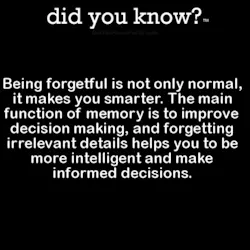
The meme shown to the right is one that I’ve seen circulating on several of my social media feeds for about a year or two now, and it intrigued me because of the provocative claim that it makes: Being forgetful is not only normal, it makes you smarter.
It further suggests that memory exists primarily to improve decision-making and that forgetting irrelevant details helps people make better, more informed choices.
Like most viral neuroscience, the statement contains a meaningful idea wrapped inside an overstatement. Forgetfulness does not automatically make anyone smarter. Memory loss caused by sleep deprivation, distraction, traumatic brain injury, neurological disease, intoxication, chronic stress or inadequate learning is not beneficial. An officer who forgets the legal standard governing the use of deadly force is not demonstrating cognitive efficiency. A student who cannot remember the foundational safety rules of firearms handling has not achieved some higher form of intelligence.
There is, however, a scientifically defensible principle beneath the social media language. A healthy memory system is not designed to preserve a complete and permanent record of everything we experience. It must retain information that remains useful, reduce the accessibility of information that has become irrelevant and help us extract general patterns that can guide future behavior. In that sense, forgetting is not always evidence that memory has failed. Sometimes it is evidence that memory is doing exactly what it was designed to do.
When Forgetting Helps Rather Than Hurts
More on OFFICER.com
Why Prior Experience Can Help or Hurt Firearms Performance
- The challenge for firearms instructors is not simply teaching mechanics but ensuring students can recognize when a learned response fits the problem and when it may actually work against them.
Blake Richards and Paul Frankland offered one of the clearest scientific explanations of this idea in their 2017 paper, “The Persistence and Transience of Memory.” They argued that intelligent memory depends on a balance between persistence and transience. Persistence allows important information to remain available. Transience reduces the influence of outdated or excessively specific information. Together, these processes may support flexible decision-making in noisy, changing environments. Forgetting can prevent us from becoming cognitively overfitted to the past, meaning so tightly bound to the details of previous experiences that we cannot adapt when the present situation differs from them (Richards & Frankland, 2017).
That concept should command the attention of anyone responsible for firearms instruction. The objective of high-liability training is not to create a student who remembers every target, every command, every sequence and every correction ever encountered on a range. The objective is to develop a student who can retrieve the right information, recognize the right cues and execute the right behavior when conditions are uncertain, unfamiliar and consequential.
Memory is therefore not simply a warehouse. It is part of an adaptive control system.
When I watch an experienced shooter perform, especially in high-fidelity simulation trainings, I am not merely seeing someone who has stored more information than the novice standing beside him. I am often seeing someone who has become better at filtering information. The experienced performer notices the cues that matter and ignores much of what does not. He does not consciously inventory every sensation associated with grip pressure, visual alignment, posture, recoil and trigger movement. Many of those processes have been compressed into organized motor and perceptual structures that require less conscious management.
This does not mean the information has disappeared. It means the brain no longer treats every component as equally deserving of attention.
That distinction is important because firearms instructors often speak about memory as though learning were accomplished entirely by strengthening a desired response. We repeat a movement, reinforce it with feedback and assume that sufficient repetition will eventually make it permanent. There is truth in that explanation, but it is incomplete. Skilled performance also requires the nervous system to manage competition among memories, actions and interpretations.
The shooter may know several ways to solve a problem. The officer may have encountered multiple versions of a similar event. The instructor may have taught different techniques at different points in a student’s development. During performance, these possibilities do not politely wait in separate mental folders. They may compete for retrieval and response selection. The brain must promote what is useful while reducing the disruptive influence of what is not.
Retrieval-Induced Forgetting and Competing Memories
Michael Anderson, Robert Bjork and Elizabeth Bjork demonstrated this phenomenon in a series of experiments published in 1994. Participants learned category and word pairings and then repeatedly retrieved only some of the learned items. Retrieval strengthened the practiced information, as expected. More surprisingly, it impaired later recall of related information that had not been practiced. Remembering some information had caused related information to become less accessible, a process now known as retrieval-induced forgetting (Anderson et al., 1994).
This does not necessarily mean that the competing memories were deleted. In many cases, forgetting reflects diminished accessibility rather than total loss. The information may remain stored while becoming harder to retrieve under a particular cue. That is a far more useful way to understand forgetting in the firearms context. We should be extremely cautious about saying that training can erase an old motor program. The human literature does not support such a simple claim. Old responses may remain available and can sometimes reappear after time, stress, contextual change or renewed exposure.
What training can do is repeatedly strengthen the retrieval of a more appropriate response while reducing the probability that a competing response will dominate under the same conditions.
When Training Creates the Wrong Associations
Imagine an officer whose firearms experience has been shaped almost entirely by predictable qualification courses. A command is given. A target is already visible. The officer knows in advance that shooting will be required. The task is not truly whether to shoot. The task is to execute a known string of fire with acceptable accuracy.
After years of this structure, the officer may become very efficient at responding to a command and a visible target. That efficiency may look like expertise, but the learned relationship is narrow. The cue initiates the gunfire sequence because the training environment has made the cue nearly perfectly predictive.
Now place that officer in a more realistic exercise. A person appears suddenly. The hands are initially obscured. The object being held is ambiguous. The person may comply, turn away, drop the object, move toward another person or produce something that only briefly resembles a weapon. The relevant task is no longer merely executing a shooting technique. It is identifying, interpreting, predicting and selecting.
The strongest memory must not simply be “target appears, gun fires.” The more useful relationship is conditional: observe, discriminate, decide and then apply the appropriate response. If qualification culture has overstrengthened an anticipatory shooting pattern, later training must create enough decision conflict to make the old pattern less dominant and the conditional pattern more accessible.
This is where forgetting becomes operationally important. The officer does not need to forget how to fire accurately. He may need to reduce the automatic influence of irrelevant range cues that have become incorrectly attached to the act of firing. He must retain the mechanics while becoming less governed by the artificial context in which those mechanics were originally rehearsed.
Kuhl and colleagues provided neural evidence for the potential benefit of this type of competition reduction. Their 2007 research found that when competing memories became less accessible following selective retrieval, later remembering placed fewer demands on cognitive control. The relevant memory could be retrieved with less interference and reduced involvement of brain systems associated with resolving mnemonic conflict (Kuhl et al., 2007).
In practical terms, the brain may become more efficient not because it remembers more, but because fewer competing memories are fighting for control at the critical moment.
Reducing Cognitive Interference Under Pressure
That principle fits naturally with recognition-primed decision-making. Experienced decision-makers operating under time pressure do not necessarily generate a long list of possibilities and conduct a formal comparison among them. They often recognize a familiar pattern, retrieve a plausible response, mentally evaluate whether it will work and act if it appears satisfactory. Their advantage comes largely from the organization of experience and the ability to detect meaningful cues, not from consciously processing every available detail (Klein, 1993).
For an officer confronting an uncertain threat, speed does not come from eliminating thought. It comes from reducing unnecessary competition. Relevant patterns are recognized earlier. Implausible interpretations receive less influence. Appropriate actions become easier to retrieve. The person is not remembering everything that has ever happened. The person is using organized experience to determine what matters now.
This is precisely why indiscriminate repetition can be dangerous. Repetition does not know whether the behavior being strengthened is tactically meaningful, legally appropriate or merely convenient for running a range. The nervous system learns the regularities we provide. If the student always fires after the same command, always knows the number of rounds, always encounters a fully exposed target and always receives immediate confirmation of success, the brain may become highly efficient at solving that specific exercise. The key here is to understand that efficiency is not the same as adaptability.
Research on complex police motor learning emphasizes that firearms performance integrates sensory perception, memory, situational awareness, decision-making and motor action. A draw stroke is not merely a collection of joint movements. It is a motor command selected because the performer interpreted environmental information and decided that drawing was appropriate. As training progresses, smaller action components become organized into larger chunks that can be performed with less mental effort. That reduction in effort is valuable, but only when the chunks are connected to valid perceptual and decision cues (Di Nota & Huhta, 2019).
This is one reason NeuralTac principles place so much emphasis on distinguishing performance from learning. Smooth execution during a familiar drill may show that the performer has adapted to the drill. It does not establish that the skill will remain available after delay, transfer to a changed context or survive the effects of stress. My own work in Unlocking the Brain Code addresses this recurring problem: Training systems frequently reward visible outcomes while overlooking the cognitive architecture supporting those outcomes. Familiarization becomes mistaken for learning, and short-term fluency becomes mistaken for durable capability (Hanson, 2026).
Adaptive forgetting adds another layer to that argument. A well-designed training program must not only ask what should be learned. It must also ask what should retain priority, what should become conditional and what should lose influence.
Some information must remain highly persistent. Firearms safety rules, muzzle awareness, target identification requirements, the legal and policy standards governing force, and the obligation to account for the environment cannot be allowed to fade into optional background knowledge. These elements require durable encoding, repeated retrieval and application across contexts.
Other information should be remembered as a flexible principle rather than a rigid script. A student may need several ways to solve a problem, with selection depending on distance, available cover, physical position, lighting, injury, equipment and the behavior of other people. Training should develop a repertoire without allowing one familiar solution to become a hammer that makes every problem look like a nail.
Still other information should be allowed to lose influence. The exact order of yesterday’s drill, the instructor’s location, the color of a particular target border, the predictable rhythm of commands and the ritualized behaviors attached only to administrative range management should not control future performance. They may have supported initial learning, but they are not the skill itself.
The science also warns us that forgetting can benefit later relearning. Storm, Elizabeth Bjork and Robert Bjork found that information subjected to retrieval-induced forgetting could subsequently be relearned more quickly. The memory had become less accessible, but it had not necessarily returned to a completely unlearned state. This savings effect shows why forgetting and erasure cannot be treated as synonymous (Storm et al., 2008).
That finding has practical implications for instructors who are changing an established technique. A shooter who appears to have replaced an old response may still retain much of the earlier learning. Months later, renewed practice or stressful conditions may make the old response reappear. The instructor should not interpret that recurrence as proof that the new training accomplished nothing. Nor should the instructor assume that a few successful repetitions permanently eliminated the prior habit. Always remember this: learning is competitive and history matters.
The appropriate instructional response is not to chase magical repetition counts. It is to provide repeated opportunities to retrieve the desired response under varied, meaningful conditions. The student must recognize when the response applies, when it does not apply and what environmental information should govern selection. Over time, the appropriate response becomes more accessible across a broader range of cues, while the obsolete or contextually inappropriate response becomes less likely to win the competition.
Designing Training That Promotes Adaptability
This is why NeuralTac incorporates spacing, interleaving, variability and retrieval practice. Spacing allows time to intervene, reducing the artificial support provided by recent repetition. Interleaving forces the learner to identify the problem rather than mindlessly repeat the last solution. Variability prevents the skill from becoming dependent on a single distance, target, rhythm or environmental arrangement. Retrieval practice requires the learner to reconstruct knowledge or performance rather than merely follow an immediately demonstrated pattern.
These methods frequently make practice look worse before they make learning better. Shea and Morgan found that random practice produced greater contextual interference and poorer acquisition performance than blocked practice, but it improved later retention and transfer, particularly under more complex transfer conditions (Shea & Morgan, 1979). Roediger and Karpicke similarly showed that repeated testing enhanced delayed retention more than repeated study, even when repeated study produced stronger immediate performance (Roediger & Karpicke, 2006). Guadagnoli and Lee’s challenge point framework further explains that learning depends on matching task difficulty and available information to the performer’s skill level. Too little challenge produces limited learning. Too much challenge creates overload rather than useful adaptation (Guadagnoli & Lee, 2004).
The operative word here is (and should be, calibrated.)
Introducing uncertainty does not mean turning every drill into chaos. Adding stress does not mean screaming at students, exhausting them or exposing them to hazards they are not prepared to manage. A novice who is still allocating most of working memory to foundational gun handling cannot benefit from the same complexity appropriate for an advanced officer. NeuralTac principles require progression. Mechanics are stabilized, decision cues are added, tasks are varied and pressure is introduced in a manner that stretches capability without overwhelming it.
Stress makes the selective function of memory even more important. Under elevated arousal, attention can narrow, working memory can become less reliable and cognitively demanding functions may degrade. Arble, Daugherty and Arnetz studied 17 Swedish police cadets in a dynamic critical incident simulation and found that physiological arousal affected performance domains differently. Well-rehearsed tactical behavior appeared more resilient than verbal communication, which imposed greater cognitive demands. Heart rate elevation alone did not neatly predict overall performance, underscoring that stress effects are complex rather than reducible to a single pulse threshold (Arble et al., 2019).
This matters because an officer under stress cannot afford to search through a cluttered collection of equally strong but incompatible responses. The training goal is not mindless automaticity. It is contextually governed automaticity, where sound perceptual recognition and decision rules release a practiced motor response.
Reality-based practice offers evidence that this can be developed. Oudejans assigned police officers to handgun practice either against an opponent who returned fire with marking cartridges or against conventional cardboard targets. Officers who practiced under representative pressure were better able to prevent the degradation of shooting performance under pressure than officers who practiced conventionally (Oudejans, 2008).
A recent small field trial by Smith and Boolani examined a non-anticipatory, random-action target system with six experienced shooters. The target’s location and exposure time could not be reliably predicted. Although the sample was far too small to support broad conclusions, the trial suggested that non-anticipatory practice may help shooters improve accuracy while reducing omission and commission errors. The value of the study is not that it proves a particular target system is the answer. It demonstrates the importance of training the decision and response-selection process rather than allowing the shooter to rely entirely on anticipation (Smith & Boolani, 2024).
This brings us back to the original graphic. Forgetting does not make us intelligent merely by subtracting information. It can support intelligent behavior when it reduces interference, preserves flexibility and helps us generalize beyond the irrelevant details of past experience.
For firearms trainers, the lesson is not that students should remember less. The lesson is that they must remember selectively, retrieve conditionally and act adaptively.
The student should not carry every range artifact into the field. He should carry durable safety behavior, sound legal judgment, perceptual discipline, adaptable motor capability and the ability to recognize when a practiced response applies. He should be able to ignore the resemblance of a harmless object to a weapon when better information becomes available. He should be able to stop a response when the threat changes. He should be able to select another option when the familiar solution no longer fits. He should be able to cycle through OODA efficiently and effectively.
A brain that remembered every detail with equal strength would not necessarily produce superior performance. It might produce hesitation, interference and rigid attachment to the past. Effective memory does something more useful. It maintains what predicts success, weakens what creates noise and reorganizes experience into patterns capable of guiding future action. That is not forgetfulness as failure. It is forgetting in the service of adaptation.
In high-liability training, the real measure of intelligence is not how much information a student can accumulate. It is whether the right knowledge, cue and action become available at the right moment, while the wrong ones remain out of the way.
References
Anderson, M. C., Bjork, R. A., & Bjork, E. L. (1994). Remembering can cause forgetting: Retrieval dynamics in long-term memory. Journal of Experimental Psychology: Learning, Memory, and Cognition, 20(5), 1063-1087. https://doi.org/10.1037/0278-7393.20.5.1063
Anderson, M. C., & Hulbert, J. C. (2021). Active forgetting: Adaptation of memory by prefrontal control. Annual Review of Psychology, 72, 1-36. https://doi.org/10.1146/annurev-psych-072720-094140
Arble, E., Daugherty, A. M., & Arnetz, B. (2019). Differential effects of physiological arousal following acute stress on police officer performance in a simulated critical incident. Frontiers in Psychology, 10, Article 759. https://doi.org/10.3389/fpsyg.2019.00759
Di Nota, P. M., & Huhta, J. M. (2019). Complex motor learning and police training: Applied, cognitive, and clinical perspectives. Frontiers in Psychology, 10, Article 1797. https://doi.org/10.3389/fpsyg.2019.01797
Guadagnoli, M. A., & Lee, T. D. (2004). Challenge point: A framework for conceptualizing the effects of various practice conditions in motor learning. Journal of Motor Behavior, 36(2), 212-224. https://doi.org/10.3200/JMBR.36.2.212-224
Hanson, K. A. (2026). Unlocking the brain code: Exposing the limits of traditional firearms instruction and high-liability training through neuroscience, psychology, and human performance research. Applied Threat Science Publications.
Klein, G. A. (1993). A recognition-primed decision model of rapid decision-making. In G. A. Klein, J. Orasanu, R. Calderwood, & C. E. Zsambok (Eds.), Decision making in action: Models and methods (pp. 138-147). Ablex Publishing.
Kuhl, B. A., Dudukovic, N. M., Kahn, I., & Wagner, A. D. (2007). Decreased demands on cognitive control reveal the neural processing benefits of forgetting. Nature Neuroscience, 10(7), 908-914. https://doi.org/10.1038/nn1918
Oudejans, R. R. D. (2008). Reality-based practice under pressure improves handgun shooting performance of police officers. Ergonomics, 51(3), 261-273. https://doi.org/10.1080/00140130701577435
Richards, B. A., & Frankland, P. W. (2017). The persistence and transience of memory. Neuron, 94(6), 1071-1084. https://doi.org/10.1016/j.neuron.2017.04.037
Roediger, H. L., III, & Karpicke, J. D. (2006). Test-enhanced learning: Taking memory tests improves long-term retention. Psychological Science, 17(3), 249-255. https://doi.org/10.1111/j.1467-9280.2006.01693.x
Shea, J. B., & Morgan, R. L. (1979). Contextual interference effects on the acquisition, retention, and transfer of a motor skill. Journal of Experimental Psychology: Human Learning and Memory, 5(2), 179-187. https://doi.org/10.1037/0278-7393.5.2.179
Smith, M. L., & Boolani, A. (2024). Feasibility of a non-anticipatory, random-action target system to improve shooting performance: A brief field trial. Sports, 12(11), Article 305. https://doi.org/10.3390/sports12110305
Storm, B. C., Bjork, E. L., & Bjork, R. A. (2008). Accelerated relearning after retrieval-induced forgetting: The benefit of being forgotten. Journal of Experimental Psychology: Learning, Memory, and Cognition, 34(1), 230-236. https://doi.org/10.1037/0278-7393.34.1.230
About the Author
 Keith Hanson
Keith Hanson
Contributing Editor Keith Hanson is a career law enforcement professional with extensive experience across operational and instructional domains, specializing in firearms instruction, tactical operations training, and counterterrorism tactics. With a strong background in neuroscience and psychology, Keith is a co-creator and senior program architect of NeuralTac™, which combines neuroscience, combat psychology, neuropsychology, kinesiology, and educational sciences, drawing from the latest research in human performance, to produce advanced high-liability instructional frameworks for law enforcement agencies, contract security firms, and other armed professionals. It also aims to develop and foster advanced-level master trainers within those organizations. Additionally, as a certified Force Science analyst and certified cognitive/forensic interviewer, Keith serves as a court-recognized expert witness on use-of-force matters and provides consultation on legal strategies. He is the author of "Unlocking the Brain Code: Exposing the Limits of Traditional Firearms Instruction and High-Liability Training Through Neuroscience, Psychology, and Human Performance Research."
You can email Keith: [email protected]
And visit his LinkedIn page: https://www.linkedin.com/in/keithhanson1973/