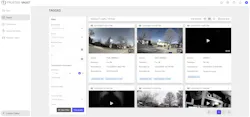
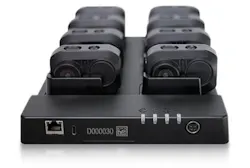
The T500 docking station, used to recharge the cameras and download videos from them, was quick and easy to set up. It only required a power source, space to place it and direct connection to the Internet. The cameras themselves only fit into the docking station one way, “snapping” in and showing indicator lights for charging status and connectivity to the docking station itself. For remote charging, there is also a USB fed power cable that the camera can be docked in, but note that this charging option does not allow for uploading videos to the Trusted Vault system.
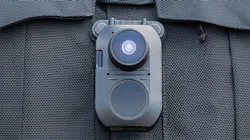
The test unit cameras we received came with three mounting options to include a MOLLE mount, a spring-loaded clip-on mount, and a magnetic mount. Between the three types of mounts, we were able to test the cameras on an external body armor carrier, a uniform shirt and a sweatshirt. For the sweatshirt we used the magnetic mount and it’s strong enough that when it connects outer plate to inner plate, you’ll feel it if you don’t get your fingers out of the way. It holds the camera securely and stays in place even during rigorous activity. Notably, the T500’s footprint is roughly a third smaller than any body worn camera currently sold to law enforcement—achieved without compromising battery life or video-storage capacity.
The camera itself goes into the mount only one way and then is turned to lock in. If you view a given mount vertically, the camera would go into the top upside down and then be turned 180 degrees to be worn. If the mount is turned sideways, the camera would go in and be turned 90 degrees and still be locked in.