Tenn. Police to Continue Security Training for Federal Nuclear Regulators
What to Know
- Federal nuclear regulators are receiving security training from the Chattanooga Police Department under a contract worth up to $235,000 over five years.
- The training teaches inspectors about firearms, explosives, breach charges and current attack tactics so they can assess security at nuclear facilities.
- Chattanooga police bomb squad members have been providing similar technical training to Nuclear Regulatory Commission staff for about 15 years.
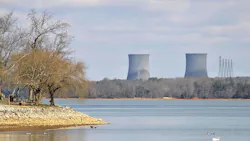
As part of their jobs, federal nuclear regulators study how reactors work and how to minimize risks associated with radiation, and in Chattanooga, they learn about automatic weapons and explosive breach charges.
Earlier this week, the Chattanooga City Council voted to allow Police Chief John Chambers to enter into a training contract between the Chattanooga Police Department and the Nuclear Regulatory Commission, the federal agency tasked with monitoring the nation's commercial nuclear reactors and other facilities that use and store nuclear materials. The contract includes one year of training at $47,000 with an additional four one-year extensions for a potential total of $235,000.
The authorized period runs from Sept. 1, 2026, through Aug. 31, 2031, with all payments under the contract going directly to the city.
"This training is to prepare attendees for any type of attack on nuclear facilities or facilities that contain nuclear sources," said police spokesperson Heather Holley via email.
In order to prepare for a litany of potential threats, trainees are given instruction on weapon systems — including automatic weapons and thermal scopes — as well as information on various types of explosives, according to a June commission procurement notice.
They also are taught to think like those who may attack a U.S. nuclear facility. According to the notice, each cohort is shown "current adversary tactics, techniques and procedures."
The inspectors themselves come from a variety of backgrounds, said commission spokesperson Dave Gasperson via email. Regardless of their prior experience, he said, they complete commission qualification programs specific to their inspection responsibilities.
The inspectors take the training so they can evaluate how well nuclear facilities are prepared for an attack, said commission Public Affairs Officer Christine Saah Nazer. They're tasked with making sure these facilities are prepared to respond in such an event, assessing site weaknesses and vulnerabilities and ensuring staff have plans and procedures in place.
"This training directly supports assessment of facility security, identifying vulnerabilities and verifying facilities' protective strategies," Nazer said via email.
The size of the annual classes ranges from 20 to 30 inspectors, Holley said, with members of the Special Operations Unit serving as instructors. In addition to firearms training, there are multiple lectures on improvised explosive devices and homemade explosives. Following that, the police bomb squad conducts two days of demonstrations: one covering standard explosives and the second focusing on explosive breach charges used to enter secure buildings. According to the procurement notice, the training prepares attendees for external assaults, insider threats, vehicle bombs, waterborne attacks and cyberattacks.
The notice says the instruction is aimed at helping staff evaluate the security of nuclear facilities, which, following the terrorist attacks of Sept. 11, 2001, was deemed by the agency as needing "enhancement."
The Nuclear Regulatory Commission's training history in Chattanooga dates well before that, though.
Following the 1979 Three Mile Island accident, the commission moved its technical training program to Chattanooga in 1980 because it was the only place in the country staff could train on simulators representing all commercial nuclear power plant designs, according to an October 2000 report from the U.S. General Accounting Office. The simulators were owned by the Tennessee Valley Authority.
In that report, it notes plans had already been made that same year to move the training center to Rockville, Maryland, but the move never occurred. Congress blocked the change, and the center remains in Chattanooga today.
The Chattanooga Police Department's role came later. According to Holley, the bomb squad has been providing technical training to commission staff for the past 15 years.
"The only changes are the devices used to update the threats and the cost of the explosives," she said.
______________
© 2026 the Chattanooga Times/Free Press (Chattanooga, Tenn.).
Visit www.timesfreepress.com.
Distributed by Tribune Content Agency, LLC.