Big Brother or Best Evidence? How Police Video Becomes an Officer's Best Defense
What to Know
- Surveillance has evolved from wired phones to AI devices with always-on microphones, shaping societal perceptions of privacy.
- Trust in law enforcement leadership influences how new monitoring technologies are accepted or viewed with suspicion.
- Video evidence from dashcams and body cameras generally supports professional conduct and aids in exoneration.
Yes, I am old enough to remember when phones were hardwired to wall phone jacks and everyone was still paranoid that somehow the government would find a way to turn on the speaker in the mouthpiece, even when the phone was hung up, and listen in on your household in whatever room. Now a great many households have an AI device, i.e., Alexa, that has a microphone that is always listening, and we complain if we have to say the name twice to wake it up. A plethora of science fiction movies have been made wherein society is constantly and almost totally under surveillance (thank goodness there are still private bathrooms). Depending on the movie, that surveillance is either shown as a benefit or proof of a cruel, overlord-type government. What makes the difference in perception? The biggest difference is determined by whether we accept that open microphone in our home as part of a service or part of a surveillance operation. The difference in societal monitoring is how the information is used and who directly benefits from it.
When GPS monitoring of patrol vehicles first entered the scene, trust in the agency’s leadership played the largest part of how the new technology was perceived. One agency I’m aware of had a deputy chief that used the GPS tracking purely to monitor his officers’ patrol patterns, calling them if they left their patrol area and disciplining them if they sat still for too long. It’s easy to understand why his officers didn’t like the GPS technology. Another agency’s chief used the tracking technology exclusively to provide emergency backup if needed and had policies in place to prohibit any other use of the GPS tracking. That agency welcomed and appreciated the adoption of the technology.
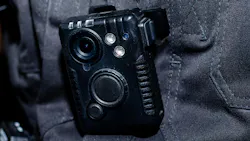
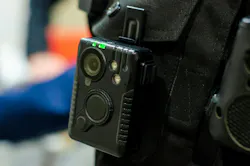
Enter body-worn cameras and every other type of camera that exists in our society today. Is all that captured video, sometimes live-streamed video, negative surveillance? Or a boon to law enforcement in many ways? Where video “surveillance” is concerned, it’s a mixed blessing.
When dashboard-mounted cameras were first introduced in patrol vehicles, the captured video was most often seen as a benefit. The video provided evidence during traffic stops and usually supported arrests in traffic violations. All those inebriated drivers who went to court and claimed the officer was lying had to face the video that showed the same driver staggering around or falling down during field sobriety tests, their slurred language easy to hear on the video. When those dashcam videos captured a fight between the officer and suspect(s), justification for use of force was either clear … or in question and examined. Video evidence of unprofessional conduct garnered from within the agency itself was a new thing, and there were certainly officers who suddenly weren’t great fans of dashcams.
In today’s operational world, officers are tracked and monitored more than ever. As a retired officer who learned how to police in the 1980s, I have to admit that it would be difficult for me to adapt to the constant monitoring, but that doesn’t make it a bad thing. It means that our outlooks, policies, training and tactics have all had to evolve, and today’s officers are more professional than ever — and it’s proven time and again by “going to the recording.” Evidentiary video has easily exonerated more officers from accusations of wrongdoing far more than it has supported the allegations.
That evidentiary video comes from a variety of sources, and we should welcome every single one of them with the possible exception of two (discussed momentarily). Dashcam videos, body-worn camera videos, prisoner compartment videos, helicopter videos, weapon-mounted cameras (not as rare as we might think), and more all provide proof, 99.99% of the time, that the officer performed professionally and the criminal allegation against the perpetrator is supported. It is a given axiom of modern police work that no officer goes on patrol with full knowledge that everything s/he does is being recorded and with the intent of doing something unprofessional or beyond policy.
The evidentiary video captured today is of higher quality than ever before thanks to constantly evolving technology, and all video from a given incident gets examined, offering multiple perspectives/views of the same incident. This provides a greater opportunity to look for the angles where someone might think they saw one thing, but the video(s) prove they just had a wrong angle and couldn’t see what actually occurred.
So, when is captured video not necessarily great? When it is captured by an unprofessional source, such as a random citizen using their cell phone, and it’s published in a carefully edited fashion to display what the “cameraman” wants it to show. When it’s been edited to “prove” the officer did something wrong and made public, often before the agency command staff knows an incident has occurred. For example, the use of force incident has a total of over 90 minutes of video from dashcams and body-worn cameras, but the citizen-captured edited video shows 30 seconds or less of police performance carefully presented to condemn what the officer(s) did.
Keep in mind that those citizen-captured videos are not part of the “Big Brother” system, and they may or may not be to your advantage. Even the most professional 100% correct performance can be segmented on video and edited to somehow look wrong. And those are the exact instances when Big Brother’s video — all of the dashcam, body-worn camera, prisoner compartment cameras, and any vicinity cameras that can be gathered — are needed and should be fully appreciated. Video is probably the best tool available for exonerating officers when accusations of unprofessional conduct or excessive force are made.
So, when you catch yourself complaining about all of the ways you are being recorded, unless you have leadership that focuses on discipline instead of exoneration, reconsider your outlook and be thankful.
About the Author
 Lt. Frank Borelli (ret), Editorial Director
Lt. Frank Borelli (ret), Editorial Director
Editorial Director
Lt. Frank Borelli is the Editorial Director for the Officer Media Group. Frank brings 25+ years of writing and editing experience in addition to 40 years of law enforcement operations, administration and training experience to the team.
Frank has had numerous books published which are available on Amazon.com and other major retail outlets.
If you have any comments or questions, you can contact him via email at [email protected].