Are Your Police Video Reviews Missing the Officer's Perspective?
What to Know
- Different types of police cameras (body-worn, dash, weapon-mounted) provide varied perspectives that can influence incident interpretation.
- Effective video analysis requires comparing multiple footage sources and aligning timelines to verify officer reports and perceptions.
- Agency policies should clearly define the purpose of video review, focusing on evidence collection, training, and accountability, while avoiding misuse for disciplinary reasons.
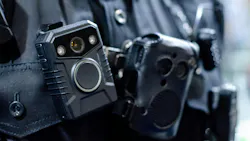

For decades now law enforcement has been using mounted cameras to record interactions of officers as they go about their duties. From dashboard cameras to prisoner compartment cameras to body-worn cameras and even, in some cases, weapon-mounted cameras, there is a plethora of options for capturing video in the policing world today. But for all the options we have available, and there are others than those listed that we’ll also discuss, there are two questions that exist.
What offers the best view of what the officer saw or observed that drove his actions? And…
How does an agency go about analyzing video as it relates to the officer’s perspective?
As a veteran (now retired) officer who worked primarily in patrol and training, I would add another question: Does the agency analyze the available video for the primary purpose of evidence against the perpetrator? Or against the officer? Or simply to minimize potential liability?
Although motivation wasn’t listed until the last question, it is by far the most important question to answer when it comes to evidentiary video. As agencies have increased the number of cameras capturing video for officers on duty, the amount of video evidence has increased proportionately. Depending on the command staff at a given agency, the motivation for examining video can differ, and it can differ from officer to officer depending on the size and professionalism of the agency. For example, in a small agency, the chief can have a “problem child” officer, or simply an officer he doesn’t like, and use any video to seek a reason for discipline or dismissal. That can be done even if citizens aren’t involved in an incident. Let’s be brutally honest, we occasionally get a chief in police work who achieves the position either because no one else was available or he was simply next in line. That doesn’t always make for good leadership and sometimes offers the opportunity for reshaping the agency, fully inside of general orders and guidelines but with malignant motivations. For that very reason, an agency should consider general orders or published policy that limits the purpose of video review to what is necessary or acceptable. “Necessary” would include when complaints are filed or when evidence is captured and needs to be documented. Acceptable would be when video is used as part of performance evaluations, such as when a rookie is in a field training program or in training.
Understanding that, let’s delve into the other two questions:
What offers the best view of what the officer saw or observed that drove his actions? The answer is that there may not be a single “best view” that fully reveals the officer’s experience, and as we’ve discussed in the past, even if you could see exactly what the officer saw, you may interpret it differently based on your background, knowledge, and experience — which is different from his and impacts how we interpret what we see. What may be required is to take the officer’s report narrative/statement and compare it with several different videos from his body-worn camera to his dash camera to other officers’ body-worn cameras and more to see if we can identify what he describes of his perception. This is where all those other cameras can come into play as well. For example, if the incident in question is a domestic disturbance and the encounter between officer and citizen(s) takes place in the front yard of the home, is there a doorbell camera that offers another perspective? Is there a security camera that might? It behooves supervising and investigating officers to seek out all available videos and examine them in comparison to the incident timeline and then overlay that with the officer’s narrative or statement. What we should be seeking is confirmation that he saw what he reports having seen. If not, further clarification from the officer is necessary.
That process answers the second question as to How an agency goes about analyzing the video to understand the officer’s perspective?
Note that this is different from trying to justify an officer’s actions, although that may be a happy side effect. If the officer’s actions or statements are in question and the video is being examined to either support it or to prove it inaccurate, then all available points of view should be examined.
Now, understand the numbers and the strength of AI in video analysis. For one incident that lasts 20 minutes, there may be four or more videos available: two officers with body-worn cameras, one dashboard camera and one doorbell camera. But that means there are 80 minutes of video to be examined, and the timeline of each has to be ensured for alignment.
The power of video is massive if it’s used properly. It must be available, of sufficient clarity and managed properly from start to finish. There has to be correct policy or general orders, and the evidentiary chain of custody has to be maintained without fault. If everything is done right where the video is concerned, it can support the officer’s report, it can exonerate him from a false accusation, or it can support the complaint. But the original analysis should be done from an impartial perspective, and the analysis itself should be documented as thoroughly as the officer’s performance during the incident from start to finish.
Hence, the title of this article and a question all agency leadership needs to firmly know the answer to: What perspective does your agency use?
About the Author
 Lt. Frank Borelli (ret), Editorial Director
Lt. Frank Borelli (ret), Editorial Director
Editorial Director
Lt. Frank Borelli is the Editorial Director for the Officer Media Group. Frank brings 25+ years of writing and editing experience in addition to 40 years of law enforcement operations, administration and training experience to the team.
Frank has had numerous books published which are available on Amazon.com and other major retail outlets.
If you have any comments or questions, you can contact him via email at [email protected].