Mpls. Council Rejects Veteran Police Leader's Bid to Become Chief
What to Know
- The Minneapolis City Council voted 8-5 to reject interim police chief nominee Bill Peterson, a 31-year department veteran backed by Mayor Jacob Frey.
- Several council members questioned whether an internal candidate could drive reform and challenged Peterson over his recollection of discriminatory language and culture within the department.
- Following the rejection, Frey defended Peterson's qualifications and must now decide whether to veto the council's decision or nominate another candidate.
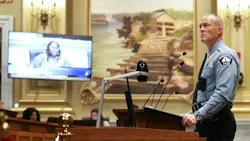
The Minneapolis City Council rejected Bill Peterson’s bid to become the next police chief Thursday, following a grueling hearing in which the 31-year department veteran’s work history and plans for the future were scrutinized.
For more than three hours, Peterson fielded a barrage of questions from elected officials, many of whom remain skeptical of any internal candidate’s ability to reform the institution from within.
Several council members appeared deeply unsatisfied by Peterson’s responses to inquiries about whether he’s observed discriminatory language used by officers during his tenure within the department. His initial inability to identify specific examples led Council Member Robin Wonsley to question if he’s unable to recognize that culture or simply acknowledge it.
“Neither of those inspires my confidence in your ability to lead MPD in this moment, where it does require that deep transformation,” she said ahead of the 8-5 vote denying his appointment.
In addition to Wonsley, council members Elliott Payne, LaTrisha Vetaw, Pearll Warren, Soren Stevenson, Jason Chavez, Aisha Chughtai and Aurin Chowdhury voted to oppose Peterson, dealing a serious blow to Mayor Jacob Frey’s administration. It marks the second major rejection of a public safety leader put forth by the mayor in recent months.
Those voting in Peterson’s favor were: Michael Rainville, Jamal Osman, Linea Palmisano, Elizabeth Shaffer and Jamison Whiting.
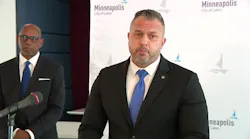
Afterward, Frey held a news conference expressing his disappointment and frustration with the Council’s decision.
“The underlying question was: ‘Was Billy Peterson qualified to do the job?’” Frey said. “The answer is an obvious and a resounding ‘yes.’”
He lamented that Minneapolis has lost out on other qualified potential candidates – both within MPD and other city departments – due to concerns about navigating Council politics.
“They don’t want to apply because they don’t want to experience the toxicity on the City Council,” Frey said, and “this made it all the worse.”
The mayor added that Peterson met with all 13 council members prior to the vote and likely received more extensive questioning by elected officials than any prior police chief candidate in the city’s history — standing for approximately five hours between two hearings.
Frey tapped Peterson to lead MPD on an interim basis following the abrupt exit of Chief Brian O’Hara, who resigned in May amid findings that he interfered in a sexual misconduct investigation.
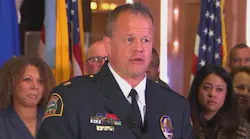
Peterson, 52, has spent his entire law enforcement career with the Minneapolis Police Department. He joined the agency in 1995 at age 21, during the city’s “Murderapolis” era when homicides hit their peak, and he steadily climbed the ranks.
He served stints in the special operations division and on SWAT, before being named the First Precinct Inspector, where he led policing downtown and within bordering neighborhoods since 2019.
Peterson raised his family in Minneapolis’ Bryn Mawr neighborhood, where he lived for 25 years before moving to the suburbs. That proximity, he said, allowed him to build strong relationships with community members, business leaders and law enforcement partners.
Known as “Billy Jack” by friends and colleagues, he has long maintained respect from residents and the Downtown Council for overseeing patrols of the city’s entertainment district.
Dozens of community members testified in favor of him earning the permanent chief role during a public hearing last week, effusive in their praise of his deep experience and integrity.
Elected officials also pointed to the fact that Peterson has two open complaints against him, which were not resolved before his nomination as the city’s top cop.
Although Peterson is largely unaware of the nature of these complaints, he said he remains confident that neither of them would contain anything disqualifying for the position.
At least eight misconduct complaints were lodged against him between 1999 and 2021, according to city records, and all of them were closed without discipline being imposed.
His personnel record also reflects numerous commendations, including a Medal of Valor for his response to the mass shooting at Accent Signage in 2012, which killed four people.
In one contentious exchange from the dais, Wonsley interrogated Peterson about whether he’s ever heard officers mock or disparage minority groups, gay and trans people, the Black Lives Matter movement, the disabled or the city’s homeless populations.
In each case, he said he could not recall any such instances with specificity.
“I am not saying that it has not occurred within the Minneapolis Police Department,” Peterson emphasized. “But if it had in front of me, it would not be tolerated.”
Peterson later acknowledged hearing some sexist and demeaning language toward women, which resulted in a “significant” disciplinary decision from his office. He also recalled an incident involving a racist comment while he was assigned to special operations several years ago and said he “dealt with that immediately,” sending the information to Internal Affairs and human resources.
Vetaw said she was disappointed that Frey hadn’t instead nominated Deputy Chief of Investigations Charlie Adams, who she considered the “more qualified candidate.”
Adams, a 41-year department veteran who maintains steadfast support on the city’s Northside, and was among four finalists for the chief job. He is a Minneapolis native and has, for years, served as an assistant football coach for North High School, his alma mater.
In her remarks, Vetaw lauded Adams’ decades-long commitment to fostering relationships, his outsized role in achieving a historic reduction in violent crime within the city’s Fourth Precinct and push to improve domestic violence response.
“He is someone our community sees ourselves in,” she said.
Just before the vote, Frey made one final appeal for Peterson, asking several council members to reconsider their positions.
“It troubles me that Interim Chief Peterson seems to be presently being held accountable for mistakes that he didn’t make, for experiences that he didn’t have, and for dark marks on his record that quite simply aren’t there,” he said.
After the clerk called the roll, denying Peterson the job, members of his leadership team converged behind him at the podium. They quickly exited the council chambers as a group. He did not speak to the media.
Peterson needed at least seven of the 13 council members to vote for him. Now, Frey could veto the council’s decision, putting it in a sort of legal limbo, or put forth another candidate. He has yet to decide which route he will take.
In an interview earlier this week, Peterson emphasized that he intends to finish his career with the Minneapolis Police Department, regardless of whether he obtains the permanent chief role.
“I’m not going anywhere,” he told the Minnesota Star Tribune two days before the vote. “I’m not looking for a chief’s job elsewhere or another position. I’m going to be here and continue to do the absolute best job that I can.”
____________
©2026 The Minnesota Star Tribune.
Visit startribune.com.
Distributed by Tribune Content Agency, LLC