Getting Inside the OODA Loop Means Challenging Officers' Expectations
What to Know
- Many firearms and scenario-based training programs teach officers to disrupt an adversary's decision-making while rarely forcing students to adapt when their own assumptions prove wrong.
- Predictable scenarios can reward anticipation of an instructor's script rather than developing perception, judgment, adaptability and sound decision-making under changing conditions.
- Training that requires officers to recognize new information, reassess evolving threats and adjust their response is more likely to build durable skills that transfer to real-world encounters.
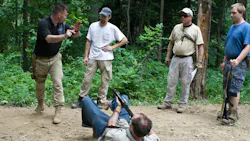
The officer enters a simulated school hallway wearing protective equipment and carrying a firearm modified for force-on-force training. Somewhere inside the building, an aggressor is reportedly shooting people, and the officer's assignment is to respond to the developing threat. As the exercise begins, simulated gunfire erupts from a nearby room. Moments later, an armed role-player appears in a doorway, presenting what the student recognizes as an immediate threat. The officer responds with simulated force, the role-player goes down, and the instructor announces that the scenario has ended. During the subsequent critique, the student is praised for recognizing the threat, acting decisively, and disrupting the attacker's OODA Loop. From almost every conventional measure, the exercise appears successful. The officer identified the threat, selected an appropriate response, executed the necessary physical skills, and completed the scenario without hesitation.
There is, however, an uncomfortable detail that deserves closer examination. The officer knew before entering the building that the exercise involved an active shooter. Previous students encountered essentially the same situation, the simulated gunfire originated from the same general location, and the armed role-player appeared at approximately the same point in the exercise. Most importantly, the student had every reason to expect that the encounter would conclude with a shooting because that was how similar scenarios had unfolded throughout the training program. Although the officer may have performed exceptionally well, the exercise required relatively little interpretation of unfamiliar circumstances. The critical decision had effectively been made before the student entered the hallway. While the officer was supposedly learning to disrupt an adversary's expectations, the officer's own expectations were never meaningfully challenged.
Now consider a variation of that same exercise. The officer enters under similar circumstances, but the person emerging from the room is an unarmed civilian attempting to escape. Moments later, an armed role-player appears, creating a credible threat requiring immediate assessment. Before the officer acts, however, the individual unexpectedly drops the simulated weapon and begins complying with commands. The situation has changed, and the response that appeared appropriate an instant earlier may no longer be justified. Suddenly, the exercise is no longer simply an evaluation of whether the officer can recognize a predetermined shooting opportunity and execute a familiar motor response. It requires the student to distinguish relevant information from assumptions, recognize changing circumstances, and continually reassess what those circumstances demand. The officer must remain capable of influencing the encounter without becoming a prisoner of the original expectation that the scenario will inevitably end in gunfire.
Both exercises could have legitimate instructional value, provided the conditions are properly controlled and the objectives are clearly established. The first may be useful for developing and assessing particular physical skills or responses to an unmistakable threat. The second introduces an additional demand by requiring the student to interpret information and adapt when circumstances differ from the anticipated pattern. The distinction is not that one exercise is inherently good and the other inherently bad. It is that they develop and assess different capabilities, and instructors must stop treating successful performance in one as proof of competence in the other. That distinction becomes especially consequential when we claim our training prepares officers to seize the tactical initiative, disrupt an adversary's decision-making, and function effectively when an encounter refuses to follow a familiar script.
What It Really Means to Get Inside an Adversary's OODA Loop
Anyone familiar with contemporary active shooter response, immediate action, or rapid deployment training has probably encountered the concept of getting inside an adversary's OODA Loop. Developed by U.S. Air Force Col. John Boyd, the framework describes four interconnected functions: Observe, Orient, Decide, and Act. Within a tactical encounter, the objective is not simply to complete those functions faster than an opponent, but to influence the conditions under which the opponent must operate. An unexpected development may invalidate the adversary's existing expectations, requiring a reassessment of the situation while the responding officer or team attempts to retain the initiative. The familiar expression that whoever controls the OODA Loop controls the encounter captures an important tactical principle, although it should not be interpreted as an absolute guarantee of success. No officer can literally control another person's cognitive processes, and unexpected behavior does not automatically produce confusion, hesitation, or surrender.
Boyd's work was considerably more sophisticated than the familiar four-stage diagram suggests. His detailed model described a continuous process involving feedback, previous experience, implicit guidance, and adaptation to changing conditions, with orientation occupying a particularly influential position because it shapes how information is interpreted and which actions appear appropriate (Boyd, 2018). The Advanced Law Enforcement Rapid Response Training Center's 2025 Level 1 student guide reflects the tactical application of this concept, describing the OODA Loop as a time-competitive decision cycle in which responders may gain an advantage by improving their own decision-making tempo or slowing an opponent's ability to respond (Advanced Law Enforcement Rapid Response Training Center, 2025). Military analyses have similarly emphasized that successful disruption involves timing, initiative, and the ability to challenge an opponent's expectations rather than simply acting more quickly (Kerg, 2020; Luft, 2023).
The distinction is particularly important in active shooter response because the attacker initially possesses a substantial advantage in initiative. The attacker has chosen to initiate violence, while responding officers enter a developing event with incomplete information about the location of the threat, the number of people involved, and the circumstances confronting innocent victims. Effective intervention seeks to interrupt the continuing attack and influence the direction of events rather than allowing the attacker to proceed according to the original intentions. Yet gaining that advantage requires more than physical speed or aggressive action. The responding officers must continue interpreting new information, evaluating changing circumstances, and recognizing when their own expectations are no longer accurate. An officer who attempts to seize the initiative through an inappropriate or poorly understood action has not demonstrated superior tactical decision-making simply because the action was unexpected.
The Training Contradiction Few Instructors Address
This brings us to a problem I believe deserves considerably more attention in firearms and scenario-based instruction. We routinely teach officers to disrupt an adversary's expectations, but how often do we deliberately develop the perceptual and cognitive capabilities necessary to function when their own expectations are disrupted? How frequently do our exercises require students to recognize meaningful changes, reconsider an initial interpretation, or select a response that differs from the one they anticipated before training began? The irony is difficult to ignore because the very predictability that makes training administratively convenient can undermine the adaptability we claim to be developing. We teach students that an effective adversary may gain an advantage by introducing unexpected circumstances, yet frequently construct training environments in which the student knows what will happen, when it will happen, and what response the instructor expects.
The problem begins with observation, which is far more complicated than simply looking at something. Officers encounter visual information, sounds, speech, body language, movement, environmental conditions, and behavioral changes that may be relevant to their immediate circumstances. Yet human beings do not perceive their surroundings as objective recording devices. Attention is selective, previous experiences influence which details appear significant, and the information an individual notices may differ substantially from what another person recognizes in the same environment. The officer is not merely receiving sensory information but interpreting that information through a framework constructed from previous experiences, expectations, assumptions, and learned associations.
Consider an officer responding to a disturbance involving several individuals. One person is shouting, another appears frightened, and a third repeatedly reaches toward a jacket pocket. The behavior is observable, but its significance remains uncertain. The individual reaching into the pocket might be retrieving a weapon, a cellphone, identification, or an entirely unrelated object. The movement may reasonably justify increased attention or precautionary measures, but the observation alone does not establish the person's intent. If the officer automatically interprets every movement toward a pocket as an imminent threat, the resulting response may be inappropriate. Conversely, an officer who disregards meaningful threat indicators because they do not resemble a familiar pattern may fail to recognize a developing danger. Both outcomes can occur despite excellent physical skills because the underlying deficiency involves how information is perceived and interpreted.
Research provides compelling reasons to take this relationship seriously. Nieuwenhuys, Savelsbergh, and Oudejans (2012) examined shooting decisions among 36 police officers under differing anxiety conditions. When anxiety increased, participants demonstrated a greater tendency toward shooting responses, including erroneous shots at individuals who surrendered. The researchers found that anxiety appeared to increase reliance on threat-related expectations and interpretations rather than objective visual information relevant to the decision. The findings do not establish that anxiety invariably produces inappropriate shooting decisions, but they illustrate how an individual's expectations can influence behavior when circumstances become demanding. If an officer is already expecting a particular threat, incoming information may be interpreted in ways that reinforce that expectation, making the quality of previous training experiences particularly significant.
Why Perception and Interpretation Matter More Than We Think
This is where orientation becomes especially consequential. I consider it the most underappreciated function within the OODA Loop because orientation provides the interpretive framework through which observations acquire meaning. Gary Klein's research into naturalistic decision-making offers an important explanation for how that framework develops. His Recognition-Primed Decision model describes how experienced individuals use familiar patterns to identify plausible courses of action without necessarily comparing numerous alternatives through deliberate analysis. Skilled decision-makers recognize meaningful relationships among environmental cues, expected developments, and workable responses because previous experiences have established useful associations (Klein, 1993). An experienced officer may recognize a significant detail that a novice overlooks or anticipate a likely development without extensive conscious deliberation, producing an apparent speed advantage rooted in the quality of prior learning.
However, experience is not automatically expertise, and repetition does not guarantee that the patterns being reinforced are useful or accurate. An individual can accumulate years of experience while repeatedly confirming inappropriate assumptions, just as a student can complete hundreds of training exercises without developing the ability to distinguish meaningful differences between situations. The value of pattern recognition depends upon the quality, relevance, and variability of the experiences from which those patterns were developed. If every scenario follows the same progression, students may become exceptionally efficient at anticipating the instructor's script while remaining poorly prepared for circumstances that depart from it.
That possibility deserves particular scrutiny in scenario-based training because these exercises can appear highly realistic while requiring relatively little meaningful interpretation. A role-player may be convincing, the environment may contain sophisticated simulation equipment, and the student may experience substantial physiological arousal. Yet if the exercise invariably progresses from verbal confrontation to physical resistance and ultimately to a shooting, the student can learn that violence is inevitable regardless of the circumstances or the choices made during the encounter. After sufficient exposure, the student may begin concentrating on when the anticipated confrontation will occur rather than whether the information actually supports the expectation.
A scoping review by Scott, Blake, and Suss (2025) identified a disproportionate emphasis on shooting scenarios compared with nonshooting scenarios in research involving interactive video-based law enforcement simulators. The researchers raised concerns that such an imbalance could unintentionally establish unrealistic expectations about the likelihood of deadly force. Their findings describe the scenarios represented in the research literature rather than proving that every police academy has the same imbalance, but the instructional implications deserve careful consideration. When training repeatedly associates particular circumstances with a predetermined force response, students may develop expectations that are narrower than the range of circumstances they will encounter operationally.
The Danger of Rehearsing Only One Outcome
This should not be taken as, nor is it intended to be, an argument against preparing officers for violent confrontations. Officers must be capable of responding decisively when circumstances require force, and training environments must provide opportunities to develop those capabilities. The concern is whether our programs accurately represent the range of decisions officers may be required to make, including circumstances in which restraint, communication, containment, or another response is more appropriate. An effective training program should develop the ability to distinguish among those situations rather than repeatedly rewarding the same response regardless of the information presented.
In Unlocking the Brain Code, I addressed the instructional consequences of emphasizing easily measured outcomes, writing, "Over time, what can be measured becomes what is valued, and what is valued becomes what is pursued" (Hanson, 2026, p. 27). That observation applies directly to firearms and scenario-based training because measurable performance frequently dominates instructional priorities. Shooting scores, elapsed times, technical compliance, and successful scenario completion provide convenient evidence that a student performed as expected. They do not necessarily establish that the student correctly interpreted unfamiliar circumstances, selected the appropriate response, or retained the ability to adapt when events developed differently from the instructor's plan.
Consider two officers participating in a firearms exercise. The first demonstrates exceptional shooting speed and accuracy but begins responding before fully processing relevant information. The second performs slightly more slowly but consistently recognizes changes that require a different response, including circumstances in which shooting is inappropriate. A scoring system emphasizing only accuracy and elapsed time may favor the first officer even though the second may be demonstrating more sophisticated decision-making capabilities. That does not mean slower responses are inherently superior, but it does demonstrate why instructors must distinguish technical performance from the perceptual and cognitive processes that determine whether a particular action is appropriate.
Tactical decision-making is frequently reduced to response speed, and instructors sometimes invoke Hick's law to argue that eliminating available options necessarily improves performance. The Hick-Hyman relationship describes how choice reaction time can vary with the number of stimulus-response alternatives and the information associated with them. However, applying those findings directly to complex police encounters requires considerable caution because the relationship is influenced by practice, stimulus-response compatibility, and task structure (Proctor & Schneider, 2018). Operational decisions are not simply selections from a fixed menu of equally probable alternatives, and experienced officers may identify workable responses through recognition rather than consciously comparing every conceivable option.
The objective should therefore be developing officers capable of making timely and appropriate decisions rather than simply reducing the time between a stimulus and a predetermined action. Sometimes circumstances demand immediate intervention because delaying an appropriate response would expose people to unacceptable danger. In other situations, additional observation, communication, or reconsideration may be necessary because the information does not justify an irreversible action. The important capability is recognizing which circumstances require which response, and that cannot be adequately developed through exercises that consistently eliminate meaningful alternatives before the student begins.
Speed Is Not the Same as Sound Decision-Making
This distinction also changes how we should think about tactical initiative. Getting inside an adversary's OODA Loop is not synonymous with applying force as quickly as possible, nor does the concept establish that the most aggressive person necessarily controls the encounter. Initiative involves influencing the circumstances under which another person must make decisions while retaining sufficient awareness to recognize the consequences of those actions. An intervention may alter an attacker's expectations, interrupt the preferred course of action, or create a new problem requiring immediate reassessment, but the resulting behavior cannot be assumed in advance. The attacker may react in several different ways, and the responding officer must remain capable of interpreting those developments rather than becoming committed to a particular anticipated outcome.
This is where the action component becomes more complex than the physical execution of a technique. A traditional shooting exercise may end when the prescribed number of rounds has been fired, but an operational encounter does not necessarily conclude when a weapon is discharged. The officer must remain capable of recognizing whether the threat continues, whether circumstances have changed, and whether further action remains appropriate. A training program that evaluates only the speed and accuracy of the initial response may provide valuable evidence of firearm proficiency, but it does not necessarily establish competence in managing the changing conditions produced by that response.
The same principle applies beyond firearms. A role-player may begin complying after initially resisting, an apparently threatening individual may turn out to be an uninvolved bystander, or additional information may require the officer to abandon the original assessment. The student must recognize when previously reasonable decisions no longer fit the circumstances, even when modifying the response means departing from a familiar technique or anticipated outcome. I would argue that the ability to recognize when an action should cease deserves the same deliberate instructional attention as the ability to recognize when that action should begin.
Scenario-based training provides an opportunity to develop these capabilities because instructors can create environments in which student decisions produce meaningful consequences. A well-designed exercise should allow appropriate communication, observation, and intervention to influence how the encounter develops, while role-players respond credibly within parameters established by the instructional objectives. The exercise need not guarantee that reasonable decisions produce favorable outcomes, because human behavior is inherently variable. However, the student's decisions should have a plausible relationship to subsequent events rather than being rendered irrelevant by a script that requires confrontation regardless of the circumstances.
Unfortunately, some scenario programs accomplish precisely the opposite. The instructor decides in advance that the role-player must become violent, and the exercise continues toward that outcome even when the student makes decisions that would reasonably influence the encounter. Appropriate communication is ignored, changing circumstances produce no meaningful effect, and alternative responses are treated as failures because they interfere with the instructor's predetermined conclusion. The resulting lesson may be entirely different from what was intended. Rather than learning that appropriate decisions can influence the direction of an encounter, the student may conclude that confrontation is inevitable and that communication or restraint merely delays the expected violence.
That creates an extraordinary contradiction for programs that claim to teach officers how to gain tactical initiative. We explain that effective decision-making can influence an adversary's expectations and behavior, then construct exercises in which student decisions cannot meaningfully influence the outcome. The student may complete the scenario successfully, but the experience offers little evidence of an ability to recognize opportunities, adapt to changing conditions, or influence an encounter through sound judgment.
This is why realism must be distinguished from instructional validity. A scenario can contain convincing role-players, realistic equipment, loud noises, environmental distractions, and apparent danger while remaining instructionally deficient because it requires little meaningful observation or interpretation. Conversely, a relatively simple exercise may provide substantial developmental value when the student must recognize relevant information, evaluate changing circumstances, and select an appropriate response without knowing the correct answer in advance. The sophistication of the exercise should be judged by the capabilities it develops rather than the spectacle it creates.
Where NeuralTac Fits Into Modern Instructor Development
It was precisely this disconnect between conventional instruction and the science of human learning that led me to develop NeuralTac™. Throughout my career as a firearms and tactical instructor, instructor developer, and expert witness examining training deficiencies and liability exposures, I have repeatedly encountered programs that are exceptionally thorough in prescribing what instructors must teach, yet provide comparatively little understanding of how the human brain actually acquires, retains, retrieves, and applies those skills under operational conditions. NeuralTac was developed to help bridge that gap. It is not another firearms or tactics instructor certification program, nor is it intended to replace established curricula, regulatory requirements, or recognized instructor credentials. Rather, it serves as an educational bridge between traditional instructional methodologies and the scientific disciplines and conceptual frameworks necessary to understand, evaluate, and improve how high-liability skills are actually learned. By integrating cognitive psychology, educational neuroscience, motor learning, ecological dynamics, and human performance research, NeuralTac gives instructors a deeper understanding of not merely what they are teaching, but why particular instructional methods work, why others fail, and how training can be structured to produce durable, adaptable capabilities that transfer beyond the controlled training environment.
That distinction becomes especially important when we examine tactical decision-making through the OODA Loop. Within the NeuralTac framework, I encourage instructors to look beyond the physical actions performed during an exercise and examine the underlying relationships among the learner, the task, and the environment. Rather than simply asking whether a student executed the expected response, we examine whether the exercise developed the perceptual discrimination, cognitive flexibility, decision-making, and motor capabilities necessary to respond appropriately when circumstances change. If the objective is recognizing significant developments during an encounter, the training must require meaningful observation and interpretation. If the objective is developing tactical initiative, students must encounter circumstances in which their decisions can influence the direction of events. And if the objective is adaptability, the training must occasionally invalidate the student's initial expectations and require a different, contextually appropriate response. The purpose is not to replace proven techniques with academic theory, but to apply established scientific principles to the instructional methods we already use, improving their effectiveness while addressing the limitations that traditional instructor development programs frequently leave unexplored.
These principles are consistent with the broader scientific understanding of complex motor learning in policing. Di Nota and Huhta (2019) emphasized the relationship among motor skill acquisition, situational awareness, decision-making, and the environmental demands under which those capabilities are performed. Their review reinforces that physical execution cannot be considered independently of the perceptual and cognitive processes that guide it. Although officers require reliable foundational motor skills, they must also develop the ability to recognize when and how those skills should be employed.
For a beginning firearms student, relatively predictable exercises provide opportunities to establish safe and consistent mechanical performance. Repetition helps refine movement patterns, identify errors, and reduce the conscious effort required to execute essential physical skills. As competence develops, the instructor can introduce more variable conditions requiring recognition and adaptation rather than reliance upon a fixed sequence of commands. More advanced exercises can incorporate unfamiliar information, changing circumstances, and different response requirements, with the progression structured around the student's actual capabilities rather than an arbitrary demand for greater difficulty.
Scenario-based instruction can follow a similar progression. Early exercises may involve relatively simple interactions requiring students to identify meaningful cues and select reasonable responses. More demanding exercises can introduce uncertainty, competing demands, and changing behavioral conditions that require the student to reassess an initial interpretation. The objective is not to overwhelm students with complexity but to develop the capacity to identify relevant information and respond appropriately when familiar patterns are disrupted.
This also requires distinguishing useful variability from randomness for its own sake. An exercise does not become instructionally valuable merely because the instructor introduces unexpected developments. If those changes have no meaningful relationship to the learning objective, they may increase confusion without improving the capabilities the exercise is intended to develop. The student should encounter plausible variations that require recognition of relevant information, while the resulting outcomes remain reasonably connected to the decisions and circumstances involved. Unpredictability has instructional value when it requires useful adaptation, not simply because the student could not anticipate what the instructor would do next.
What Stress Really Does to Tactical Performance
Stress introduces another dimension because it can influence the very perceptual, cognitive, and physical processes upon which tactical decision-making depends. Acute stress can affect attention, perception, communication, memory, and motor performance, but those effects are not uniform across individuals or tasks. Arble, Daugherty, and Arnetz (2019) examined 17 Swedish police cadets participating in a simulated critical incident and found that elevated heart rate alone did not predict differences in overall performance. Their findings suggested that physiological responses could influence communication and tactical performance differently, reinforcing the limitations of reducing stress-related performance to a single physiological measurement.
Similarly, Anderson and colleagues (2019) reviewed the influence of acute stress physiology on skilled motor performance in policing, emphasizing the complex relationship among physiological responses, task demands, and neuromuscular performance. The research supports concern about performance degradation during highly stressful encounters, but it does not justify assuming that every officer experiences identical limitations at predetermined physiological thresholds. The practical implication is that instructors should examine the demands imposed by a training exercise rather than relying upon generalized claims about what a particular heart rate will supposedly do to an officer's performance.
This is particularly relevant to the practice of requiring students to sprint, perform calisthenics, or complete physically exhausting tasks immediately before shooting, then describing the exercise as preparation for a life-threatening confrontation. As I discussed extensively in last week's article, "A Sprint Isn't a Gunfight," physical exertion can be useful for evaluating shooting performance under conditions of exertion or fatigue, but it does not, by itself, reproduce the perceptual, cognitive, and emotional demands associated with confronting a person believed to pose an imminent threat of serious injury or death. The distinction is not whether these exercises have instructional value, but whether instructors accurately understand what they measure and, perhaps more importantly, what they do not. Baldwin and colleagues (2019) examined physiological responses among 64 police officers during actual calls for service, using operational records and movement data to distinguish cardiovascular changes associated with physical activity from those associated with operational circumstances. Their findings revealed that cardiovascular responses varied with the phase of an encounter and specific incident characteristics, including call urgency, the presence of weapons, and the use of force, even after accounting for physical movement. Although the study did not directly compare physical exertion drills with life-threatening confrontations, it reinforces the broader conclusion that elevated heart rate alone is an inadequate measure of the complex physiological and psychological responses associated with perceived threats.
The instructional objective should determine the stressor rather than allowing the stressor to become the objective. If the purpose is developing tactical decision-making under uncertainty, the exercise must require meaningful decisions under uncertain conditions. If the objective is developing adaptability, circumstances must change in ways that require reassessment. If the goal is maintaining the initiative during a developing encounter, students must have opportunities to recognize how their actions influence subsequent events. Increased intensity without a clear relationship to these objectives may produce impressive performances or memorable experiences without necessarily improving the capabilities the training is supposed to develop.
Evaluating those capabilities also requires more than determining whether the student completed the exercise successfully. An instructor who measures only shooting accuracy, elapsed time, or technical compliance may overlook substantial differences in the quality of the decision process. A student who acts rapidly for the wrong reason may produce a superficially successful outcome, while another who recognizes changing circumstances and appropriately modifies a response may demonstrate a more adaptable capability. The evaluation should therefore examine what information was reasonably available, how the student interpreted that information, and whether the selected response remained appropriate as the situation developed.
A thoughtful debrief can provide useful insight into those processes, although instructors should be cautious about demanding elaborate explanations for responses that may have involved rapid, largely implicit recognition. Experienced performers cannot always reconstruct the precise cognitive operations underlying their actions, and retrospective explanations can be influenced by hindsight. The instructor should combine observable performance evidence, the information available during the exercise, and appropriately framed student reflection to identify whether the underlying deficiency involved perception, interpretation, decision-making, physical execution, or some combination of those functions.
There is also a significant danger in evaluating scenarios through the instructor's privileged knowledge. The person designing an exercise knows the role-player's intentions, the planned developments, and the anticipated outcome. The student must operate with whatever information was reasonably available during the encounter. If the instructor evaluates the student's performance against information that could not reasonably have been known, the exercise may become an assessment of whether the student guessed the instructor's expectations rather than whether the student made an appropriate decision under the circumstances. This is particularly damaging in high-liability training because students can begin searching for the instructor's preferred answer instead of concentrating on the information actually presented.
The distinction between immediate performance and lasting learning introduces another important consideration. Schmidt and Bjork (1992) demonstrated that practice conditions producing rapid short-term improvements are not necessarily those producing the strongest retention and transfer. Soderstrom and Bjork (2015) further emphasized that observable performance during instruction can provide misleading evidence of durable learning. Those findings have direct implications for firearms and scenario-based training because students frequently demonstrate their strongest performance when the exercise has become highly familiar.
A qualification completed after extensive rehearsal may produce excellent scores, but those scores do not necessarily establish that the underlying capabilities will remain accessible after time has passed or transfer effectively to different circumstances. Similarly, a student who repeatedly encounters the same role-player, familiar environment, and predictable sequence may eventually demonstrate an exceptional response without having developed the broader ability to interpret unfamiliar situations. The apparent tactical proficiency may be partly attributable to information provided by the training structure rather than capabilities that would remain available when the student encounters an unscripted problem.
In Unlocking the Brain Code, I emphasized that "The objective is resilient capability under unpredictable, high-stress conditions" (Hanson, 2026, p. 16). That principle is central to NeuralTac because training should ultimately be judged according to the capabilities it develops beyond the immediate instructional environment. A program cannot reasonably claim to develop adaptability simply because students successfully complete predictable exercises, nor can it claim to develop tactical initiative when student decisions have little influence on how an encounter unfolds. Durable competence requires deliberate practice, relevant variability, feedback, and opportunities to demonstrate performance after time has passed and under conditions that differ from those used during initial learning.
Instructors Bring Their Own Biases Into Training
Perhaps the most uncomfortable implication of this discussion is that instructors themselves are influenced by the same cognitive processes they are attempting to develop in their students. We form expectations through experience, become comfortable with familiar methods, and may interpret student performance according to longstanding beliefs about effective instruction. An instructor who strongly values speed may unintentionally reward premature action, while another who favors a particular technique may construct scenarios that consistently reward that technique even when alternative responses would be reasonable.
The instructor's orientation can therefore shape the student's orientation through the design of the training environment. If exercises repeatedly reward the same responses, students learn to anticipate those responses. If scenarios consistently end in violence, students may develop expectations that are narrower than the operational environment requires. If instructors reward initiative without evaluating whether the action used to gain it was appropriate, they risk confusing tactical decisiveness with indiscriminate aggression. The instructional system may become highly efficient at producing the behavior it rewards without adequately examining whether that behavior is appropriate outside the training environment.
This is why I believe instructor development must extend beyond certification in particular techniques and methods of presentation. Professional instructors need to understand how expectations influence perception, how repetition shapes learning, how stress can affect decision-making, and why impressive performance under familiar conditions may not translate into competent behavior when circumstances change. Those deficiencies are not corrected merely by adding more drills, raising passing scores, or expanding the number of instructor credentials. They require a deeper understanding of the scientific principles that explain how learning occurs, what conditions support its retention, and how skills can be adapted to demands that differ from those encountered during practice. This is the educational foundation I sought to provide through NeuralTac, not as a substitute for conventional instruction, but as a way to make that instruction more effective, defensible, and relevant to the demands of high-liability performance.
In active shooter response and immediate action disciplines, the ability to gain the initiative has particular urgency because innocent lives may depend upon interrupting an ongoing attack. Yet the same underlying principles apply to other rapidly developing police encounters in which accurate perception, sound judgment, and the ability to influence changing circumstances can determine whether a situation escalates or resolves safely. The ultimate instructional challenge is developing officers who can recognize appropriate opportunities without becoming cognitively committed to a single expected outcome. They must be capable of acting decisively when the circumstances require it while remaining equally capable of recognizing when their initial interpretation was incorrect or when subsequent developments require a different response.
We must also recognize that controlling an encounter, in the tactical sense, does not mean controlling every variable or guaranteeing a particular outcome. It means influencing the circumstances sufficiently to gain or preserve an advantage while remaining responsive to information that may require reconsideration. That advantage can disappear quickly when assumptions become rigid, feedback is ignored, or the individual becomes committed to an expectation that no longer fits the situation. An officer who cannot adapt to an unexpected development may lose the initiative even while performing technically excellent physical skills.
For too long, portions of the law enforcement training community have concentrated heavily on the final physical action while assuming that the preceding perceptual and cognitive capabilities will develop automatically through experience. Scenario-based training offers an opportunity to address that deficiency, but only when exercises require meaningful decisions and allow student actions to influence subsequent developments. When scenarios merely reproduce predetermined scripts, they risk reinforcing the same narrow patterns that limit transfer from conventional firearms drills. The challenge is not choosing between firearms training and scenario-based instruction, because both are necessary. It is integrating their strengths into a system that develops officers who can interpret unfamiliar circumstances, make appropriate decisions, execute necessary actions, and remain adaptable as conditions change.
Ultimately, the most important lesson Boyd offers the law enforcement training community is not that victory belongs to whoever acts first. It is that effective performance during a confrontation depends upon understanding a changing environment while influencing the conditions under which an adversary must operate. If we want officers who can genuinely get inside an adversary's OODA Loop, we must do more than teach them to execute predetermined responses quickly. We must develop their ability to recognize meaningful information, distinguish observations from assumptions, anticipate plausible developments without becoming trapped by those expectations, and respond appropriately when an encounter unfolds differently than anticipated.
Outside the training environment, nobody announces the learning objective, identifies the correct response in advance, or guarantees that another person's behavior will follow a familiar script. An adversary may introduce unexpected circumstances, environmental conditions may change, and information initially believed to be reliable may prove inaccurate. The officer must interpret those developments while continuing to exercise sound judgment, and the value of previous training will be revealed by the ability to adapt rather than the ability to reproduce a familiar routine.
Our objective should therefore extend beyond producing officers who can complete the OODA Loop faster than someone else. We must develop professionals capable of recognizing when they possess the initiative, understanding when that advantage is slipping away, and responding appropriately as circumstances evolve. If our training programs are genuinely intended to prepare officers for that responsibility, then we should stop asking only whether students can perform the required action under pressure and begin examining whether they can understand, influence, and adapt to the circumstances that determine which action is appropriate.
After all, getting inside the adversary's OODA Loop provides little advantage if our own training has left us incapable of recognizing when the situation has changed.
References
Advanced Law Enforcement Rapid Response Training Center. (2025). Active shooter response: Level 1 course (Version 8.0, student guide). Texas State University. https://alerrt.org/r/81
Anderson, G. S., Di Nota, P. M., Metz, G. A. S., & Andersen, J. P. (2019). The impact of acute stress physiology on skilled motor performance: Implications for policing. Frontiers in Psychology, 10, Article 2501. https://doi.org/10.3389/fpsyg.2019.02501
Arble, E., Daugherty, A. M., & Arnetz, B. (2019). Differential effects of physiological arousal following acute stress on police officer performance in a simulated critical incident. Frontiers in Psychology, 10, Article 759. https://doi.org/10.3389/fpsyg.2019.00759
Baldwin, S., Bennell, C., Andersen, J. P., Semple, T., & Jenkins, B. (2019). Stress-activity mapping: Physiological responses during general duty police encounters. Frontiers in Psychology, 10, Article 2216. https://doi.org/10.3389/fpsyg.2019.02216
Boyd, J. R. (2018). A discourse on winning and losing (G. T. Hammond, Ed. & Comp.). Air University Press. https://www.airuniversity.af.edu/Portals/10/AUPress/Books/B_0151_Boyd_Discourse_Winning_Losing.pdf
Di Nota, P. M., & Huhta, J.-M. (2019). Complex motor learning and police training: Applied, cognitive, and clinical perspectives. Frontiers in Psychology, 10, Article 1797. https://doi.org/10.3389/fpsyg.2019.01797
Hanson, K. A. (2026). Unlocking the brain code: Exposing the limits of traditional firearms instruction and high-liability training through neuroscience, psychology, and human performance research. Applied Threat Science Publications.
Kerg, B. (2020, November 1). Let Boyd speak! Marine Corps Gazette. https://www.mca-marines.org/gazette/let-boyd-speak/
Klein, G. A. (1993). A recognition-primed decision (RPD) model of rapid decision making. In G. A. Klein, J. Orasanu, R. Calderwood, & C. E. Zsambok (Eds.), Decision making in action: Models and methods (pp. 138-147). Ablex Publishing Corporation.
Luft, A. (2023, November 16). The OODA loop and the half-beat. Department of National Defence, Government of Canada. https://www.canada.ca/en/department-national-defence/maple-leaf/defence/2023/11/ooda-loop-halfbeat.html
Nieuwenhuys, A., Savelsbergh, G. J. P., & Oudejans, R. R. D. (2012). Shoot or don't shoot? Why police officers are more inclined to shoot when they are anxious. Emotion, 12(4), 827-833. https://doi.org/10.1037/a0025699
Proctor, R. W., & Schneider, D. W. (2018). Hick's law for choice reaction time: A review. Quarterly Journal of Experimental Psychology, 71(6), 1281-1299. https://doi.org/10.1080/17470218.2017.1322622
Schmidt, R. A., & Bjork, R. A. (1992). New conceptualizations of practice: Common principles in three paradigms suggest new concepts for training. Psychological Science, 3(4), 207-218. https://doi.org/10.1111/j.1467-9280.1992.tb00029.x
Scott, D., Blake, D., & Suss, J. (2025). Examining the use of interactive video-based simulators in law enforcement human performance research: A scoping review. Journal of Experimental Criminology, 21, 649-688. https://doi.org/10.1007/s11292-023-09606-5
Soderstrom, N. C., & Bjork, R. A. (2015). Learning versus performance: An integrative review. Perspectives on Psychological Science, 10(2), 176-199. https://doi.org/10.1177/1745691615569000
About the Author
 Keith Hanson
Contributing Editor Keith Hanson is a career law enforcement professional with extensive experience across operational and instructional domains, specializing in firearms instruction, tactical operations training, and counterterrorism tactics. With a strong background in neuroscience and psychology, Keith is a co-creator and senior program architect of NeuralTac™, which combines neuroscience, combat psychology, neuropsychology, kinesiology, and educational sciences, drawing from the latest research in human performance, to produce advanced high-liability instructional frameworks for law enforcement agencies, contract security firms, and other armed professionals. It also aims to develop and foster advanced-level master trainers within those organizations. Additionally, as a certified Force Science analyst and certified cognitive/forensic interviewer, Keith serves as a court-recognized expert witness on use-of-force matters and provides consultation on legal strategies. He is the author of "Unlocking the Brain Code: Exposing the Limits of Traditional Firearms Instruction and High-Liability Training Through Neuroscience, Psychology, and Human Performance Research."
You can email Keith: [email protected]
And visit his LinkedIn page: https://www.linkedin.com/in/keithhanson1973/