'Old School' Doesn't Cut It Anymore
What to Know
- Older officers often resisted new technologies like portable radios and body armor, citing discomfort or perceived irrelevance based on their experience.
- Technological advancements such as in-car laptops, body cameras, and mobile data terminals have significantly enhanced police efficiency and safety today.
- Despite embracing new tools, core principles like 'Protect & Serve' and doing the right thing remain central to effective and ethical policing.
More on Officer.com
This article appeared in the September/October 2026 issue of OFFICER Magazine
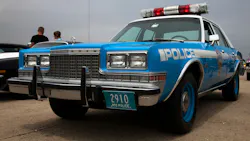
It’s interesting that the term “old school” means different things depending on how old the person is that you’re talking to. A person who was a police officer in the 1970s-1980s will give you a different answer than someone who didn’t start their career until after 1990. Someone who started their career after 2010 will give you yet a different answer. But the thing to remember is this: no matter what your variation of “old school” is (or was), it doesn’t cut it anymore. Today’s law enforcement professionals have to embrace technologies, protocols and policies that many veteran officers wouldn’t be able to work with (this author likely being one of them). Let’s take a look at a few examples.
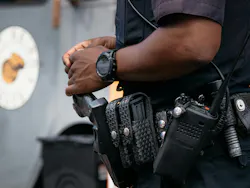
In the 1970s and into the mid-1980s, portable radios were still new in many areas. Law enforcement had evolved from call boxes to radios mounted in patrol vehicles, but portable radios, especially those that plugged into the car charger, going in and out with the officer, were still growing into common use across the country. With the adoption of portable radios, protocols for use evolved as some of the older generation resisted using them to their full advantage. Having grown used to a radio in the patrol vehicles, those veteran officers didn’t necessarily see the value of taking the radio with them. After all, they hadn’t needed it so far. Why would they need it now? Other officers saw the advantage of being able to speak to a dispatcher without having to go back to the patrol vehicle. They saw the potential officer survival value of it.
But Officer Survival itself was barely a topic then. Another prime example was the use of concealable body armor. While not widely adopted until the 1980s, even then it was resisted by some of the older officers. “It’s too uncomfortable.” “It hurts my mobility.” “It won’t save me if I get shot in the head.” All statements/complaints heard in the mid-1980s from officers who had started their careers in the early 1970s. Remembering that SWAT teams weren’t developed until the late 1960s, it was interesting to hear one officer say, “I’m not a SWAT cop. Why do I need body armor?” As if he had never faced a situation where the body armor could have saved him injury.
Flashlights could be given as another example. There were plenty of officers in the 1970s and 1980s who only carried a flashlight at night. Their reasoning was relatively sound. It’s daylight. Why would they need a flashlight? Plus, the flashlights of the time were heavy metal tubes powered by four D-Cell batteries. Carrying one meant having another ring on your duty belt and the officers often placed them right next to the ring for their nightstick ... which sometimes got left in the patrol car as well. Being a fixed stick, they had to take it off their belt every time they got into the car, and sometimes forgot to take it with them when they got out.
Keep all that in mind as we move forward into today. Much of what was resisted back then is embraced today, both by officers and administration. Body armor is worn by everyone in uniform, usually without a reminder. Most General Orders require that it be worn if in uniform. Flashlights have become so powerful in such small packages take many officers have more than one on their person: a primary and a backup, no matter what shift they’re working. (We eventually learned that going into dark buildings on day shift meant we needed to take light with us.) Portable radios are simply worn on body and the batteries usually last for a whole shift. But that’s not to say that there aren’t radios in the patrol cars, right? There are ... and so much more.
Somewhere along in the early to mid-1990s we saw the first mobile data terminals being tested in patrol vehicles. The hardware, software and functionality were all very rudimentary compared to what we use today. In one Maryland municipality in the mid-1990s an officer spent time on his midnight shifts building forms in Word Perfect (remember that?) as packets, i.e. impound report, arrest report, etc. so he could fill them in more quickly and type the narratives rather than having to handwrite everything.
Today’s in-car laptop computers can integrate control of the emergency lights and sirens as well as serving to connect with crime databases, predictive policing suites and more. Body worn cameras are on almost all officers and the “portable office” is exactly that. Officers can generate all paperwork, print it, email it, upload it, or whatever right from their driver’s seat. Ticket books? A thing of the past. (This author really missed saying, “Press hard. You’re making five copies.”)
But is everything “old school” antiquated and of no use? Absolutely not. The tools have evolved. Technology has empowered us in ways we couldn’t imagine in the 1970s and 1980s. Having your work schedule available on your cell phone, or using your cell phone as a squad coordination/communication device wasn’t even a thought in the 1990s. But while we embrace the technology and all of the new policy that comes with it, there are a few traditions and outlooks that we should never let go of.
“Protect & Serve” shouldn’t be just a slogan but a motivation. Doing what’s right even when it requires extra effort and some level of sacrifice should still be the focus, 100% of the time. Peacekeeping is different from law enforcement, and much of our technology empowers both, but agency leadership is responsible for ensuring that policy and general orders don’t restrict officers so badly that they can’t do the job professionally, ethically and morally. “Sometimes doing the right thing isn’t doing the right thing,” isn’t just a quote from the movie SWAT, but a statement of fact dependent on circumstance. No matter how much we evolve into the future, our “old school” values and motivation should never be lost.
About the Author
 Lt. Frank Borelli (ret), Editorial Director
Editorial Director
Lt. Frank Borelli is the Editorial Director for the Officer Media Group. Frank brings 25+ years of writing and editing experience in addition to 40 years of law enforcement operations, administration and training experience to the team.
Frank has had numerous books published which are available on Amazon.com and other major retail outlets.
If you have any comments or questions, you can contact him via email at [email protected].