Purity Went Missing From Drug Casework. The Field Can Bring It Back.
Key Highlights
- A growing number of crime labs have scaled back routine purity quantification, not by choice, but because staffing and funding haven't kept pace with the caseload surge fentanyl brought.
- A field purity reading can put a number in the case file well before, or in the absence of, a lab-quantified figure, without replacing the lab's confirmatory role.
- A purity spike in one corridor can flag a new supplier weeks before the overdose calls start.
- Colorado's colorimetric restrictions passed both chambers unanimously in March 2026, and similar legislation is already circulating in other states.
- NIRLab reports purity automatically on every scan, adding a data point to the case file even when full lab quantification isn't available.
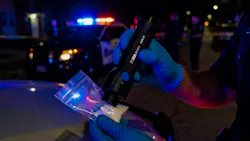

An officer seizes an ounce of suspected methamphetamine on a traffic stop. It gets photographed, packaged, and shipped to the state lab. Months later the report comes back: methamphetamine, confirmed. One number is missing, and it is the number that used to anchor the whole case. How pure?
Purity used to be routine forensic work. Through the 1990s and 2000s, federal sentencing guidelines drew a hard line between pure methamphetamine and methamphetamine mixture, and prosecutors leaned on lab-quantified purity to support trafficking charges and sentencing enhancements. Quantification was not an extra step. It was part of the job.
Then caseloads exploded. When fentanyl multiplied drug submissions starting in the mid-2010s, crime labs faced a surge in volume that staffing and budgets never caught up to. Identifying a substance is fast. Quantifying it is not: it demands calibrated reference standards, extra analytical runs, and method validation that a growing number of labs no longer have the capacity to sustain across every case. Many labs have shifted toward identity-only reporting as a matter of necessity, not preference, as quantification becomes one of the first things cut when a lab is stretched between a growing docket and a flat budget. Purity did not stop mattering. In many places, the capacity to collect it on every case did not keep pace with demand.
The federal system reflects the same shift. The U.S. Sentencing Commission's 2024 review of methamphetamine trafficking found street meth in fiscal year 2022 averaging 93.2 percent purity, with a median of 98.0 percent. When nearly everything tests pure, the guidelines' long-standing distinction between pure methamphetamine and methamphetamine mixture stops distinguishing anything, and the Commission's proposed 2026 guideline amendments, published in December 2025, include eliminating that distinction outright. The courtroom is stepping back from purity at the exact moment the street needs it more than ever.
That is the gap NIRLab is built to help close, not by replacing the lab, but by putting a number into the case file where one wouldn't otherwise exist. 908 Devices' handheld narcotics analyzer uses near-infrared spectroscopy to identify and quantify the drugs officers seize most often: cocaine, methamphetamine, heroin, MDMA, and cannabis, including THC and CBD concentration. A scan takes seconds, needs no reagents or sample preparation, and reports purity automatically on every submission, whether or not a lab downstream has the capacity to do the same.
A Result That Holds Up Against a Colorimetric Kit
Colorimetric kits are losing ground on a separate front. On March 27, 2026, Colorado became the first state to require police to issue a summons rather than an arrest when a colorimetric result is the sole basis for a low-level possession charge. The bill passed both chambers unanimously after researchers documented error rates as high as 38 percent, and Colorado's own Department of Corrections reported a false positive rate of roughly 33 percent on its colorimetric results. A University of Pennsylvania Quattrone Center study estimated that these tests contribute to about 30,000 wrongful arrests a year nationwide, out of an estimated 773,000 annual arrests involving presumptive field tests. Sugar, prescription medication, even bird droppings have flashed positive. Similar legislation is already circulating in other statehouses.
NIRLab gives the officer something a color change never will: an identification backed by a library validated against more than 40,000 GC-MS quantified reference samples, much of it through ISO 17025 accredited lab work, plus a purity figure that adds context no color test can offer. That context is useful well before a lab report arrives, and it does not replace the lab's confirmatory analysis. It gives an officer's initial handling decisions, and a prosecutor's early charge considerations, something to stand on in the meantime, instead of nothing.
Intelligence for Where to Push Next
Purity is more useful as a trend than as a single number. When methamphetamine or cocaine purity climbs across a precinct or corridor over several weeks, that usually means a new supply source or a shorter distribution chain reaching the street. A task force watching that trend across synced NIRLab results can shift patrol presence, surveillance, or buy operations toward the area before it surfaces in overdose statistics or a violence spike tied to a new supplier. A sudden drop in purity tells the opposite story: a disrupted supply with adulterants moving in behind it, which carries its own overdose risk and its own reason to act.
The same data can strengthen the relationship with the lab rather than strain it. A supervisor holding an immediate identity and purity result can help triage which seizures most urgently need full laboratory confirmation, giving an already stretched lab better information about where to focus its limited capacity.
A Signal Worth Sharing With Public Health
Overdose surveillance today mostly runs on toxicology results, which means health departments and hospital emergency rooms usually learn about a dangerous batch after someone has already overdosed on it. Purity and adulteration data captured at the point of seizure, aggregated across many stops, can flag that batch earlier. When an agency chooses to share it, medical personnel get a leading indicator instead of a lagging one: an alert issued this week instead of a pattern noticed after next month's cluster of overdose calls. For agencies competing for HIDTA and overdose-response funding, being the department that supplies that early warning is a position worth owning.
Built for the Street, Not the Bench
None of this requires new training or new safety procedures. NIRLab uses low-energy near-infrared light, not a laser, so there is no eye hazard and no ignition risk when scanning an unknown substance in the field. It weighs less than 250 grams, is comparable in size to a tactical flashlight, and is built for an officer who has never touched a lab instrument. And when a scan shows an unusually concentrated or heavily cut sample, the officer holding it knows how carefully to handle it, without waiting on a lab report that, given today's caseloads, may be weeks away or may not include a purity figure at all.
The next drug case doesn't have to start with an unknown, and it doesn't have to sit without a number while the system catches up. Request a demo to see how NIRLab performs on the substances your agency encounters most.