A Retired Officer’s Gear List from His ‘Night on the Street’
Key Highlights
- Modern patrol vehicles are equipped with numerous electronic devices, including multiple cameras, screens, and communication tools, vastly different from earlier models.
- Specialized enforcement teams focus on targeted, proactive efforts in high-crime areas, demonstrating well-trained tactics and quick backup procedures.
- The ride-along provided a firsthand look at officers' gear, including body armor, firearms, flashlights, and other tactical equipment, emphasizing their importance in daily operations.
- Personal safety gear, such as body armor and footwear, remains crucial, especially during cold weather, and can significantly impact officer comfort and effectiveness.
- The experience highlighted the technological and tactical evolution in policing, offering valuable insights for retired officers and civilians interested in law enforcement practices.
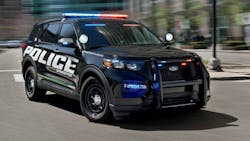
Just recently I had opportunity to do a ride-along with a local agency. While I finally fully retired from uniform police work just over two years ago (as I type this), it has been quite some time since I manned a patrol car with the last 15 years of my police career being in training and SWAT. Time spent in a patrol car? Next to none since 2008. Needless to say, things are very different today, but I hadn’t really appreciated just how different until I went and rode the shift. I thought I’d share some observations on the differences I observed and also provide an idea of what a retired officer might wear when enjoying such an experience.
Let’s begin with how different the inside of that patrol vehicle was. While I was always in a sedan, this was a 2022 iteration of the Ford Explorer pursuit vehicle, fully marked, lightbar and all (many today in my experience don’t have lightbars). Sitting in the passenger seat was… cramped. The laptop (that we used to always call a Mobile Data Terminal or MDT) sits off-center and swivels - but you all probably already know that. What struck me was the sheer quantity of electronics in the vehicle. How many camera lenses and screens could be seen? Let’s start with screens: The laptop, the radio, the backup camera screen built into the rearview mirror, the officer’s cell phone - and I’m sure I’m missing / forgetting something. For cameras there were at least three, plus the officer’s body camera that he put on every time he got out. There was the dashcam, the interior camera and the backup camera. There were the usual controls for lights and siren but also the (no longer used) separate body-worn audio recorder, the StarChase controller, charging cords for flashlights and probably more that I didn’t even realize was there.
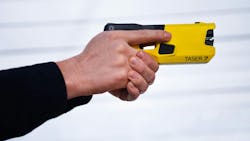
The particular officer I was riding with had, on his person, two flashlights (I’m a big fan of this) plus the one on his duty sidearm. I happen to know that there’s also one on his patrol rifle, although he had no cause to get that out of the lock box during the shift. He had the inevitable TASER on (a 7 I think) although some other officers looked to have the X26 on. At some point in the evening I realized just how much electricity was being used in that vehicle as compared to what it was “back in my day.” And the amount of data being collected and stored also struck me. When you think about it, it’s no surprise that LAPD recently changed their policy to reduce how long they save their bodycam video files. The data adds up and once cases are out of the time limit for criminal action, I just don’t think it makes sense to keep it.
Cell phones seem to be commonly used for unofficial group conversations and to avoid unnecessary radio traffic. It appears they are also used for schedule coordination, leave requests and more, and while my generation of patrol officers certainly had them and used them, we strictly avoided using personal cell phones for anything work related.
I was riding with a member of a special assignment team so “routine patrol” (as much as we hate to use the term routine) wasn’t what I experienced. This team handled assignments that regular patrol officers weren’t really equipped to deal with and then they performed a lot of targeted enforcement in the jurisdictions higher crime areas with a focus on preventing carjackings, armed robberies, etc.
The team certainly stayed busy and the biggest strengths I saw was their smooth coordination, well-trained tactics and near-immediate backup for each other if anyone pulled a stop or came across a suspicious circumstance. Temperatures were in the low 30s and high 20s Fahrenheit, but the cold didn’t seem to slow them down at all. Aggressive, proactive investigative and enforcement efforts were the playbook and they did it well. It was educational for an “old cop” who was along as a JAFO - Just Another F-ing Observer.
Since I’m a retired officer, the team didn’t treat me as much like an outsider as might have occurred with someone who had never worn a badge. And, with my experience behind the badge, I knew better than to go out unprepared. So, what follows is what I wore/carried, obviously all concealed.
Knowing it was going to be cold and we’d be out of the vehicle (I assumed) quite a bit in an area that still had plenty of snow and ice (and slush) on the ground I wore an old pair of Original SWAT boots; all leather construction, waterproof up about 5-6” from the ground with a good Vibram sole. Padded and insulated, even though they’re about the oldest boots I have, they kept my feet warm and dry.
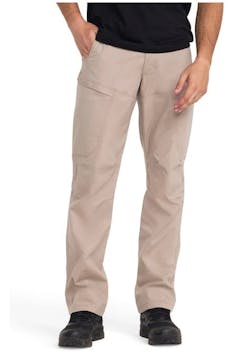
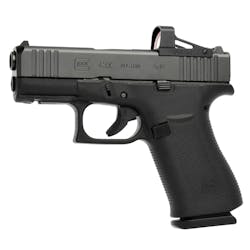
For pants I had on khaki 5.11 Tactical Ridge straight fit. The segmented cargo pockets gave me the space I needed for a spare magazine and a flashlight, with an ASP Blueline Clip handcuff key. I had no expectation of needing a handcuff key but it seemed silly not to have it just in case. The flashlight in that pocket was the NexTorch TA22 Tri-Mode tactical penlight. I made sure it was fully charged and that little light pushes 850 lumens plus has a strobe mode. Also in my pockets, as usual when I leave the house, was a lighter, my wallet (with my retired ID in it) and my CRKT Homefront folding lockblade knife. On my belt was my Glock 43X with a Shield Arms carry kit so I had 15+1 rounds of 9mm and a spare 15-round magazine (as mentioned above), and there was a Shield Sights RMSc RDS mounted on the weapon. I also had my retired badge on my belt directly in front of the holstered handgun.
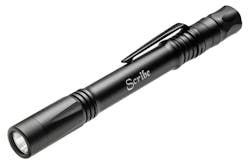
Everything on my belt was covered by the Under Armour hoody that I was wearing under a First Tactical jacket. The jacket had 5.11 gloves in the pockets and an ASP Scribe penlight in the sleeve pocket that parallels the zipper on the chest and is there specifically for such use. As the night progressed and it turned out I’d have use for more than a penlight (not anticipated), the officer I rode with lent me his ASP Tungsten C flashlight. It ended up clipped in my left pants pocket for easy (and frequent) access throughout the evening. It throws 600 lumens of light and has a selectable-function feature that came in quite handy.
So, that’s the “low down” on what a retired guy experiences when he goes on a ride-along. I look forward to doing it again when it’s warmer. One of the benefits of being a retired officer, which I full intend to exercise, is not having to work in the cold, snow or rain. I’m going to wait for a beautiful spring day/night to repeat the experience.
About the Author
 Lt. Frank Borelli (ret), Editorial Director
Lt. Frank Borelli (ret), Editorial Director
Editorial Director
Lt. Frank Borelli is the Editorial Director for the Officer Media Group. Frank brings 25+ years of writing and editing experience in addition to 40 years of law enforcement operations, administration and training experience to the team.
Frank has had numerous books published which are available on Amazon.com and other major retail outlets.
If you have any comments or questions, you can contact him via email at [email protected].