Security Camera Boom Helps N.C. Police Solve More Cases
What to know
- The rapid growth of private security cameras—at homes, businesses, and even vehicles—has significantly expanded North Carolina law enforcement’s ability to identify suspects and build cases using video evidence.
- Detectives increasingly piece together crimes by tracking suspects across multiple cameras, with footage helping solve everything from thefts and assaults to kidnappings and traffic crashes.
- While video is a powerful tool that strengthens investigations and prosecutions, it is not a substitute for traditional police work, and reviewing large volumes of footage can be time-consuming.
When a bank fraud ring on a rampage across the Southeast made a pass through little ole Waynesville, the fraudsters didn't expect to encounter Detective Eric Batchelor.
Batchelor has become a pro at deciphering security and surveillance footage, so even their best efforts at disguise — a hefty hat and keeping their chin down — were no match.
"He had a very, very, well done fake driver's license, went into a local bank and withdrew a very large amount of money from a customer's account using that ID," Batchelor said. "He tried to avoid the cameras, but eventually I was able to get a high quality face shot and identify him."
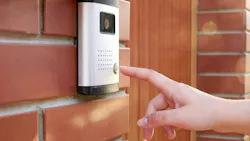
Thanks to the exponential rise of private security cameras — both among business and homeowners — detectives can now solve crimes that even five years ago would have left them empty handed.
"A picture is worth 1,000 words, but a 10 second video clip is worth all the words. When we've got physical evidence — fingerprints, shoe prints, whatever it is — but, oh, by the way, we've also got video that we can show in a courtroom, it makes all the difference in the world," said Batchelor, a detective with the Waynesville Police Department.
Piecing together a case with video surveillance often involves leap-frogging from one camera to another. For example, someone stealing goods inside a store can be followed through the aisles, out the door, and into the parking lot, where a camera eventually nabs their license plate.
"Walmart has great video cameras, inside and outside. People will park way out in the parking lot. But I can still see you, and if I can see you, I can eventually get you," Batchelor said.
Sometimes, suspects are tracked all over town until enough evidence emerges.
"We may only get a vehicle outline, or then what they're wearing. We may finally get a face, and then a vehicle tag," Batchelor said. "It's a piece here, piece here, piece here, until you can corroborate it."
Community watch
A ginseng poacher prowling the lush forests of Villages of Plott Creek last year never expected to be caught on video. But an astute homeowner with a ginseng patch on his property had rigged up cameras to watch the woods.
Meanwhile, two more ginseng poachers were caught by a neighbor's camera, strolling along the road, carrying a tell-tale digging stick whittled to a point and a backpack with green ginseng plants sticking out of it.
Catching poachers red-handed is tricky. The circumstantial evidence of being on someone's property is just trespassing — unless they're caught with the contraband on camera.
Captured images quickly make the rounds, sometimes via official channels of a homeowner's association sending a mass email. But more often, it's via a group text to neighbors: "Heads up. My camera caught this person snooping around my carport."
It's the latest evolution of the old-school "Neighborhood Watch" campaign exported into American suburbs in 1970s and '80s — with commercials starring McGruff the Crime Dog enlisting the public to help "Take a Bite Out of Crime."
Now, law enforcement is swimming in calls from people who spotted a stranger on their home cameras.
"A lot of times it's just someone knocking on doors in the neighborhood or suspicious activity that occurred in the yard," said Haywood County Sheriff Bill Wilke. "It could be someone who's looking for a lost pet, or someone who mows lawns. Half of the time, there are logical explanations."
But sometimes it truly is suspicious — so when in doubt, call it in, Wilke said.
"We need to look at it every time someone calls or thinks something's going on," Wilke said. "I would much rather go out and find that there's a legitimate reason than someone not call, and then have to deal with a breaking-and-entering later."
Real-time view
Thousands of second-homes and vacation homes across Haywood County have also led to a proliferation of private security cameras.
"It's pretty often we'll get a call from an out-of-town homeowner who saw something on a camera and asks us to go take a look," Wilke said. "Those calls have increased substantially."
Meanwhile, the technology has gotten less expensive.
"With the price of surveillance cameras, I tell people there's almost no reason not to have surveillance," Batchelor said.
Today's DIY models are easy for homeowners to install themselves. And the capabilities have improved exponentially.
"Cameras will notify you almost instantaneously. As it detects motions, you'll get a notification on your phone, and you can see in real time what's occurring," Wilke said. "They've even got night vision. I can tell you if there's a fox getting in my hen house."
However, simply catching footage of someone in your yard isn't evidence of a crime.
"We need a reason to stop someone. Just because you got this guy on a camera, and then you see him a week later walking down the street, it's not conclusive of anything other than that person walking down the street," Wilke said. "But it's still very good for awareness. There's no reason you shouldn't call us."
Tool in detective work
As good as the cameras have gotten, and as helpful as they are, video is not a substitute for boots-on-the-ground detective work and crime scene analysis.
"It's a crucial element. It gives you a starting place to help solve these crimes. But you can't get around doing the work," Wilke said.
Security footage isn't a magic bullet, agreed Batchelor.
"It's just another piece of evidence at the end of the day. If we just depend on video. Then you start doing sloppy police work," Batchelor said. "You can't show up on a scene and say 'Okay, everybody start checking 360 cameras.' You still have to process the crime scene."
Nonetheless, the rise in security cameras gives traction to cases that otherwise would likely go unsolved — or at the very least solved slower.
Take a kidnapping case a few months ago in Canton. A woman secretly placed a 911 call from the Hot Spot gas station and could be heard saying "Let me go."
Police promptly reviewed the security footage, which showed a man grab the victim and pull her back into the car. It also captured the license plate, so police knew exactly who they were tracking.
Security footage not only helps solve crimes, but improves their success rate at trial.
"With a sexual assault case, for example, when you have DNA, you've got the case sealed tight. It's the same with a property crimes case when you bring camera footage. You know you have it tied up pretty tight," said Canton Detective Megan Taylor.
She cited one such case involving stolen goods, where a neighbor's security camera had caught the thieves in the act. The stolen goods later turned up in South Carolina. But being in possession of stolen goods isn't the same as being the one who stole them.
"It was the footage from the neighbor across the street that meant I could paint that picture. I could actually put them at the residence," said Taylor.
In another case last month, a woman was found loitering behind a doctor's office where a broken window had triggered the alarm system. When sheriff's deputies arrived, she claimed she had nothing to do with the broken window. But security footage proved otherwise, showing the woman — who happened to be wearing a bright yellow safety vest — do the deed.
Security camera footage even extends to traffic accidents.
"I had a pretty serious three-car wreck on Russ Avenue that involved a Tesla, and the Tesla cameras are pretty much 360," Batchelor said. "The owner was able to pull up his video on the side of the road, and I knew exactly who was at fault before measuring the skid marks."
Help yourself
Batchelor has forged relationships with businesses across Waynesville that give him unfettered access to their security footage — no need to pull a warrant.
"I know how to operate their cameras, and they go, 'Well, you know where it is, go look at it,'" Batchelor said.
Sparkle Clean Car Wash in Canton was having so many cases of vandalism and its coin boxes being broken into, the owner turned over the keys to the Canton Police Department, quite literally.
"He gave us keys to his footage closet, so that he wouldn't even have to be there to meet us if we wanted to watch footage," said Taylor.
Eventually, he turned over the login credentials and password to access so she could watch the footage remotely anytime she wanted. That's becoming more common — avoiding the extra step for law enforcement officers to get a warrant to pull footage.
"Business owners have said 'I'll give you access to any of the video footage and you can watch remotely from your office,'" Taylor said.
Businesses are eager to help even if they aren't the victim of the crime but have footage that might help. When a purse was snatched from a car in the Dollar General parking lot in Canton in February, the suspect was caught on the security camera of an adjacent business, Leonard's RV.
The owner of Leonard's RV didn't even wait for law enforcement to ask. He posted the footage to his own Facebook page asking the public to help identify the suspect. The tips started pouring in, and the man was caught.
It wasn't the first time Leonard's RV came to the rescue in the name of justice. Leonard's footage of a man who beat up and shot at a woman in the Dollar General parking lot was critical when Taylor took the stand in the courtroom, narrating the footage.
"He has the best cameras in all of Canton. You could see blow by blow. I could say 'He struck her a total of this many times over the course of this assault and shot the gun at exactly this time,'" Taylor said.
Game changers
Since joining the Canton Police Department in 2019, video footage at Taylor's disposal to help solve crimes has increased exponentially.
"Today, you can go into almost any business and be able to get footage," Taylor said.
But it's not just the prevalence of cameras that's made a difference in fighting crime.
In the old days, security cameras relied on VHS tape. Swapping out cartridges, let alone storing mountains of boxy tapes, was cumbersome. So camera systems recorded over the same tape every 24 hours. Pulling up footage days or weeks later wasn't possible.
Now, digital cameras have nearly infinite storage. So when a county credit card was stolen, Taylor could go to a vape shop in Canton where it had been used and still secure footage long afterward.
"We knew the time and day based on the transaction on the credit card statement and I was able to get a picture of the suspect," Taylor said.
Another game changer is video quality.
"Cameras now are so clear that it's a lot easier. The difference is huge compared to when I started," Taylor said.
"You could read a newspaper at night with some of them," Batchelor added.
Challenges
The enormous quantity of security footage available to detectives presents a challenge, however: it takes a lot of manpower to view hours of footage to find the moment you're looking for.
"You just sit down and muscle through it," Taylor said. "If it was my item that was stolen or my parents' house that was broken into — I always treat the things that I'm working as if it were someone close to me, because I would want to be treated that way."
Perhaps the most voluminous case of security camera footage was the infamous bathroom bomb threat perpetrator last year. For two months, an unknown suspect left a trail of bomb threats scrawled on bathroom stalls — forcing multiple evacuations of Walmart, Ingles and fastfood joints.
Batchelor was tasked with cross-referencing dozens of hours of footage of everyone going in and out of the bathrooms, looking for the same person to pop up.
Crime victims are often willing to pitch in reviewing footage, like one case involving a Waynesville business that Batchelor worked.
"We went through his cameras for a little while and didn't find anything. The next day he calls and says 'Hey, I think I've got something that you need to see.' And that's not uncommon," Batchelor said. "It just becomes 'Let's find Waldo,' and he sat there continuing to look."
Sometimes, the victims of a crime will even do their own reconnaissance to scout for available security footage themselves — like in the case of a track hoe that was stolen off a construction job site in Canton last fall.
The owners of the track hoe knew the day and time it was stolen based on a GPS tracker on the machinery. The GPS trail later went cold, but it was still actively pinging as the track hoe was hauled off the site.
Determined to get his track hoe back, the owner Taylor Howard went to a gas station near the jobsite and asked for their footage. Sure enough, it showed the track hoe going by on a trailer, pulled by a truck with a distinctive tool box.
The track hoe was eventually located, with the same truck and trailer parked nearby. The video footage helped seal the case.
"When private citizens come together, collect information and provide it to us, in some cases it can save us some leg work," Wilke said. "That community- Sheriff's Office connection is vital to us getting the job done."
________
© 2026 The Mountaineer (Waynesville, N.C.).
Visit themountaineer.villagesoup.com.
Distributed by Tribune Content Agency, LLC.