How to Catch a Criminal: Priest's Confession Helps Solve Teacher's 57-Year-Old Murder
What to Know
- Irene Garza was a beloved teacher whose disappearance in 1960 led to Texas' largest missing person search at the time.
- Despite false leads and public pranks, her body was found in a canal, with evidence pointing to her murder and sexual assault.
- Father John Feit, a priest and suspect, initially passed a polygraph but later confessed to confiding in a monk, leading to his arrest decades later.

Related Content
Every officer with a decent amount of time on the job knows the unexpected turns an investigation can take. Seeing a major case through to completion often involves giving up on a theory and taking your investigation in a different direction as new information becomes available. In How to Catch A Criminal, we look at the many ways not-so-perfect crimes are solved. This month, what was done in the dark is brought to the light.
Irene Garza was born in 1934 to Nicolas and Josefina Garza. The family owned a dry-cleaning business in the border region of Texas, the Rio Grande Valley. Irene was the first Latina to become a twirler and drum majorette while she attended McAllen High School. For her beauty and prowess, she would go on to be crowned Miss All South Texas Sweetheart in 1958. Irene was also a devout Catholic and would attend mass on a daily basis. In adulthood, Irene became a second-grade teacher, specializing in teaching indigent students. Those who knew Irene described her as shy, but as she found her work as a teacher so fulfilling, she began to gain more confidence in herself. This confidence was especially boosted when she became secretary of her school's parent-teacher association.
On April 16, 1960, Irene went to confession at the Sacred Heart Church in the city of McAllen. Many church members would later recall seeing her there that evening. When she did not return home on time, her family thought she had stayed at Sacred Heart to attend an Easter Vigil Mass. The Garza family became concerned when they found Irene had still not come home by 3:30 a.m. Her parents immediately went to the local police department and reported her missing.
Two days after her disappearance, while investigators were conducting searches of the last places Irene was known to have been, they received information from citizens who stumbled across three items of evidence: her purse, her lace veil, and her left shoe. The items were found spread out on a desolate road in McAllen. From there, authorities expanded their search, utilizing volunteers to look for Irene or at least more signs of her. This effort would grow into the largest missing person search conducted in the Rio Grande Valley up to that point. With the expansion of the search and the involvement of the public came a few leads, but some turned out to be not just false but cruel. On one occasion a woman called the Garza home pretending to be Irene, stating she had been kidnapped and taken to a hotel in a neighboring town. Authorities looked into the call but found it was just a tasteless prank. Another tip came in regarding a man who had confessed to killing Irene, but the investigation determined he was just telling tall tales to his friends after having too much to drink.
On April 21, 1960, Irene Garza's body was found floating in a canal. Her body was sent for an autopsy, and it was determined that she had died from suffocation. The medical examiner also found signs that Irene was raped while most likely unconscious after having been severely beaten, which was obvious due to serious injuries to her face. While investigators had a few pieces of evidence and a few answers, any trace of the suspect had been washed away in the canal’s waters.
The discovery of Irene’s body confirmed her disappearance and death were caused by another person. This led investigators to question around five hundred people across Texas. They interviewed known sex offenders as well as Irene's family, friends, and co-workers. All in all, dozens of polygraphs were conducted, and a reward of over $2,000 was offered for information connected to Irene's death. That amount was later bolstered by an additional $10,000 thanks to a compassionate businessman.
One of the last people to see Irene alive was her priest, John Feit, who had heard her confession on April 16th. Feit fell under suspicion, and law enforcement began to interview church members who were present the night Irene disappeared. Many of the congregation noted the line for confession moved slowly that night, and Father Feit left the church on more than one occasion. More evidence against Feit began to build when the canal where Irene was found was drained. There, lying in the canal, was a handheld electronic device used for viewing film slides without a projector. The unusual item was published in the local paper in the hopes someone would recognize it and identify its owner. None other than John Feit reached out to investigators to claim ownership of the slide viewer, but he didn’t elaborate on how the device ended up in the canal. After the Easter Vigil, Feit was seen with scratch marks on his hands. His fellow clergymen also found it peculiar that Feit conducted Irene's confession at the church rectory, rather than in a normal confessional. Feit submitted to a polygraph, which he passed. When asked about taking Irene’s confession, Feit first denied seeing her. He went on to change his story to state he took her to the rectory because she was too good for the confessional. He stated he left the church because he accidentally broke his glasses and went to get another pair. He had gotten locked out of the rectory and had to climb up to a second-floor window, which is how he scratched his hands.
Another victim spoke up not long after Irene's death. Maria Guerra claimed she was sexually assaulted while praying at another Catholic church nearby, just a few weeks before Irene Garza’s murder. Feit was identified by Guerra and accused, but the church scoffed at the idea of a priest committing such a crime. A year later Fiet was charged with rape, but a mistrial was declared due to a hung jury. In 1962 he pleaded no contest to the lesser charge of aggravated assault and paid a small fine. The Catholic Church felt it best to send Fiet to a monastery in Springfield, Missouri. There he received counseling after confiding in a monk that he raped one woman and murdered another. Eventually Fiet left Missouri and spent the rest of the 1960s at a monastery for troubled priests in Jemez Springs, New Mexico. He gave up the clergy life in the 1970s and settled down in Phoenix, Arizona, far from the prying eyes and burning questions of the Irene Garza murder investigation.
The case went cold until 2002, when guilt finally consumed the former monk to whom Feit confessed. He could no longer keep the secret and decided that even though it was not his place to judge the sins of others, the Garza family needed peace. With his statement reigniting the cold case, investigators examined the evidence for anything that may have been overlooked at the time of the murder. They found the polygraph, which Feit passed, should have been labeled as inconclusive because his statements indicated he was hiding something. Despite this, a grand jury chose not to indict him in 2005, and the case went cold again. That is, until a new District Attorney, Ricardo Rodriguez, in 2014 reopened the case and tried, for the third time, to bring Irene Garza’s killer to justice.
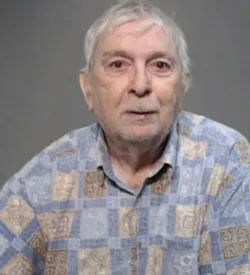
In early 2016, 83-year-old John Feit was arrested in Arizona and extradited back to Texas. Despite his age and frailty, he was held on a $1,000,000 bond until his trial in November 2017. Former Father John Feit was finally convicted on December 7th. He was sentenced to life in prison for the murder of Irene Garza. After 57 years, her killer was the one begging God for mercy. Feit died of natural causes in 2020. At no point did he ask for his sins to be forgiven.
About the Author
 Officer Brendan Rodela, Contributing Editor
Officer Brendan Rodela, Contributing Editor
Brendan Rodela is a Sergeant for the Lincoln County (NM) Sheriff's Office. He holds a degree in Criminal Justice and is a certified instructor with specialized training in Domestic Violence and Interactions with Persons with Mental Impairments.