Drones Take on Bigger Role as LAPD Looks Beyond Helicopters
What to know
- The LAPD is expanding its use of drones through a “drone as a first responder” program, deploying the devices thousands of times to get faster eyes on emergency scenes.
- Officials say drones often arrive before officers, sometimes allowing police to adjust or cancel responses, while department leaders stress the technology is meant to complement—not replace—LAPD’s helicopter fleet.
- The expansion has raised privacy and oversight concerns, with critics warning that quieter, AI‑enabled drones could increase surveillance with fewer visual cues to the public.
More on OFFICER.com
Taking Flight: Ohio Launches First Statewide Drone as First Responder Program
- The Ohio Drone First Responder Pilot Program represents the first statewide deployment of DFR technology in the country.
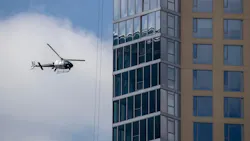
The LAPD's black-and-white helicopters have long been a fixture of local skies, allowing the police to track suspects and patrol the city from above.
Now, the air traffic is growing more crowded with the expansion of the department's drone fleet.
The Los Angeles Police Department has increasingly come to rely on small, unmanned aerial vehicles since launching a "drone as a first responder" pilot program in July.
In a report set to be presented Tuesday to the Police Commission, LAPD officials said drones were deployed more than 3,500 times last year, mostly in response to emergency calls or officer requests for assistance.
In recent months, the devices have been deployed to incidents including home break-ins and calls about armed suspects. An online dashboard of LAPD flight activity showed they were used at least 39 times on April 15 alone.
The LAPD drones are propelled by four sets of rotors. Each drone is about 3 feet wide and equipped with cameras and infrared night vision. Department officials say the drones take off from launchpads that are strategically placed around the city. Once airborne, they can cover two miles in roughly two minutes, allowing police to more quickly get eyes on crime scenes and determine the level of appropriate response.
The first LAPD helicopters took flight in 1956 to help monitor traffic along the city's growing highway system. Drones have been part of the department's arsenal for just over a decade, but until recently their use was restricted to a narrow set of incidents, most involving barricaded suspects or bomb threats.
Officials have made it clear that drones are meant to complement — not replace — an aging fleet of 17 helicopters, among the largest in the world for a municipal police department. At least two choppers are kept up in the air for around 20 hours every day.
In recent years, the helicopters have drawn more and more complaints about high operating costs and the potential health impacts from noise pollution.
Some members of communities where they most often hover have come to consider them an unwelcome intrusion and a reminder of the LAPD's overbearing presence. Critics worry that the quieter, nimbler drones will be used to surveil the public with little oversight.
The news site the Intercept reported that the department deployed drones to monitor crowds during the recent "No Kings" protests.
Caren Kaplan, a professor emeritus at UC Davis, who has written about police "weaponizing airspace" with the use of helicopters, said she is equally wary of the newer generation of drones that combine with AI technology.
"At least a police helicopter is identifiable," she said. "Small drones can be really pernicious."
Talk of expanding the role of drones has been ongoing for years but ramped up in 2025 after a public outcry over a series of high-profile burglaries on the city's Westside.
At a presentation in front of the Police Commission this year, department officials said they plan on growing the drone fleet from nine to 24 devices, which launch from 17 docks spread across five police divisions.
A $1.2-million donation from the Police Foundation, the department's private fundraising arm, is paying for some of the new drones.
Department officials say that about half of the times drones were deployed, they arrived at the scene before officers. In roughly 10% of cases, officials say, they revealed information about the scene that allowed police to cancel other responding units, saving valuable time and resources.
One recent incident, described in a police search warrant affidavit, involved a man with a gun who had threatened a street vendor and her young brother in the 2200 block of South Central Avenue before fleeing down an alley.
Police sent up a drone that arrived before officers and beamed back images of the man on the rooftop of a building, kneeling down and placing into his backpack a dark object that police believed was a handgun, according to the affidavit.
Responding officers later surrounded the building and eventually took the 26-year-old suspect into custody, finding that he possessed a replica firearm. Jail records show he was booked on suspicion of making criminal threats.
The report issued Tuesday by the department detailed two drone crashes. The first occurred in November during the Dodgers' victory over the Toronto Blue Jays in Game 7 of the World Series, when a drone "deployed to support a crowd control" suddenly lost "connectivity" because of the large number of cellphones operating in the area and slammed onto a sidewalk. According to the LAPD report, a bystander tossed it into a trash can.
Four days later, the report said, a drone hit a high-rise building in the area of Vermont Avenue and Wilshire Boulevard while flying at night.
Department officials said they plan to start sending drones in response to street takeovers. Another proposed use: missions on July 4, New Year's Eve and other holidays to identify and cite people who set off illegal fireworks.
A controversial 2024 audit by the L.A. city controller's office highlighted the high operating costs of LAPD helicopters. It concluded that the department spent roughly $50 million a year on police helicopters — more than the annual budgets of at least 14 city agencies.
The report found that the choppers spend less than half of their flight time responding to violent crimes — findings that the department disputed in its own report.
According to a 2022 budget assessment, LAPD officials concluded that using a drone instead of a helicopter during a SWAT situation could save the department roughly $3,500 per incident, based on lower fuel and maintenance costs.
Officials say the biggest hurdle to wider expansion is that the current drone technology lacks the range of helicopters. For now, the models used by the LAPD can stay airborne only for roughly half an hour before they have to recharge.
Former LAPD Deputy Chief John McMahon said that replacing the legacy helicopters with drones would be a tough sell in the department. But he said it could eventually happen as improved technology makes drones cheaper, faster and more capable than ever.
"I think police executives need to at some point look at the cost-benefit analysis," said McMahon, who served as the LAPD's technology chief before retiring last year.
_____________
©2026 Los Angeles Times.
Visit latimes.com.
Distributed by Tribune Content Agency, LLC.