A Clearer Picture: AI Assistant Helps Provide Officers With Better Evidence
What to Know
- Field Clarity transforms traditional report intake into an intelligent, guided process that improves data accuracy and completeness.
- The AI-assisted video technology simplifies reporting for civilians and officers, capturing photos, videos, and structured data seamlessly.
- Feedback from law enforcement agencies highlights increased report quality, faster case reviews, and improved public trust.

More on Officer.com
This article appeared in the September/October 2026 issue of OFFICER Magazine
Artificial intelligence has helped modernize and enhance a countless number of software solutions for public safety. From report writing to video management, law enforcement agencies now have the power to quickly and efficiently receive and respond to critical information.
LexisNexis Coplogic Solutions is introducing Field Clarity, a new feature of its Desk Officer Reporting System (DORS). The AI-guided, conversational video assistant helps members of the public capture accurate information at the scene. According to the company, Field Clarity will provide officers and investigators with better evidence and the ability to build a stronger case.
OFFICER Magazine recently reached out to Eric Hobbs, Senior Director of Product Management at LexisNexis Coplogic Solutions, on how Field Clarity is moving the DORS solution forward with a technology-first approach.
How does the new Field Clarity feature help modernize and enhance DORS?
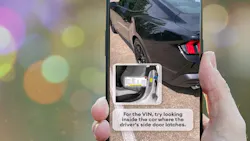
Field Clarity modernizes our LexisNexis Desk Officer Reporting System (DORS) by transforming data capture from passive intake into intelligent, guided capture. Instead of relying on static forms and manual entry that are time-consuming and prone to errors, Field Clarity uses AI-guided workflows to ensure information is complete, accurate, and structured at the point of capture.
How do the AI-assisted guided video technology features increase usability for both civilians and law enforcement?
Field Clarity makes filing experience much more intuitive by guiding users step-by-step, almost like having a digital assistant with them in the moment. Instead of asking someone to fill out forms and guess what’s needed, Field Clarity can prompt them to scan a driver’s license, capture a VIN, or record a short walkaround video explaining what happened, all while capturing the data necessary to complete the report. For civilians, this means less confusion and less back-and-forth — they are getting it right the first time.
For officers, it means something even more important: they’re receiving cleaner reports and richer evidence upfront. Photos, video, and structured data all come in together, which makes report reviews easier while capturing robust evidence and significantly reducing follow-up work.
What led to the addition of Field Clarity?
Field Clarity is the result of our ongoing commitment to helping law enforcement agencies make better, faster decisions that improve public safety for their communities. The data collected at the scene is paramount to driving data that enables those very best decisions. If the input is somehow incomplete or inconsistent, it can create downstream friction—more follow-ups, more corrections, and slower resolution times for victims. At the same time, equally important, public expectations have changed. People are used to mobile-first, guided experiences, officers and civilians expect that type of experience. Field Clarity was introduced to tackle both of those things: improve data quality at the source while modernizing the overall user experience. It’s about solving the problem upstream so everything downstream flows more seamlessly.
Field Clarity has obvious benefits for civilians submitting reports, but what are the benefits for officers?
While it absolutely improves the civilian experience, the impact on officers is where we see some of the biggest gains. First, they’re getting reports that are more complete and decision-ready right out of the gate. That alone reduces review time and eliminates a lot of the back-and-forth reviewing officers and investigators are dealing with. Second, the evidence quality can improve significantly. With video, photos, and scanned data coming in together, officers have a clearer picture of what happened without needing to chase down additional details. And at a broader level, it builds confidence — confidence in the data, in the reports, and in the decisions that follow.
What has the feedback been so far from law enforcement agencies?
The feedback so far is extremely positive. We consistently hear from agencies that the experience is noticeably easier for the person filing the report, building citizen trust and satisfaction with their local police department, that also has a direct impact on workforce-community interactions and the data quality officers receive at the back end. When the process is guided and intuitive, filers aren’t getting frustrated, guessing what to include— they’re being walked through the filing step-by-step. That leads to more complete submissions and far fewer errors or gaps. At the same time, agencies are really responding to the amount and quality of evidence that comes with those reports. Instead of just written descriptions, officers are now seeing structured data alongside photos and video, which gives them a much clearer picture of what actually happened. The combination of ease of use on the front end and richer, more reliable data on the back end is resonating with agencies. In the end, Field Clarity increases satisfaction among the public while giving officers more confidence in the reports they’re reviewing and helps them move faster with fewer follow-ups.
How will this technology-first approach continue to influence LexisNexis Coplogic solutions?
Field Clarity is just the beginning of a broader shift. It represents a move toward more intelligent, AI-driven capture across the entire Coplogic Solutions enterprise. It’s not a standalone feature only within the Desk Officer Reporting System, but is something that is being explored along with agencies across multiple data collection applications. Looking ahead, this approach opens the door to deeper integration with evidence systems, better analytics, and ultimately a more connected, data-driven platform.
The bigger vision is making agencies aware that the Coplogic Solutions team of law enforcement experts offer more than reporting tools but who are actually agency allies who can help agencies leverage technology with greater clarity, confidence, and consistency to develop a unified perspective of data that helps them overcome their greatest challenges: the workforce crisis, volumes of digital evidence management and public perception.
About the Author
 Paul Peluso
Paul Peluso
Editor
Paul Peluso is the Managing Editor of OFFICER Magazine and has been with the Officer Media Group since 2006. He began as an Associate Editor, writing and editing content for Officer.com. Previously, Paul worked as a reporter for several newspapers in the suburbs of Baltimore, MD.