How New Police Facilities Can Boost Safety Without Adding Officers
What to Know
- Police facilities support safety by enhancing training, communication, and coordination, but do not directly create safety on their own.
- Strategically located stations with dedicated spaces improve incident response, information flow, and operational readiness during major events.
- Design features like public lobbies and community spaces strengthen relationships, foster trust, and promote community engagement.
More on OFFICER.com
How Police Facilities Support Readiness, Trust and Leadership
- The most effective police buildings do more than house personnel—they support proactive training, improve workflows and strengthen public trust through thoughtful design.
When communities invest in new police facilities, a common and important question follows: How does this make us safer? It’s a fair question — especially when public dollars are involved — but the answer is more nuanced than a simple cause and effect.
Police facilities do not create safety on their own. Risk in the field is managed by people — officers making decisions in real time, often under pressure. Safety is improved not by the building itself but by the preparedness, coordination and performance of those responding.
The role of a facility is to support that effort.
What facilities don’t do
New facilities do not replace staffing, eliminate risk, or guarantee faster response in every situation. They do not solve every challenge a department faces.
But they do remove barriers by reducing friction in how officers train, communicate, deploy, and recover, often in ways not visible to the public but critical in moments that matter.
In policing, outcomes are driven by people, but performance is shaped by the environment they operate in.
Response and deployment
Police operations are largely field-based. Officers are on patrol, responding dynamically to calls and conditions across the community rather than deploying from a station in the same way as other services.
Even so, facilities play a critical role, particularly during major incidents. Stations function as coordination points where officers regroup, share information and deploy resources effectively when situations escalate.
Well-designed facilities support faster information flow, clearer command structure, and more effective coordination through strategically located briefing areas, incident command spaces and technology-enabled collaboration environments. These are factors that directly influence how well a department responds under pressure.
Training and operational readiness
Before an officer responds to their first call, they must complete extensive training, the success of which is rooted in facility design.
Thoughtfully planned stations provide dedicated space for this training — from defensive tactics and scenario-based exercises to structured briefings that improve communication and situational awareness. In many cases, these spaces are multilevel or adaptable environments that support a variety of training needs.
When training occurs within the facility, departments can train more frequently, more consistently, and with greater participation. Increased training frequency directly improves readiness and response in the field while reducing the need for off-site training that requires time and cost.
The result of incorporating these spaces in new facilities is simple: better-trained officers who make better decisions.
Community engagement and relationships
Facilities also play an important role in how departments connect with the communities they serve. Well-designed spaces support public education, outreach and interaction, which ultimately strengthen relationships and foster a greater sense of safety within the community.
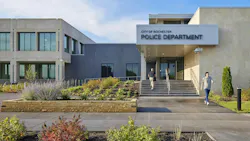
The Rochester North Service Center and Police Station in Minnesota demonstrates how public safety facilities can extend both city services and police presence into growing areas of a community. Designed by BKV Group, the facility combines police operations, community-accessible city services, training functions and emergency operations capability within a single location that is intentionally welcoming and accessible to residents. Inviting public lobby spaces and shared civic functions create an environment where the community feels comfortable seeking services, while at the same time strengthening the department’s connection to the people it serves.
When departments are visible, accessible and engaged, communities are more informed, more confident in their services and more likely to feel safe. Facilities that support these functions reinforce not only actual safety, but also public confidence in it.
Coordination, information and emerging capabilities
Modern policing increasingly depends on the ability to gather, interpret and act on information quickly.
We are now designing facilities to support capabilities such as real-time crime centers, crime analysis units and coordinated environments for major case investigations. These spaces enhance departments’ ability to connect information across incidents, recognize patterns and respond proactively.
Other design and space planning considerations plan for increasing integration with social workers and behavioral health professionals — either on staff or through outside partnerships — who help address community needs not best handled through enforcement alone. These co-responder models support more measured responses and can reduce escalation while still providing necessary services.
Technologies such as drones as first responders are changing how departments operate and require dedicated space for coordination and deployment. These approaches reflect a broader shift as policing expands beyond response to include prevention, intervention and coordination with other service providers. All of this impacts design and planning for future facility needs to create environments where information is shared faster, decisions are made more clearly, and responses are better coordinated.
Efficiency and time back to the mission
A less visible — but equally important — benefit of new facilities is operational efficiency.
Older buildings often create inefficiencies in storage, circulation and layout. As equipment and protocols evolve over time, makeshift solutions in existing facilities mean gear access and storage might be less than ideal, and time is lost navigating the building rather than focusing on core work.
Well-designed facilities reduce that friction, allowing officers to access equipment quickly and spend more time focused on their responsibilities. Over time, these improvements return time and attention to the mission.
Personnel health, wellness and performance
Officers are expected to perform at a high level — physically, mentally and emotionally — and facilities play a key role in supporting that with a “healthy building” environment.
Dedicated spaces for physical training and defensive tactics support readiness for the demands of the job, but equally important are spaces that support mental and emotional resilience. Officers are regularly exposed to trauma, and facilities that include areas for decompression and access to counseling help departments address that reality.
In Rosemount, Minn., a joint police and public works facility reflects the growing emphasis on wellness and long-term performance in public safety design. BKV Group’s design for the building includes a shared-use fitness space with controlled access, which maintains CJIS security requirements while supporting physical readiness for both departments. Interior wellness and recovery spaces, along with an outdoor garden area directly adjacent to patrol operations, give officers environments that support both their mental and physical well-being, contributing to better performance under pressure and sustained performance over time.
Community safety and stewardship
Police facilities are ultimately investments in how a community is served through preparedness, coordination and long-term effectiveness.
Individually, improvements in training, coordination, efficiency and wellness may seem incremental. Together, they shape how effectively a department operates — not only in responding to incidents, but also in addressing community needs through prevention, partnership and non-emergency service.
Facilities do not replace the people responsible for keeping a community safe, but they influence how well those individuals perform, how effectively they work together and how prepared they are when critical moments occur.
The goal of a police facility is not to promise safety, but rather to ensure that when safety is needed, the people responsible are prepared, supported, and able to respond at the highest level. Similarly, facilities themselves do not create safety, but they enable it to be delivered more effectively.
About the Author
 Paul J. Michell
Paul J. Michell
Vice President of Government Law Enforcement Practice Leader, BKV Group
Paul Michell is a registered architect, public-sector design leader, and national expert in law enforcement and public safety facility planning. As Vice President of Government and Managing Partner for BKV Group’s Minneapolis region, Paul leads the planning, design, and delivery of complex public-sector projects serving municipalities and public agencies throughout the Midwest. He also serves as BKV Group’s National Law Enforcement Practice Leader, providing subject matter expertise in police facility planning, public safety buildings, training environments, and other mission-critical civic infrastructure for communities across the United States.
With extensive experience partnering with local governments, elected officials, police leadership, and stakeholder groups, Paul guides projects from early planning and programming through design and construction. His work focuses on aligning community vision, operational performance, and responsible stewardship of public resources—ensuring facilities are functional, durable, adaptable, and built to deliver long-term value. His project portfolio includes police stations, public safety campuses, fire stations, city halls, emergency response facilities, and specialized training environments designed to support the evolving needs of modern public safety organizations.
Known for his collaborative leadership style and disciplined approach to project delivery, Paul brings hands-on involvement to every phase of development, from master planning and stakeholder engagement to multidisciplinary team coordination and design execution. He is recognized for clear decision-making, responsive communication, and technically sound design solutions that consistently meet client goals for quality, schedule, and budget. Paul’s leadership is grounded in a deep understanding of government operations, law enforcement workflows, and the sensitive nature of public-sector decision-making. He understands the responsibility that comes with investing public dollars and approaches every project with respect for its stakeholders, civic context, and long-term community impact.
In addition to leading complex projects, Paul plays a strategic role in advancing BKV Group’s government practice through client relationship development, mentoring emerging leaders, and contributing to firmwide thought leadership in civic and public safety design. His passion for community-centered work, combined with decades of experience delivering high-performing public facilities, has made him a trusted partner to agencies seeking thoughtful, resilient, and future-ready environments that strengthen both operations and the communities they serve.
 Mitch Cook
Mitch Cook
Civic Practice Leader and Associate Partner, BKV Group
Mitch Cook, Civic Practice Leader and Associate Partner with holistic design firm BKV Group, is a dedicated architect with 17 years of experience specializing in community and municipal projects, particularly police and fire station design. He brings a strong understanding of public safety needs, operational efficiency, and civic identity to every project. As a project manager, Mitch guides multidisciplinary teams through all phases — from planning and engagement to design and construction — while building lasting client relationships. Mitch is also passionate about mentoring emerging professionals and fostering a collaborative, growth-focused environment. His approach combines technical expertise with thoughtful leadership to create impactful, community-driven spaces that serve both immediate and long-term needs.