Experience Never Retires: Lessons From Veteran Police Officers
What to Know
- Veteran officers relied on community familiarity and personal relationships rather than high-tech gadgets.
- Basic police work, such as knowing your beat and maintaining detailed records, remains crucial today.
- Effective communication and accurate report writing are powerful tools that can influence justice and public trust.
More on OFFICER.com
Mentoring New Police Officers Takes More Than Field Training
- Rookie police officers need more than technical training to succeed, and a strong mentoring program can help them navigate agency culture, career goals and the stresses of law enforcement.
An old police retiree walked into a restaurant. There were 10 or more officers sitting around finishing their lunch. One officer recognized the old timer and spoke and waved him over to share the pleasantries of the day. “We’ve all been at the range today," as he shook hands. "Good, I hope you all had a good day at the range.” Nobody else spoke up and kept their eyes to the plates and sodas. As the retiree walked away, it was overheard, "Yeah, he used to be a cop.” This scenario plays out daily across the nation. But something is missing and lost.
When you are “on the job," the last thing you want to hear about is ‘back in my day’ or ‘when we used to do it’ stories. There are vast differences that separate the generations of police work. One generation only had a few items on their duty belt — holster, dump box, handcuffs and baton ring. Their car only had a radio with a couple channels, one switch for the roof lights and another for a siren. But within that lost generation, cops knew how to handle themselves without all of today’s gadgets, electronics, and new policing systems.
I recall back in my tenure when we had the community policing days, a lady dropped by the precinct to ask a favor. She was caring for her uncle, who was retired from the New City Police Department. Fresh out of WWII he joined the NYPD and retired in the early 1970s. All his family had died except for this niece who was caring for him now in his eighties. She asked if I would come by her home and sit and talk with him. He had lost all contact with his friends and had questions about being a police officer here in a Southern city. I agreed and drove over that afternoon. He was sitting in the living room and was eager to ask and learn, not tell a story. The first thing he asked me was about “what is this community policing stuff." I tried to tell him about gaining connectivity with the public and business communities and building trust with the police department. He could not grasp it but then told his story. He started his career ‘standing a post’ in his precinct. He got to know everyone that lived in his few-block area, what buildings they lived in, where they worked and the superintendents of each building. He prided himself in knowing every store owner. What struck me was that he prided himself in not working a ‘radio car.' The quote that got me was when he was on his beat, you could not step over a drunk lying on the sidewalk, but a radio car could drive by him. I immediately got what he was saying, in that the new modern techniques we were trying back then were refined back in his day.
He further went on to tell me about his ‘beat book.' He kept names and numbers in it. When there was a crime and the detectives showed up looking for suspects, most of the time they were in his book. That afternoon enlightened me that despite all the high-tech criminology we had, that years ago, basic police work met the needs then, and we can still learn from it.
Another veteran story was from a wiry old sergeant that was about to retire. He was sitting at the sallyport one night and told me to come in and talk to him. He told me to pull up and listen, for I needed some of his advice. It was the midnight shift, and I would kill some time from the night, so why not? He asked a question, "What is the most powerful weapon that you carry?” Back then it was a revolver, so it was a 38 Special. No! He reached over and pulled out of my left uniform shirt pocket and extracted my pen. “This is your most powerful weapon. It can change people's lives. It can send a man to the chair, it can send a man to prison, and it can create justice.” I let him ramble on for this is now getting good. He told me that the judges, the district attorneys and everyone in the courthouse does not know your face or name, but they will know your name by your work. When you write a good, solid police report, you can change lives. You do not want to be called in on your day off for questions about a poor report. “Write it right the first time”, for the defense attorney will not want you in court; they will plead out and you can sleep late on your day off instead of going to court. When you sign your report and your signature is a statement of your hard work, it speaks for you. They will know you by your work, not your face. Now, today we have workstations with spell check and grammar checks. We no longer must sit and write out the reports in longhand, but his statement still rings true.
Go back and recall what you have heard the “old timers” tell you and try to apply their advice. Just because they did not operate in the same modern environments that you do today does not mean that their teachings are no longer applicable. Today’s officers are blessed to have the scientific advantages some of us never had. The veteran officers of yesteryear did not have it easier, but they adapted. I recall one told me that not all of them had portable radios; once you got out of the car, you were on your own. If things got bad, you had no way to call for backup; you had to handle things the best you could. I asked what that means: "You learned to talk to people and talk them down." Now, today we must attend deescalation classes. I wonder what that old-timer could teach us about the days of no radios and no backup available and the ‘tactical talking’ he had to do. Sometimes the answers for today are in the past; we just need to ask for the guidance of our old-timers.
About the Author
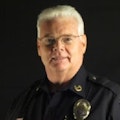 William L. Harvey
William L. Harvey
Chief
William L. "Bill" Harvey is a U.S. Army Military Police Corps veteran. He has a BA in criminology from St. Leo University and is a graduate of the Southern Police Institute of the University of Louisville (103rd AOC). Harvey served for over 23 years with the Savannah (GA) Police Department in field operations, investigations and completed his career as the director of training. Served as the chief of police of the Lebanon City Police Dept (PA) for over seven years and then ten years as Chief of Police for the Ephrata Police Dept (PA). In retirement he continues to publish for professional periodicals and train.