Responding to the Unthinkable: How LASER Training Shapes Active Shooter Response
What to know
- LASER training promotes rapid movement toward the threat, prioritizing neutralization to minimize casualties.
- Real-world case studies help police officers understand critical factors like delayed entry and communication failures that impact outcomes.
- Early intervention by first responders is vital, with LASER preparing officers to act swiftly and decisively in chaotic situations.
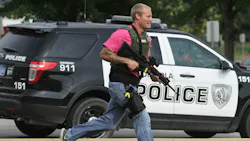
Active shooter incidents remain one of the most complex and time-sensitive threats facing law enforcement today. In these events, the outcome is often determined not by resources or manpower, but by the speed and quality of the first decisions made on scene.
Modern training has shifted the expectation of response from containment to immediate action. Programs such as LASER (Law Enforcement Active Shooter Emergency Response) reflect this evolution by emphasizing rapid deployment, decisive movement toward the threat, and the ability to operate effectively under extreme uncertainty.
For responding officers, the challenge is not simply knowing what to do—it is executing it correctly under stress, with incomplete information, and within seconds that directly impact survival outcomes.
Moving Toward the Threat
Modern active shooter doctrine has shifted away from containment strategies toward immediate engagement. LASER training reinforces this principle by emphasizing rapid movement toward the threat in order to stop ongoing harm as quickly as possible.
Officers are trained to:
- Respond without unnecessary delay
- Prioritize neutralizing the threat
- Operate effectively alone or in small teams
This approach reflects the reality that the first arriving officer often has the greatest opportunity to influence the outcome.
Training Through Real-World Lessons
A key component of LASER is its reliance on past incident analysis. Officers study previous active shooter events to understand what contributed to success or failure in real-time response.
Key lessons include:
- The impact of delayed entry on casualty rates
- Communication breakdowns during unfolding incidents
- The importance of decisive leadership in chaotic environments
These case studies provide critical context for improving future performance.
Scenario-Based Application
LASER training emphasizes practical application over theory. Officers are placed into realistic scenarios that simulate high-stress conditions.
Training includes:
- Movement through structures under stress
- Room entry and threat identification
- Coordination in dynamic, low-visibility environments
- Adapting tactics based on evolving threats
This hands-on approach helps bridge the gap between classroom instruction and field performance.
Decision-Making Under Pressure
Active shooter incidents rarely provide complete information. Officers must make rapid decisions with limited intelligence while maintaining operational focus.
LASER training reinforces:
- Independent decision-making when isolated
- Rapid threat assessment
- Maintaining control under high stress
- Adjusting tactics in real time
The objective is to build officers capable of functioning effectively even in incomplete and chaotic environments.
The Reality of the First Responder Role
In many active shooter situations, the first officer on scene faces the critical decision to engage immediately or wait for additional support. LASER training prepares officers for this reality by emphasizing speed, initiative, and tactical responsibility.
Early intervention often plays a decisive role in limiting further harm and stabilizing the situation.
Conclusion
Active shooter response remains one of the most complex responsibilities in modern law enforcement. Success depends on preparation, training, and the ability to act decisively under pressure.
Programs like LASER provide officers with structured training designed to improve response effectiveness in high-risk environments. While no training can eliminate the danger of these incidents, proper preparation significantly increases the likelihood of a successful outcome.
About the Author
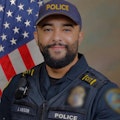 Jacob Abson
Jacob Abson
Jacob Abson is a law enforcement professional and instructor based in the Oklahoma City metropolitan area. He currently serves as a police officer in Oklahoma and is the owner of Abson Training and Security, with experience in overseeing safety and security operations in structured public environments.
He is a certified instructor in multiple disciplines, including law enforcement instructor development, defensive tactics, de-escalation techniques, crisis intervention, CPR/AED, emergency medical response, firearms instruction, and active threat/active shooter response training. His training background also includes scenario-based response development, use-of-force decision-making, and situational awareness instruction for both law enforcement and security personnel.
Abson’s professional focus includes the practical application of emergency response tactics, performance under stress, and officer safety principles in real-world environments. He has experience training personnel in structured settings such as schools, houses of worship, and community facilities, emphasizing rapid decision-making and coordinated response during critical incidents.
He actively provides instruction in LASER-based active shooter response methodologies, incident command fundamentals, and defensive response strategies designed to improve operational readiness and survivability in high-risk situations.
He is currently advancing his law enforcement career through continued instructor development and field experience, with an emphasis on improving decision-making under pressure, leadership in dynamic incidents, and strengthening frontline response capability.
Abson is committed to continuous professional development and believes effective law enforcement is built on disciplined training, realistic preparation, and consistent application of proven operational principles.