New FEMA Ala. Facility Prepares Police, First Responders for Major Emergencies
What to Know
- The Center for Domestic Preparedness in Anniston opened a new 43,000-square-foot Advanced Responder Training Complex designed to help police and other first responders prepare for major emergencies.
- Built on the site of a former Fort McClellan warehouse, the facility expands FEMA's training capabilities and supports a center that has trained over 1.5 million U.S. responders since 1998.
- Officials said the new complex will enhance emergency preparedness and strengthen the center's mission of "training the best for the worst."
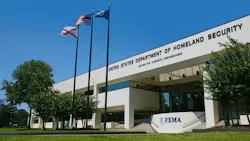
Officials say the new complex will expand the Center for Domestic Preparedness' ability to train responders for the nation's worst emergencies.
A site that once echoed with the sounds of young soldiers arriving at Fort McClellan is once again serving the nation — this time by preparing first responders for the emergencies communities hope never face.
Federal, state and local officials gathered Monday at the Center for Domestic Preparedness in Anniston to cut the ribbon on the Advanced Responder Training Complex, Building 640.
The 43,000-square-foot facility was constructed on the foundation of a former unused warehouse. The new complex is designed to help firefighters, police officers, health care professionals and other first responders prepare for complex emergencies.
The project took about six years from design through implementation, with actual construction beginning in 2023. The original building was demolished down to its concrete foundation before construction began on the new facility.
For CDP Acting Superintendent Chris Chesney, the ceremony represented more than the opening of another building. It represented the revival of a piece of Fort McClellan's history.
On that site, Chesney said, “is where initial entry training soldiers got off the bus and met their drill sergeant for the first time,” Chesney said.
Fort McClellan closed in 1999, and the building subsequently sat largely empty, occasionally being used for training and warehouse space. The facility now joins other specialized CDP training venues, including a chemical, biological and radiological training facility, Noble Training Hospital and a simulated street scene and subway designed to replicate real-world environments.
The CDP's mission is summed up in a phrase displayed prominently inside the new complex: “Training the best for the worst.”
“Training the best. The best is the first responder. Training them for the worst. That's their worst day on the job,” Chesney said.
The Center for Domestic Preparedness opened in June 1998 and provides specialized training to responders from all 50 states, the District of Columbia, tribal nations and U.S. territories. More than 1.5 million responders have trained at the facility since it opened, officials said.
The center trains more than 50,000 emergency responders each year.
U.S. Army Corps of Engineers Col. Kelcey Shaw said the new building is about more than bricks, mortar and square footage.
“Today we're cutting a ribbon on a building, but what we're really doing is we're delivering a capability,” Shaw said.
Shaw credited the partnership between the Army Corps, the Department of Homeland Security, FEMA and the CDP for bringing the project to completion.
"Our organizations wear different uniforms and carry different seals, but ultimately we serve the same American people," Shaw said.
FEMA Administrator Cameron “Cam” Hamilton said training is the foundation of effective emergency response.
“As much as I like to say that we rise to the occasion, in reality we default to our level of training,” Hamilton said.
Hamilton, who has gone through training at the CDP during his career, said the lessons learned at the Anniston facility can have an effect long after responders return home.
"I'm honored that we have this new facility," he said. "I'm honored that we can look for the future and know that the investments we make today will impact the lives of others for decades and generations to come."
DHS Under Secretary for Management Brian Cavanaugh, the ceremony's keynote speaker, said the project demonstrates what can happen when a community and federal agencies work together.
Cavanaugh, a former volunteer and career firefighter, said much of the work of emergency preparedness happens behind the scenes, through the people who make sure responders have the tools, resources and training necessary to do their jobs.
"What I see here is a community that's willing to adapt and overcome and meet challenges head-on every day to ensure that we have the Center for Domestic Preparedness here in Anniston, Alabama," Cavanaugh said.
He said the facility also provides a place where responders from different parts of the country can meet, exchange ideas and build relationships.
Cavanaugh said he hopes the CDP will eventually double the number of people it has trained.
The networking component is one of the things Chesney said makes the CDP especially valuable.
Students use the complex's break area to interact with other responders during training, sharing experiences and lessons learned from their respective jurisdictions.
"That is a metric that's immeasurable, but that's one of the big values of the CDP," Chesney said.
The new facility also represents a significant local resource.
“The biggest thing for us is just the training opportunity,” said Anniston Police Chief Clint Parris. “Just like this, training the best for the worst, because you just never know what's going to happen any day and in time.”
Nearby law enforcement departments gain something simply by avoiding extended travel time to distant training centers.
"It means we have a new place to send officers for more and better training right here locally," said Oxford Police Chief Daniel Phipps.
Phipps also pointed to the opportunity for local officers to interact with first responders from across the country.
"Of course, like they were saying, that it brings first responders from across our nation and across our world to come here and share ideas and network," Phipps said.
Retired Col. Chuck Keith, co-chair of the Military & Security Affairs Committee with the Calhoun County Area Chamber and Visitors Center, said the continued growth of the CDP strengthens the area's network of military and emergency-response organizations.
"The whole thing just keeps growing, and more people are coming," Keith said.
He pointed to the Alabama National Guard, Anniston Army Depot and CDP as important parts of the region's interconnected military and preparedness infrastructure.
A number of local agencies also participated in Monday's ceremony. Anniston Police Department, Oxford Police Department and Anniston Fire Department provided static displays.
Chesney said the CDP's local relationships stretch back to the 20th century days of Fort McClellan.
"The CDP is really tied to this community more so than I think of any other FEMA facility because we're out here in rural Alabama, Anniston, Oxford, Jacksonville area, and we really have a tight, close-knit relationship with our partners here," he said.
The ribbon was cut by Chesney, Thom Layou of FEMA's National Preparedness Directorate, Hamilton, Cavanaugh, DHS Deputy Under Secretary for Management Erin Hoffman, Shaw and Rodney Singleton, CDP director of Business Operations.
Following the ceremony, media members were given a tour of the new facility, including student services, staff and faculty offices, training classrooms, an auditorium and reception area.
__________
© 2026 The Anniston Star (Anniston, Ala.).
Visit www.annistonstar.com.
Distributed by Tribune Content Agency, LLC.