What Do Law Enforcement Officers Need in a Patrol Rifle?
What to Know
- Patrol rifles have evolved from simple long guns carried in the Wild West to essential tools for modern law enforcement, especially in active shooter scenarios.
- Key considerations for selecting a patrol rifle include engagement distance, caliber energy, magazine capacity, and the need for accurate, long-range fire.
- While AR-15-style rifles are common, other semi-automatic rifles and even lever-action models can meet patrol needs, depending on agency policies and local laws.
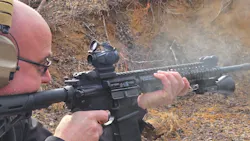
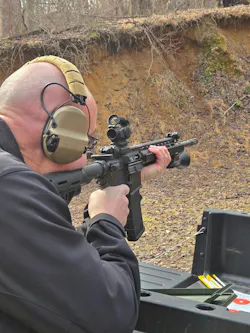
The idea of a patrol rifle really isn’t as new as many of us think it is today, but what we think of and the needs we articulate probably have changed over the years. Think about it: Even the lawmen of “The Wild West” carried a rifle in their buckboard or in a scabbard mounted to their horse’s saddle. Some carried two: one for fighting close up and one for longer shots. All of them carried a sidearm, or sometimes two. What’s really changed? The times and technology.
In terms of modern policing, the need for a patrol rifle exploded in parallel with active shooter response protocols. For a brief history lesson — prior to 1966 there weren’t any SWAT teams in the country. An officer might have had a personal shotgun or rifle in a patrol vehicle, but officers patrolling on foot certainly didn’t. After SWAT was developed, the average patrol officer would have less need for a rifle, although shotguns were still prevalent in squad cars. Then Columbine happened, and as we developed active shooter response, patrol rifles became more necessary. Why? Because we wanted to be better armed than the people committing the attacks, and some school hallways are longer than 100 yards. Making that long of a shot with a handgun isn’t something we train for, and even if we did, many didn’t have faith that the most common 9mm, .40 S&W, or .45 ACP rounds would deliver enough energy to stop the shooter. Enter the patrol rifle.
It’s a shame, looking back, that a lot of agencies only addressed one consideration: that of accuracy at longer engagement distances. They purchased long guns chambering those common handgun cartridges. It was an improvement but not a complete answer to the potential challenge. Yes, the officer had a better chance of hitting a target out past 50 yards, and yes, the round delivered more energy. But why skimp on something so obviously necessary?
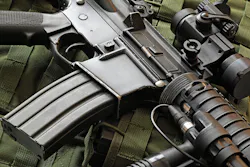
Other agencies selected patrol rifles in .223 or 5.56mm or other true rifle calibers, the most common being some variant of the AR-15 platform. Of course, in some places, that was met with immediate, largely political, complaint because law enforcement was “using a weapon of war” against a civilian populace. Never mind that it was just equivalent armament to that being used by some attackers. What it did accomplish was answering both needs fulfilled by a patrol rifle: longer accurate engagement distances and energy delivery that would (hopefully) stop the active shooter faster. And those are the two needs that should be addressed when any agency selects a patrol rifle or authorizes a variety of them for their officers.
Most agencies today train and qualify their officers with handguns out to a range of 25 yards. There are plenty of officers who can accurately engage targets beyond that with their handgun, but we have to remember that liability is also a concern, and most agency leaders want their officers to have all the accuracy they can muster. Quite often ammo capacity in said rifle also becomes a consideration. Historically speaking, some active shooters have had several hundred rounds of ammo preloaded into magazines, and it’s good for responding officers to have more than the opponents they face. On the other hand, some agency leaders want to limit just how many rounds their officers can fire downrange, remembering that every shot has to be accounted for.
So, what exactly do you need in a patrol rifle? As described above, the two most important considerations are engagement distance and accuracy, along with a caliber that delivers enough down-range energy to stop an attacker before they can do more harm. Unless the officer in question is a tactical team member, they do not need select-fire weapons (although such used to be available through the military surplus program). The average rifle available to any citizen can meet the requirements. It doesn’t have to be an AR-style rifle.
With a 16” barrel and fed from a detachable magazine, any semi-automatic rifle chambered in a reasonable caliber will suffice. In some areas, there might even be an argument made for lever-action rifles, and there are even box-magazine-fed lever actions available on the market today. The argument exists that a lever-action rifle is ‘too slow for repeat shots’ for use as a patrol rifle. The opposite argument exists that such a rifle would encourage slower and more accurate shots.
While iron sights are sufficient for the realistic engagement distances for a patrol officer, optics are common, relatively inexpensive, and easy to mount and zero. Magnified optics are a mixed blessing, but variable-power optics can be of benefit as long as the appropriate training for proper use of the same is delivered.
Training certainly has to be considered for any patrol rifle program as well. If you issue a handgun and a rifle, or even just authorize the rifle, then the training budget has to be increased to allow for the necessary training ammo, targets, time, etc. If you permit lights and/or optics on either (or both) weapons, that’s more training ammo and time that needs to be allotted.
It’s important to keep in mind that proper storage and security of the patrol rifle is vital. Whether it’s in a locked rifle rack in the patrol vehicle or inside of a locked and mounted weapon storage box, it can’t simply be left in a rifle case (hard or soft) in the trunk or rear storage area. We’ve all seen news stories of a law enforcement vehicle that’s been broken into and weapons stolen out of it. No agency needs that, and certainly no officer needs their personally owned agency-authorized weapons stolen.
At the end of the day, we would just encourage you not to “make do” when it comes to patrol rifles and the concerns attached to authorizing or issuing them. This is truly a case of “do it right or don’t do it at all.”
About the Author
 Lt. Frank Borelli (ret), Editorial Director
Lt. Frank Borelli (ret), Editorial Director
Editorial Director
Lt. Frank Borelli is the Editorial Director for the Officer Media Group. Frank brings 25+ years of writing and editing experience in addition to 40 years of law enforcement operations, administration and training experience to the team.
Frank has had numerous books published which are available on Amazon.com and other major retail outlets.
If you have any comments or questions, you can contact him via email at [email protected].