Mich. Police Sergeant Leads Outreach Effort to Connect Houseless Residents With Help
What to know
- A Kalamazoo police sergeant is leading a specialized community service team focused on connecting unhoused residents with housing, mental health support and other resources through repeated, non‑enforcement contacts.
- Sgt. Fidel Mireles, a 22‑year law enforcement veteran, oversees the Community Service Team, which works alongside clinicians and local partners to help people move from dependency to independence, even when individuals initially decline assistance.
- Mireles said the work can be slow and uncertain, but the goal is to build trust, remove bureaucratic barriers and offer support until people are ready to accept help.
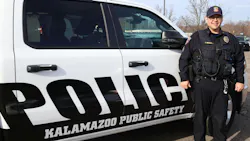
KALAMAZOO, MI—Sgt. Fidel Mireles recently spoke to a woman asking for money on the side of the road near Stadium Drive and Drake Road.
The woman said she was living in a tent nearby.
She wanted to find a job, but she had no address to put on applications.
The Kalamazoo Department of Public Safety sergeant suggested ideas to get an address, like staying at a homeless shelter. They exchanged phone numbers.
Mireles is the new leader of the “boots on the ground” team tasked with working with houseless residents of Kalamazoo — the KDPS Community Service Team (CST).
Officers don’t usually have the time to stop and talk with someone on the side of the road.
But now, Mireles and other members of the CST are tasked with reaching out to them.
“This is my primary calling now,” Mireles said.
Mireles took over as the leader of the team after Sgt. Amil Alwan retired in December 2025.
One of the biggest challenges is when the person won’t say yes to the offer for help, Mireles said.
For example, he called the woman from the side of the road a few times that next week.
No answer.
He hasn’t seen her since.
“Maybe she found some good resources and did better for herself. I don’t know. But that’s (the result) six or seven out of 10 times,” he said.
The CST’s goal is to help people go from dependent to independent, reducing reliance on public resources.
KDPS uses a co-response team where mental health clinicians ride with officers to address immediate crises on the scene. This is another program to help the department connect people with resources.
They work with community partners like Housing Resources Inc. and Integrated Services of Kalamazoo to get people help. KDPS offers city-funded bus tickets out of town for people with nowhere to live, looking for a way to a different part of the country.
The program is meant to help people get to where they have a support system or a place to stay, KDPS says.
Mireles hosts monthly partnership meetings with organizations to identify and fix bureaucratic hurdles that can discourage people from seeking help. He gets feedback from people on the street about obstacles that need to be fixed.
Despite some sad cases, he also sees hope on the job.
One such case was when he helped a mother and three children, displaced by a fire, find emergency housing.
The mother called him back recently, to thank him.
Taking the first step
Mireles has more than 22 years of law enforcement experience, with 19 years at KDPS. He spent years focused on community policing in the Edison neighborhood. He’s assistant commander of the hostage negotiation team and co-coordinator of the crisis intervention team.
Like his predecessor Sgt. Alwan, Mireles stressed the importance of making repeated contacts with people living on the streets who may need help.
Mireles’ position is embedded within the public safety department, which also handles typical police issues.
Mireles strives to help people access services like mental health support, basic needs and long-term housing. Officers sometimes have to choose enforcement instead when someone breaks the law.
The CST works through follow-up visits in hopes of helping someone before they progress into a worse situation or face trouble with the law.
While officers can’t control what happens after their contact with people on the street, they keep trying to make progress, especially with people they see regularly, he said.
The team has worked to improve data collection to track specific individuals rather than just incident locations, he said.
They also use the data to identify when someone’s behavior is escalating so police can intervene.
Mireles said he’s here to help.
A common obstacle is just taking the first step, he said.
It’s up to them to say yes.
“It just takes support and it takes the mental motivation of, ‘I don’t want to be in this predicament anymore,’” Mireles said. “We’re hoping that one day, the light switch will turn on for them and say, ‘Hey, these folks are actually going out of their way to help me.’”
_______________
©2026 Advance Local Media LLC.
Visit mlive.com.
Distributed by Tribune Content Agency, LLC.