Mass. High Court Upholds State Police Bodycam Use in OUI Case, Rejects Wiretap Claim
What to know
- Massachusetts’ highest court ruled that body-worn camera footage from a sobriety checkpoint can be used as evidence, overturning a lower court decision that had suppressed the recordings.
- The suspect argued he was unaware he was being recorded and claimed the footage violated the state’s wiretap law, but the court found officers did not intentionally record him secretly.
- Justices pointed to visible bodycams and signage warning of audio and video recording as evidence that police did not act “willfully,” allowing the footage to stand in the OUI case.
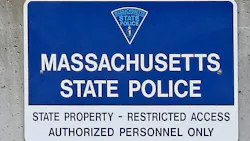
BOSTON—An OUI suspect who was able to get the police bodycam of his field sobriety tests tossed out has now lost the appeals case, resulting in a win for Mass State Police.
OUI suspect Scott Grimaldi, who was arrested at a sobriety checkpoint in 2024, had argued that the troopers’ body-worn cameras violated the wiretap statute.
Grimaldi claimed that he didn’t know he was being recorded until after his arrest, so he pushed in court to toss the body-worn camera recordings. That initially worked, as a Springfield judge allowed his motion to suppress — ruling that the recordings violated the wiretap statute.
The state then appealed the judge’s suppression order, and now the Supreme Judicial Court has reversed the lower-court ruling.
“Because the troopers did not commit a willful interception under the wiretap statute, we reverse the motion judge’s allowance of the defendant’s motion to suppress,” the SJC wrote in its ruling on Tuesday.
State Police in March of 2024 had set up a sobriety checkpoint on Page Boulevard in Springfield.
Grimaldi at around 11:30 p.m. pulled his black pickup truck into the checkpoint. After noticing the smell of alcohol, Grimaldi’s alleged slurred speech and his glassy eyes, a trooper directed him to the checkpoint “pit” — a separate screening area where troopers further examined drivers suspected of being impaired.
In the area where drivers were directed into the pit, there was a big, orange or yellow, and highly reflective sign saying, “Checkpoint, video and audio recording.”
The troopers created audio-visual recordings of Grimaldi using body-worn cameras — which were attached to their jackets, were openly displayed at chest level, and had red lights visible when recording.
Grimaldi was not told that he was being audio-visually recorded, and the district court judge found no evidence that he actually saw the large sign.
The recordings captured Troopers Sean Clark and Sarah Cantwell — both wearing body-worn cameras — administering two field sobriety tests to Grimaldi.
He first performed the nine-step “walk and turn” test, as he was instructed to walk in a straight line. During this test, Cantwell stood immediately to Grimaldi’s left.
Clark stood 10 to 15 feet to the right of Grimaldi, removed the body-worn camera from his chest, held the device near his torso, and pointed it toward the defendant to record his feet. Clark held the bodycam in this position for the entirety of the “walk and turn” test, which lasted about 40 seconds.
Then, Grimaldi performed the “one-leg stand” test, during which Clark no longer held the bodycam but instead reattached it to the outside of his jacket. During this test, both troopers remained facing Grimaldi and stood several feet away from him: Cantwell to his left, and Clark to his right.
Following the second test, Grimaldi was arrested, and he was charged with operating a motor vehicle while under the influence of intoxicating liquor.
Before the trial, Grimaldi filed a motion to suppress the bodycam recordings — arguing that the troopers violated the wiretap statute by not telling him he was being audio-visually recorded.
Then, the district court judge found that “the defendant was not reasonably put on notice of any recording.” As a result, the troopers’ use of the body-worn cameras in this case violated the wiretap statute, and the judge allowed Grimaldi’s motion to suppress.
According to the Supreme Judicial Court, suppression is warranted under the wiretap statute when an interception was committed “willfully.”
“… Willfulness requires not merely an intent to record, but rather an intent to secretly record — i.e., an intent to record someone without their knowledge,” the SJC wrote.
In this case, the troopers did not commit a willful interception under the wiretap statute, the high court ruled.
“First, regardless of whether the defendant saw the sign warning drivers that they were being recorded, the use of the large, reflective roadside sign at the checkpoint demonstrates that the troopers intended to, and did, notify motorists that they were being audio-visually recorded,” the SJC wrote. “Additionally, on the facts of this case, the troopers’ open use of the body-worn cameras indicates that they did not intend to secretly record the defendant.
“Specifically, the body-worn cameras were attached to the chest of the troopers at the checkpoint and had visible red lights displayed when in operation,” the court added. “Moreover, Clark, who was standing ten to fifteen feet away from the defendant, openly used his body-worn camera as a handheld device during the ‘walk and turn’ test. He detached the camera from his jacket and pointed it directly at the defendant’s feet to record the defendant’s movements during the test.”
----------
©2026 MediaNews Group, Inc.
Visit at bostonherald.com.
Distributed by Tribune Content Agency, LLC.