Crime Lab Funding Dispute Could Delay Cleveland Police Investigations
What to Know
- A dispute between Cleveland and Cuyahoga County over crime lab funding could threaten the city's access to forensic testing services when the current contract expires at the end of the year.
- County officials rejected Cleveland's proposal to extend its agreement through 2027, arguing the city's offer of roughly $500,000 annually does not cover its share of the lab's costs.
- Prosecutors and lab officials warn that sending more evidence to the state crime lab could create longer waits for DNA, ballistics and drug-testing results, potentially delaying criminal cases.
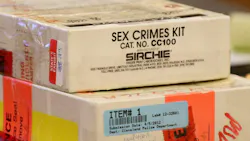
Cleveland police could wait longer for DNA, ballistics and drug test results next year if the city and Cuyahoga County can’t agree on what Cleveland should pay to use the county’s crime lab.
The city recently increased its contract with the Medical Examiner’s Office’s Regional Forensic Science Laboratory to $500,000 this year for evidence processing. But those negotiations took nine months, and Hugh Shannon with the Medical Examiner’s Office said the county only accepted the offer so it could get “at least some revenue” for the year.
The amount “was not deemed sufficient” for future years, he said. The county rejected a proposal to extend the contract through 2027, despite it coming with another slight bump to $522,500.
“The amounts were not suitable to the administration or Dr. Gilson so we are negotiating for 2027,” Shannon told the county’s Board of Control this week, referring to Medical Examiner Dr. Thomas Gilson.
The current contract ends Dec. 31.
Neither city nor county officials responded to questions about the potential impact it could have on Cleveland investigations if they don’t reach a new deal before then.
They also did not answer questions about whether Cleveland would be cut off from the lab on Jan. 1. The county kept testing the city’s evidence during negotiations this year.
But Shannon suggested to the Board of Control that if the city does lose access, it would have to start sending all of its evidence to the Ohio Bureau of Criminal (BCI) Investigation for processing.
Under state law, any law enforcement agency in Ohio can send evidence to BCI’s regional labs across the state, and that testing is mostly free. The state lab already performs some evidence testing for the city when requested, but Shannon said those results face significant wait times.
If BCI were to take on all of the city’s testing, which Shannon said accounts for over half of the county lab’s workload, it would further strain the state’s resources and likely exacerbate those wait times.
Cleveland.com reached out to BCI for comment.
Any delays could affect Cleveland Division of Police cases – and county prosecutions. And that has Prosecutor Michael O’Malley worried. He said he wasn’t aware of the negotiation issues, but he understood the problems it could create if evidence is not processed timely.
“People will end up sitting in jail for longer,” he said. “Cases can’t be disposed of.”
At the same time, though, he supported the county’s position.
“I think that the city of Cleveland should pay their fair share of the Regional Forensic Lab,” he said.
Faster processing is part of the reason the Medical Examiner’s Office opened its own regional lab back in 2014. Officials said it would provide a “localized approach, which saves municipalities time and allows for rapid response in emergency situations or meeting critical deadlines.” It also offered expanded services and evidence tracking.
Today, the lab continues to provide testing services to nearly all law enforcement agencies in the county, Communications Director Kelly Woodard confirmed to cleveland.com/The Plain Dealer. But because Cleveland accounts for more than half of the volume of submissions, she said it is the only jurisdiction with a dedicated contract to pay for that testing.
The lab is budgeted to cost $9.1 million in 2027, county documents show.
Cleveland argues it has been paying.
City spokesman Tyler Sinclair said that Cleveland originally was paying $200,000 a year for testing services and increased the amount to $300,000 in 2017. Now, understanding that nationwide inflation rates mean everything costs more, he said City Council agreed to raise the payment again to $500,000.
He called it a “fair, but still significant adjustment” that came with another bump next year to $522,500. Council approved the agreement Oct. 19.
“The City’s flexibility and willingness to come to the negotiation table with an open mind is what good governmental partnerships are all about,” Sinclair said. “We remain hopeful that the County recognizes this and that we’ll soon reach an agreement for 2027.”
A City Council spokesman was not aware of problems with the 2027 contract. He said it didn’t come up when council approved the contract.
Shannon, however, called the city’s prior agreement a “sweetheart deal” and said the county expects more compensation going forward. He didn’t put a price on what amount north of $500,000 the county would consider fair.
Woodard also did not answer the question. Instead, she pointed to the “sophisticated types of testing” and “accredited expert forensic testing solutions” that the entire justice system benefits from. The lab tests drugs, fingerprints, firearms and toolmarks, DNA, trace evidence and toxicology.
Woodard said negotiations remain ongoing and “in good faith.”
“Because these services are vital to both of our respective criminal justice systems, we want to ensure any agreement with the City of Cleveland reflects the operational needs of both the City and the Medical Examiner’s Office,” she said.
Shannon noted the office has also approached the state about helping pay for the county lab’s work, considering the number of cases it handles that could otherwise go to BCI. It’s unclear whether the state was receptive.
“We’re kind of caught between the state and the city right now trying to come up with a fair amount for what we’re doing,” Shannon said.
Sinclair maintains the city’s offer is fair and pointed to the county’s own statements from 2014 as evidence. At the time, the county called the lab a vital resource for solving crimes and getting habitual offenders off the streets and said the low-cost testing would promote regional cooperation.
“The City believes that still holds true today,” Sinclair said.
_____________
©2026 Advance Local Media LLC.
Visit cleveland.com.
Distributed by Tribune Content Agency, LLC.