New Ind. Law Opens Door for Expanded DNA Testing in Cold Case Investigations
What to know
- A new Indiana law will allow nonprofit organizations to fund DNA testing or retesting in long-unsolved murder, rape and missing persons cases, potentially helping clear thousands of cold cases statewide.
- House Enrolled Act 1248 creates a framework for outside funding when law enforcement agencies lack time or resources to pursue costly DNA analysis, which can run $40,000 to $60,000 per test.
- The law was inspired by the 1993 murder of Carmen Van Huss, a case solved decades later through advanced DNA testing.
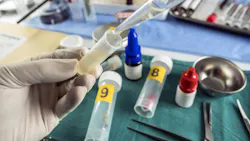
A new Indiana law may help solve an unknown number of long-stalled murder, rape and missing persons cases across the state through expanded testing, or retesting, of DNA evidence.
House Enrolled Act 1248, which takes effect July 1, establishes a framework for established nonprofit entities to cover the costs of "cold case" DNA testing at the request of a cold case victim, a family member, county coroner or a cooperating law enforcement agency.
State Rep. Carey Hamilton, D- Indianapolis, the sponsor of the new law, said the goal is to make it easier to apply the latest crime-fighting technology to cold cases when local police agencies are too busy with current investigations or unwilling to pay for costly testing for cases on the back burner.
"These tests cost $40,000 to $60,000 per test. Indiana currently has over 7,000 unsolved cold case homicides and more than 1,100 missing person cold cases. Many of these cases contain DNA evidence that thanks to modern forensic technology could be reanalyzed today with dramatically improved accuracy, speed and enhanced visual leads," Hamilton said.
Hamilton is not certain how many nonprofit organizations will want to fund cold case DNA testing. But she's hopeful organizations like Crime Stoppers, which rewards individuals who provide effective crime tips to police, will be interested in supporting this as well.
"It helps secure justice where it has been delayed too long," Hamilton said. "We believe it could be dozens, if not hundreds, of families that will receive justice through this law."
Hamilton explained that the law was inspired by the case of 19-year-old Carmen Van Huss, who was raped and stabbed to death in 1993 by an unknown person in her Indianapolis apartment.
Decades later, advanced DNA testing funded in part by private donations collected through the internet linked Dana J. Shepherd, 53, to the killing. He pleaded guilty last year to murder and was sentenced in February to 45 years in prison, records show.
"Carmen's case was solved using advanced DNA testing, and her family has been the driving force behind this bill to help bring more cases like hers to a close. Carmen's Law will help bring justice to the thousands of unsolved homicide victims and their loved ones, as well as get violent offenders off the streets to prevent further tragedies," Hamilton said.
The measure, co-sponsored by state Sen. Rodney Pol Jr., D- Chesterton, among others, was approved without opposition in either the Indiana House or Senate, and was signed into law March 3 by Republican Gov. Mike Braun.
________________
© 2026 The Times (Munster, Ind.).
Visit www.nwitimes.com.
Distributed by Tribune Content Agency, LLC.