Modern DNA Analysis Software: Enhancing Quality, Efficiency, and Confidence in Forensic DNA Analysis
By Dr. Meng-Han Lin, STRmix Senior Scientist, and Veronica Kearney, a retired DNA Technical Leader at the Tucson Police Department Crime Laboratory.
Forensic DNA laboratories face increasing demands to process larger volumes of criminal cases, interpret more complex DNA mixtures, and maintain rigorous quality standards while operating with finite resources. The demands on DNA analysis software have evolved beyond simple data visualization tools into comprehensive decision-support platforms that improve analytical consistency, streamline crime lab workflows, and enhance confidence in forensic DNA interpretation.
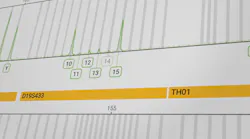
FaSTR™ DNA is an example of an analysis software developed to fulfill these requirements, implementing advanced algorithms that provide a data-driven, multi-dimensional assessment of DNA profiles generated by capillary electrophoresis. Enhanced baseline evaluation and peak-calling algorithms, adapted from the fundamental process implemented in OSIRIS [1], provide a more robust assessment of electropherogram data than traditional manual review alone. Automated modeling of amplification artifacts — including an unrestricted number of types of stutter products — allows crime laboratories to identify and appropriately classify these expected artifacts, enabling analysts to focus their expertise on data requiring scientific interpretation rather than repetitive routine assessment.
Additional automated quality-control features further strengthen the analytical process. Detection of pull-up artifacts, poor peak morphology, and known STR kit artifacts, together with assessment of partial DNA profiles and other quality indicators, directs analyst attention to areas where expert review is most valuable. Rather than replacing scientific judgment, these tools prioritize review, improve data clarity and consistency, and reduce the likelihood that subtle but important data characteristics are overlooked.
Another focus of FaSTR™ DNA is adaptability to individual laboratory workflows. Whether a crime lab employs four analysts or 40, or uses paper or electronic case files, FaSTR™ DNA is designed to be configurable to support existing quality systems and minimize the requirement on laboratories to redesign established processes. Upon import, raw DNA profile data is automatically assessed against sample-level quality requirements, and peak data is analyzed using laboratory-specific analysis rules and thresholds (established during internal implementation and validation). This stepwise approach standardizes routine analytical processes while preserving analyst oversight where further expert judgment is required.
Advanced capabilities further extend the software's value. Batch comparison tools can identify samples with highly similar DNA profiles, providing an additional mechanism for detecting potential contamination events. Automated estimation of the number of contributors (NoC) using pre-trained decision-trees facilitates a consistent process amongst analysts within a laboratory. For supported STR kits, pre-trained artificial neural networks provide an additional layer of decision support by providing an independent assessment of the likely nature of a peak call. Importantly, these technologies complement — not replace — the expertise of the forensic scientist by serving as intelligent aids to interpretation while maintaining full analyst responsibility for final decisions.
Post-analysis technical review processes may vary among different laboratories. The Review Module within FaSTR™ DNA enables the reviewer to assess analyst decisions in parallel with the observed epg profile, as well as the relevant sample- and peak-level details. Reviewers may then either enter comments to suggest corrections, or modify analysis calls directly, as needed.
These same capabilities also provide significant educational benefits. The information available within the Review Module enables trainees to compare their analytical decisions with automated assessments and document the rationale for any differences. This structured feedback reinforces training, promotes consistent interpretation among analysts, and provides supervisors with an effective framework for mentoring new staff.
The available sample and peak detail data produced by the software also address an often-overlooked operational challenge: analyst decision fatigue. Reviewing hundreds of electropherograms, particularly complex DNA mixtures, requires sustained concentration and repeated judgment calls. By automating routine quality assessments and highlighting data that merits closer examination, FaSTR™ DNA reduces cognitive workload while allowing analysts to devote more attention to complex interpretive decisions that require scientific expertise.
Integration with probabilistic genotyping software further enhances laboratory efficiency.
One key advantage to utilizing FaSTR™ DNA analysis software with its companion DNA Interpretation software, STRmix™, is the alignment of the use of identical stutter models to provide the scientist with a heightened level of awareness to deduce a DNA profile for appropriate evaluation in the probabilistic genotyping software. This is beneficial for NoC estimation and ease of implementation but has no influence on the probabilistic genotyping models in STRmix™. Features that accommodate the export of DNA analysis data for use in manual or probabilistic genotyping DNA interpretation platforms make this system adaptable and versatile.
For any software/algorithm, the developmental validation study provides the first important confirmation of the veracity of the analysis outputs from the software. The developmental validation of FaSTR™ DNA was published in a peer-reviewed journal article [2], demonstrating fulfilment of the requirements of the then-applicable FBI QAS 2020.
The internal validation and implementation of analysis software is also important for each casework laboratory. A collaborative effort between the STRmix scientific support team and the laboratory’s validation team provides a clear pathway for undertaking all necessary test and validation requirements whilst ensuring that these are fit for purpose for each laboratory and in accordance with the FBI QAS. The internal validation study also provides clarity for analysts’ understanding of the performance of a method/software process.
Modern DNA analysis software has become an essential component of forensic DNA casework. When properly validated and integrated into laboratory workflows, it improves analytical consistency, enhances efficiency, strengthens quality assurance, supports analyst training, reduces cognitive burden, and facilitates seamless downstream DNA interpretation. As crime laboratories continue to manage increasing workloads and more complex DNA evidence, these capabilities enable faster, more consistent, and scientifically robust analyses while preserving the expert judgment that remains central to forensic DNA interpretation.
Meng-Han Lin is a Senior Scientist at the New Zealand Institute for Public Health and Forensic Science Limited (PHF Science) and has been employed in the STRmix team since 2016. A molecular biologist by background, his role is primarily responsible for the development, validation, and support of FaSTR™ DNA analysis software. For more information, visit https://www.strmix.com/
Veronica Kearney is a retired DNA Technical Leader from the Tucson Police Department Crime Laboratory, now independently contracted with the STRmix team. With over 20 years of experience in forensic DNA analysis, she is lending her scientific expertise, laboratory leadership, courtroom experience, and professional education for future projects with the team.
[1] R.M. Goor, L. Forman Neall, D. Hoffman, S.T. Sherry, A Mathematical Approach to the Analysis of Multiplex DNA Profiles, Bulletin of Mathematical Biology 73(8) (2011) 1909-1931.
[2] M.-H. Lin, S.-I. Lee, X. Zhang, L. Russell, H. Kelly, K. Cheng, S. Cooper, R. Wivell, Z. Kerr, J. Morawitz, Developmental validation of FaSTR™ DNA: Software for the analysis of forensic DNA profiles, Forensic Science International: Reports 3 (2021) 100217.