How to Catch A Criminal: Starting Over
What to Know
- John List murdered his family in 1971 due to financial hardship and his strict religious beliefs, staging the crime scene meticulously before fleeing.
- The case remained unsolved for nearly two decades until a televised reenactment and forensic artistry led to his identification as Robert Clark in Virginia.
- List’s confession letter revealed his motives, and he was convicted in 1990, spending the rest of his life in prison until his death in 2008.
More on OFFICER.com
Download the November/December issue of OFFICER Magazine.
Click Here to subscribe to OFFICER Magazine.
Every officer with a decent amount of time on the job knows the unexpected turns an investigation can take. Seeing a major case through to completion often involves giving up on a theory and taking your investigation in a different direction as new information becomes available. In How to Catch A Criminal, we look at the many ways not-so-perfect crimes are solved. This month, a man does the unthinkable but convinces himself he made the right choice.
Desperate times call for desperate measures, and a desperate man is a dangerous man. Sometimes life presents you with difficult circumstances that seem insurmountable. It is up to the individual whether they rise to the occasion and give it their all or simply give up. Losing a job, facing a divorce, receiving a grim medical diagnosis, and the passing of a loved one are just a few examples of hard times that might stand in your way as you try to navigate your way to a happy life. In the moment, it may feel like the hard times will never end and giving up is the only option. However, determination and courage can carry you through to the other side. In the most extreme cases, the light at the end of the tunnel may come from giving it all up and having a fresh start. That begs the question: how do you leave your old life behind before you begin another?
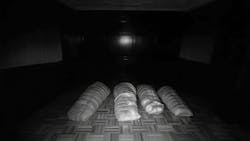
On December 7, 1971, police officers in Westfield, New Jersey, were dispatched to a welfare check at a lavish residence known as “Breeze Knoll.” Formerly the home of a stationary production millionaire, the home belonged to the List family. Not much about the family was known to their neighbors, other than they were pleasant, well-mannered people, which is exactly what drew suspicion. No one had come or gone from the gigantic 18-room mansion, yet all the lights were left on with music blaring. The List’s would never be so inconsiderate as to leave their lights on all night to flood the neighborhood, and loud music was out of the question for the normally quiet family. In fact, the lights had been left on so long that some of the bulbs were starting to burn out. When the officers arrived, they discovered that all-too-familiar smell and forced open a window. As they cleared the massive home, they discovered a shocking scene in the ballroom. Four bodies were wrapped in sleeping bags, arranged under the skylight in the ballroom. After opening the sleeping bags, it didn’t take long to identify the bodies as 45-year-old Helen List, and her children, 16-yearold Patricia, 15-year-old John Jr., and 13-year-old Frederic. Each of them had been shot in the back of the head, with John Jr. suffering at least nine additional gunshot wounds. This discovery left two of the home’s occupants unaccounted for: 46-year-old John List, the Patriarch of the family, and his mother, 84-year-old Alma List. As officers made their way to the third apartment on the third floor, they found Alma, dead on the floor, with a cloth covering her head. John, however, was nowhere to be found.
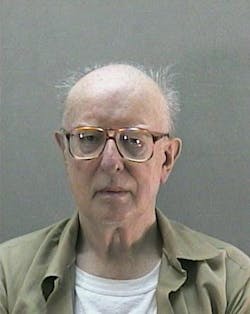
The first step in the investigation was to find a photograph of John, so his description could be broadcast to surrounding agencies to help locate him. This led to a strange twist when officers discovered his face had been cut out of every single, family photo in the house. Whoever did this could have simply removed the photos from the house, but instead meticulously removed John from each one. A move like that would be seen by investigators as personal, as well as the fact that the victim’s faces were covered. The killer likely felt shame and couldn’t stand to look the family members in the eye, and that included pictures of John, whose whereabouts were unknown. The personal nature of this crime and the culprit were quickly discovered. In the study, officers found a five-page letter, addressed to the family’s pastor, written by John List. John, a deeply religious man, confided every bit of what happened to his family to the Pastor. Aside from gruesome details and absurd reasoning, the most chilling part was the letter’s date: November 9, 1971. Wherever John was, he had a one-month head start. Officers would later find John’s car at John F. Kennedy Airport in New York but found no records of him boarding a flight. The manhunt for John quickly grew cold, and he remained a wanted man, hiding from his crime for nearly two decades.
The case quickly changed from ice-cold to red-hot when the television show America’s Most Wanted featured the unsolved family massacre in 1989. Since the case was so old, no current pictures of John List were available to show the audience when requesting information. Instead, the producers hired renowned forensic artist Frank Bender to create an 18-year-aged clay bust of John List. When the bust was presented at the end of the program, a group of neighbors in Aurora, Colorado, got to talking. They all agreed the bust looked identical to Robert Clark, their former neighbor. Clark was an accountant who had just moved to Midlothian, Virginia, with his wife. The suspicions were enough for one neighbor to call the America’s Most Wanted tip line. Just a few days after the program aired, Robert Clark was brought in for questioning and fingerprinting. Though he insisted he never knew anyone named John List, his fingerprints happened to be an exact match for the man who killed his family in New Jersey in 1971.
At his trial in 1990, John List, formerly Robert Clark, formerly John List, faced five counts of first-degree murder. He also faced his confession letter being read to the public for the first time. The details of the murders were as follows: John was a successful accountant in 1965 and bought his wife her dream home, the Breeze Knoll mansion, which was a stretch to afford already. In early 1971 he lost his job and couldn’t find anything that would bring in enough revenue to support his family and their lavish home. John couldn’t stand to tell his family they were in dire straits and opted to keep up appearances instead. Every day he put on his suit, left the house, and did nothing but read the newspaper until it was time to head home. Even though he was able to pilfer cash from his mother’s bank account, eventually it wasn’t enough. Even a second mortgage couldn’t keep the bill collectors at bay, and something had to give. John decided to downsize, and living off of Welfare was not going to keep his family happy. He was also concerned that his wife not going to church and his daughter wanting to become an actress was going to lead them away from their Christian beliefs. The only way he saw out was to move on from this life. For his family, he meant that literally. Unable to take his own life because it would keep him from going to Heaven, John decided to kill his family, knowing they would make it to the pearly gates, and perhaps later he could confess and ask for forgiveness. On the morning of November 9, 1971, John shot his wife Helen in the back of the head with a 9mm pistol. He then approached his mother in the third-floor apartment. When she asked about the noise downstairs, he kissed her, before bringing the gun to her head and firing. He cleaned the blood off the floor both in the apartment and in the downstairs kitchen before placing Helen in a sleeping bag in the ballroom. Alma was too heavy to carry downstairs, so she remained in the apartment, covered with a cloth. John then went to the post office to stop mail being sent to the house and then to the bank where he closed, he and his mother’s accounts. He returned home, fixed himself lunch, and shot his daughter Patricia in the back of the head with a .22 revolver as she arrived home from school. He did the same to his son Frederick as he arrived shortly after. After more cleaning, John attended John Jr.’s soccer game that afternoon before driving him home and shooting him as well. John Jr. did not die instantly, causing John Sr. to unload the rest of the .22 and the 9mm into him, to prevent further suffering. John finished staging the bodies, wrote his confession, turned on the lights and music, and drove to the airport where he caught a bus into the city, and a train to Colorado where he started his new life as Robert Clark.
List was found guilty and sentenced to five life terms in prison. After being a failed father, and living a lie as an accountant, John List began his third attempt at making a life for himself, this time as a prison inmate. He continued this new endeavor until he died from pneumonia in 2008. Just a few years after the murders, Breeze Knoll was burned to the ground, most likely by arson. When Investigators were searched the rubble, they made an ironic discovery of a skylight over the ballroom, where the bodies of the List family were once laid. The beautiful glass skylight was a signed Tiffany original, worth double what John List had paid for the house. As it turns out, he could have found the solution to his problems if he had just looked up.
About the Author
 Officer Brendan Rodela, Contributing Editor
Officer Brendan Rodela, Contributing Editor
Brendan Rodela is a Sergeant for the Lincoln County (NM) Sheriff's Office. He holds a degree in Criminal Justice and is a certified instructor with specialized training in Domestic Violence and Interactions with Persons with Mental Impairments.