San Diego Police Chief Rejects Limits on Pretext Traffic Stops
What to Know
- The Commission on Police Practices recommended restricting stops for minor equipment violations and other reforms to reduce disparities.
- Wahl rejected a blanket ban, citing recoveries of firearms and drugs, arrests, warrants and cases involving sex-trafficked minors.
- The commission called the chief’s response late and inadequate, saying it rejected the substance of its recommendations.

SAN DIEGO -- San Diego Police Chief Scott Wahl has rejected the police oversight commission’s recommendation to end traffic stops based on minor equipment violations such as broken taillights and tinted windows, saying it could negatively impact public safety and limit officers’ ability to identify and address criminal activity.
On Monday, Wahl sent a nine-page memo to the Commission on Police Practices, which in August had called on the department to restrict so-called pretext stops and work to promote “bias-free” policing. In his response, Wahl said current policies and officer training already cover many of the reforms sought by the commission and said lawful traffic stops, including pretextual stops, remain important investigative tools that help keep the community safe.
“The department recognizes and acknowledges the community concerns and disparity data the commission cites,” the chief said. “At the same time, these stops remain a lawful investigative tool that continue to produce recoveries of firearms, narcotics, outstanding warrants, arrests for driving under the influence and the recovery of sex trafficked minors that would otherwise go undetected. … A blanket prohibition on initiating stops for the listed violations would reduce proactive opportunities to address public-safety threats.”
The chief also questioned whether limiting or banning such traffic stops would do much good, saying that other unnamed jurisdictions that took such steps “have not demonstrated to the department that these restrictions would meaningfully reduce racial disparities or improve public safety.”
In a statement, the commission called Wahl’s response “untimely and tone deaf,” pointing out the department had missed the 60-day deadline by three days. It noted that the police chief accepted the spirit and intent of the recommendations but rejected their substance and content, which it called “hollow harmony.”
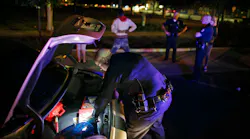
Pretext stops occur when police rely on low-level violations — such as broken brake lights, expired registration tags or missing front license plates — as probable cause for pulling people over to investigate unrelated suspected crimes. In calling for a change, the commission had argued that such stops often produce limited public safety benefits relative to the distrust, complaints of unfairness and racial disparities they generate.
Changing the practice, the commission said, would “go the farthest toward creating a more equitable and community-responsive police practice” and noted that Wahl’s focus on the use of such stops as an investigative tool highlighted what it called the problem at the heart of the issue.
“They are supposed to be conducted to enforce laws designed to protect the public from a violation posing some danger,” the commission said. “But Chief Wahl sees them as an investigative tool creating opportunity for new discoveries.
“Observation of minor infractions should not be used as an occasion to fish for major felonies,” the commission said. “These fishing expeditions lead to harassment, unwarranted provocation and, in some instances, avoidable violent confrontations.”
Wahl’s response to the recommendations, the commission said, “fails to seize an opportunity to embrace meaningful modification of SDPD pretext stop practices that would strengthen the SDPD’s legitimacy in the eyes of the community.”
The Commission on Police Practices was formed after voters approved a ballot initiative in 2020. It was intended to provide independent community oversight of the police department with a goal of increasing community trust in the agency and safety for community members and officers. One of its tasks is to evaluate and review policies, practices, training and protocols, and to represent the community in making recommended changes.
Two years ago, the commission sought to change the department’s policies regarding police pursuits after several deaths occurred as a result of chases. The commission recommended tighter restrictions on pursuits, but the police department declined to adopt the recommendations.
In his memo sent Monday, Wahl said the department supported many of the principles underlying the commission’s recommendations, including reducing racial disparities, strengthening procedural justice and ensuring enforcement decisions rest on objective facts. He said existing department policies and training, body-worn camera requirements and compliance with current laws “reflect these shared priorities.”
But he said he disagreed with some recommendations that conflict with current legal standards and established law enforcement practices that he said are important to maintaining safe communities.
The commission had sought several other changes beyond ending pretext stops, including prohibiting stops based on parole or probation status or prior criminal history, and limiting stops to address an observed violation so that “officers may not extend a stop based on hunches” unconnected to objective factual information.
They also called on the department to implement principles of procedural justice during traffic and pedestrian stops, calling for training that “preserves the dignity and respect of the civilian” by directing officers to treat people with professionalism and training officers to be sincere, truthful and empathetic during stops, among other things.
Wahl agreed with that recommendation and said he believed its existing policies, training and operational practices substantially addressed the issue. Principles of procedural justice are a “cornerstone” of training that recruits and officers undergo, the chief said. “Procedural justice is not a one-time initiative at SDPD but an ongoing commitment.”
The commission also had wanted officers to stop initiating field interviews or separate investigative encounters based on low-level traffic or equipment violations, and wanted questioning to be limited to matters related to the purpose of the stop, unless the officer had “independent reasonable suspicion of criminal activity.” Wahl said the department did not support “categorically restricting otherwise lawful consent or consensual encounters” based solely on the initial reason for the stop, and said a field interview was a voluntary contact and did not by itself constitute a detention.
With the department’s response now in hand, the commission hopes community members and elected officials will continue to talk about the need for changes.
“We urge San Diego city leaders to take the necessary action and the San Diego community to continue in the necessary conversation to rid our city of this dangerous, divisive and discriminatory daily practice of the San Diego Police Department,” commission Executive Director Roger Smith said in a statement.
The suggested policy changes came after the commission’s staff analyzed data collected under California’s Racial and Identity Profiling Act, or RIPA, which requires law enforcement officers to document demographic information, reasons for stops, actions taken during those encounters and their outcomes.
San Diego’s 2024 data reflects substantial racial disparities in several enforcement actions taken during police stops. Individuals perceived to be Black were 4.42 times more likely to be frisked than people perceived as White, and 3.36 times more likely to be asked for consent to search their property. They were also more than three times as likely to be subjected to force and to be handcuffed, the commission report said.
Black drivers also were more likely to have their parole status questioned and to be detained at curbside or in patrol cars. The commission found similar disparities affecting people perceived to be Hispanic or Latino, though generally at lower levels than those affecting Black drivers.
The police chief’s office was required under the municipal code to provide a written response within 60 days. A department spokesperson said the response wasn’t provided Friday because it wasn’t finished.
©2026 The San Diego Union-Tribune. Visit sandiegouniontribune.com. Distributed by Tribune Content Agency, LLC.