Michigan State Police, Cities Clash over Who Should Patrol Freeways
What to know
-
A Michigan State Police email directing local agencies to stop forwarding freeway calls reignited disputes over staffing shortages and responsibility for highway patrols in Oakland and Macomb counties.
-
State police leaders later verbally rescinded the directive, but local police and sheriffs are seeking written confirmation to avoid confusion for dispatchers, officers and the public.
-
The controversy renewed long-standing concerns about fairness, with some communities receiving state police patrols at no direct cost while others pay for sheriff services and face strained response times.
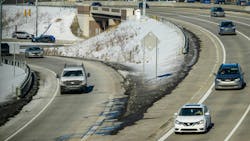
A Michigan State Police directive has rekindled a decades-old debate about who should pay for highway patrols and whether local law enforcement agencies should take over freeway duties in certain situations.
A Jan. 9 email from MSP Inspector Neil Donahue, acting commander of the state police's Second District, said the Metro North Post in Oak Park "does not have sufficient resources to routinely respond to calls for service on incorporated freeway segments within Oakland and Macomb Counties."
The email continued: "Please refrain from forwarding freeway-related calls for service within your jurisdiction to the MSP Detroit Regional Communication Center."
The firestorm over the email prompted Michigan State Police officials to call law enforcement agencies to verbally rescind the directive, said Oakland County Sheriff Michael Bouchard and Michigan Association of Chiefs of Police Executive Director Bob Wiles. But local agencies are pushing for written notices of the revocation, Bouchard and Wiles said.
The state police directive has had no impact in Macomb County, where Sheriff Anthony Wickersham said his deputies already handle freeway cases because troopers aren't available. "I am not aware of any delays or lack of response to any expressway calls," Wiles told The Detroit News in an email. There have been no delays in response in Oakland County, Bouchard spokesman Stephen Huber said in an email.
The state police email has also resurrected a debate about state police troopers' responsibilities and whether communities should receive free MSP patrols at the expense of taxpayers statewide. Officials in townships that contract with sheriff's offices complained that the deputies funded by their taxpayers are getting pulled to answer runs in the areas under MSP jurisdiction because no troopers are available.
The issues spawned by the Michigan State Police email were discussed during a Jan. 30 meeting at the Oakland County Sheriff's Office that was attended by state lawmakers, and police and sheriffs officials from across Oakland and Macomb counties. Bouchard said the meeting was set before the email was sent, although it dominated the discussion.
"You've got a lot of local agencies that are upset about this," Bouchard said. "MSP said they're short-staffed; well, everyone is short-staffed."
Wiles said police officials are seeking written confirmation that the email had been rescinded.
"From what was shared at that meeting, there was an understanding that the earlier guidance regarding freeway-related calls for service had been verbally rescinded ... and that the Michigan State Police would return to handling those calls as they had previously," Wiles said in a statement. "What chiefs are looking for now is simple clarity. Written confirmation would help ensure everyone in those affected areas; local, county, and state agencies, including dispatch centers, are operating from the same understanding and avoiding confusion for their officers and the public."
When asked if the emailed directive had been revoked, Michigan State Police 1st Lt. Michael Shaw said: "We're continuing to work with our partners across the state to make sure we provide the best public safety possible."
The flap over the state police directive comes as the 12 Oakland County communities that contract with the sheriff's office try to plan for a roughly 33% rate increase over three years, with officials telling The Detroit News they'll have to cut spending elsewhere, raise taxes or eliminate deputy positions.
Sheriff: 'How is that fair?'
After Hazel Park Police Chief William Hamel received the email from state police, he replied that he didn't plan to follow the directive.
"Freeway related E911 calls will continue to be transferred to MSP," wrote Hamel, according to the email that was shared widely among Metro Detroit law enforcement agencies, with a copy provided to The Detroit News. "Persons requiring an accident report for a freeway crash will be directed to the nearest MSP Post.
"It is my understanding that when the Michigan State Police was created ... , the director was to establish a highway patrol," Hamel wrote, citing Act 59 of 1935.
"Interstate I-75 (a state highway) was built dividing the City of Hazel Park in 1966 where businesses and neighborhoods were eliminated thereby reducing the City’s tax base," Hamel wrote. " I-75 is a state highway and not the primary responsibility of the City of Hazel Park. The State of Michigan and MSP have historically acknowledged that interstate freeways are their primary responsibility.
"... Like all other agencies, we too have staffing limitations," Hamel wrote. " The Hazel Park Police Department does not have the resources to assume primary coverage of I-75 and provide the citizens of Hazel Park with existing services they expect.
"The City of Hazel Park, like all other cities and townships, should not be penalized because nine townships choose not to provide for law enforcement services," Hamel wrote.
Hamel, who did not respond to a phone call seeking comment, concluded his email by pledging to continue working with state police and to lodge their prisoners.
Bouchard said if state police are having staffing issues, it's because they have "walked away" from their primary duty of patrolling the state's freeways by providing services to Holly, Rose, Groveland, Royal Oak and Novi townships in Oakland County; and Bruce, Ray, Richmond and Armada townships in Macomb County.
"They say they're short-staffed, but they're patrolling those nine communities for free, and the communities that contract with us are having their deputies pulled to go on those runs," Bouchard said. "How is that fair?"
Shaw said: "We have statewide jurisdiction across every community and the ability to patrol anywhere in the state."
The issue of communities getting free state police patrols must be addressed legislatively, Bouchard said.
"It's fundamentally unfair to have some communities getting free police service, while other communities have to pay," the sheriff said.
Springfield Township Supervisor Ric Davis said the issue is a "huge sore spot" because it's affecting public safety in his Oakland County community.
Springfield Township contracts with the Oakland County Sheriff's Office to provide 12 deputies, a detective, a commander and a school officer for $2.5 million a year, Davis said. But he said the deputies funded by his taxpayers often respond to runs in Groveland, Rose and Holly townships, which don't contract for patrols.
"It's hurting our response times," Davis said. "I had an hour response time on a domestic dispute not long ago; an ex-husband was banging on the door, the woman calls for police for help, and it takes them an hour to get there? That's not acceptable. It's not the deputies' fault — we love them. But they can't do the job for us and all those other communities that aren't paying, too."
Macomb Co. officials weigh in
Bruce Township Supervisor Mike Fillbrook said Macomb County Sheriff's deputies who are contracted to patrol nearby Washington Township are often pulled into his community, which doesn't pay for patrols.
"Their taxpayers pay for sheriff's deputies, but when we get an emergency, we pull them," Fillbrook said. "It's just one of those things. About 10 years ago, we put it on the ballot: Do you want to pay 2 mills on your (property) taxes to contract with Macomb County Sheriffs? It got beat, something like 75% to 25%."
Township voters defeated the Feb. 28, 2012, proposal by a 3-1 margin.
Fillbrook said he plans to add a similar proposal to November's ballot.
"We'll ask the same thing: If voters want to add 2 mills to pay for a Macomb County Sheriff's car," he said. "We had a town hall meeting about the issue last summer, and the majority seemed to be against (funding a sheriff's deputy).
"As a supervisor, I get complaints about speeding cars, people running stop signs and driving fast down dirt roads," Fillbrook said. "I don't have anyone I can call to say: 'Put patrols here to stop the speeders.' That would be an advantage, to have a deputy I can dictate to what I'm hearing from residents. But it's not up to me, so we'll get it on the ballot in the fall, and let the people decide."
Groveland Township Supervisor Kevin Scramlin said while his taxpayers don't pay directly for police services, "We do have skin in the game."
"I know there are some communities that don't pay anything, but we house (the troopers), and our taxpayers pay the utilities and cleaning of that area," Scramlin said. "We're finishing a new firehouse with 5,500 square feet that are specifically dedicated to MSP, so our taxpayers picked up $1.5 million for that space."
Macomb County Sheriff Anthony Wickersham said the Michigan State Police email asking local agencies to handle their own freeway runs didn't affect his office, since his deputies already take care of those cases because troopers aren't available.
"My dispatchers tell me 98% of the time they just pull our own car for those runs," Wickersham said.
Debates about the fairness of some communities and businesses getting free patrols, and which agency is responsible for handling Metro Detroit's freeways, go back decades.
Michigan State Police troopers patrolled the state's freeways outside Detroit until 1977. The decision for state police to take over Detroit's freeways was prompted by the Feb. 12, 1976, kidnapping and rape of a 19-year-old Windsor woman who was abducted by six men after she had a flat tire on the southbound Lodge Freeway. Five of the six men pleaded guilty to sexual assault, and the sixth man was convicted by a jury.
For months, Detroit, Wayne County and Michigan officials wrangled over who would patrol the 62 miles of freeways within the city limits. During the debate, the Teamsters union and the Southeastern Chapter of the American Red Cross sent volunteers to help with patrols.
Then Michigan Gov. William Milliken initially insisted that Detroit was obligated to handle its own patrols, but in August 1976, he deployed a contingent of 80 state troopers to Detroit's freeways. The battles over Detroit's freeway jurisdiction still raged for years, including an effort by former Wayne County Sheriff William Lucas to have his deputies handle the detail.
For decades, Detroit police officers provided free patrols for Detroit Red Wings and Detroit Tigers games, while charging the Detroit Lions for police at their games. The city stopped providing free police at Tigers and Red Wings games in 2019.
In 2017, The Detroit News reported that Michigan taxpayers were on the hook for $800,000 annually for state troopers to provide security and traffic details at the Michigan International Speedway in Brooklyn. Gov. Gretchen Whitmer cut the annual grant in 2019, although money for MIS state police patrols has been included in budgets as temporary earmarks. In 2020, a one-time $500,000 appropriation was paid for MIS traffic control, while in 2025-26, $200,000 was allocated.
_______________________________
©2026 The Detroit News.
Visit detroitnews.com.
Distributed by Tribune Content Agency, LLC.