Mich. Jury Convicts Drone Streamer of Interfering With Police Operation
What to know
- A jury convicted a Bay County digital creator of interfering with police after he flew a drone and livestreamed deputies’ activities during an active search for suspects.
- Prosecutors said the civilian drone disrupted law enforcement operations and posed a safety risk while deputies were using their own drone, while the defense argued the activity was protected by the First Amendment and regulated exclusively by the FAA.
- The man plans to appeal the conviction, which carries a potential jail sentence and fine under Michigan’s Unmanned Aircraft Systems Act.
More on OFFICER.com
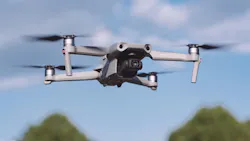
Drone Detection: Why an Anti-Drone Program for Police is Essential
- Multiple sensors can be used to detect malicious drones and keep the airspace safe, which can support law enforcement drone programs by keeping the skies free of obstructions.
BAY CITY, MI—A Bay County-based digital creator has been convicted of interfering with police when he used his drone to livestream their activity.
The two-day trial of Ray A. Rocha in Bay County District Court ended the afternoon of Friday, May 1, with the six-person jury finding him guilty of having an unmanned aircraft interfering with public safety. The misdemeanor is punishable by up to 90 days in jail and a $500 fine. It falls under the state’s Unmanned Aircraft Systems Act of 2016.
The conviction stems from Rocha flying his drone in November 2024 while Bay County Sheriff’s deputies had their own drone in the sky to help them find wanted suspects.
Rocha, 55, livestreamed the drone’s footage on his Facebook page, Ray Rocha’s Baycountylive.
Bay County Assistant Prosecutor Ryan M. Schofield tried the case on the people’s behalf, while defense attorney Joseph M. Albosta represented Rocha.
“I’m very happy with the outcome, and I’m happy with job Ryan did especially,” said Bay County Prosecutor Michael P. Kanuszewski. “I think the jury got it right, 100%. This was more about public policy and (Rocha) can fly his drone as long as he operates it within the restrictions of the law.”
Albosta disagreed with jurors’ findings and said their verdict could have far-reaching implications.
“I think this is really problematic for news agencies and for pretty much anybody that wants to cover police activity with a drone if the police can basically take you out of the sky,” Albosta said.
Albosta argued his client’s activities are protected by the First and 14th Amendments and that the Federal Aviation Administration ( FAA) has exclusive authority over navigable airspace and operational drone regulations.
“A deputy was distracted by another drone and decided to close all the airspace, which we argued was illegal,” Albosta said. “The FAA has the authority to do that, but deputies don’t. The jury decided that a minute distraction was interfering.”
Albosta said Rocha is going to appeal his conviction. Bay County District Judge Timothy J. Kelly, who presided over the trial, is to sentence Rocha on June 16.
Case background
About 5 p.m. on Nov. 10, 2024, deputies responded to the area of West Arnold and South Warner streets to help Bay City police find suspects who had allegedly stolen a vehicle, ditched it, and fled on foot into a wooded area.
Deputies deployed a drone to give searchers an aerial view of the area.
As the sheriff’s drone flew overhead, the deputy operating it noticed a second drone flying above the baseball diamonds at Kolb Elementary School, 305 W. Crump St.
The two drones weren’t that close to each other, but had the deputy activated the “return to home” function on the sheriff’s, the two could have collided, he noted in his report.
The function causes the drone to either climb or descend to a predetermined altitude, then fly to where it launched from.
“When this happens, the only thing that will stop the drone in its flightpath would be if the collision sensors catch the object in its flightpath,” the deputy wrote. “The collision sensors work for fixed objects well (buildings, trees, things of that nature) but not sure for other flying objects.”
The deputy had Bay County Central Dispatch issue a warning over city and county channels: “Any civilian drone in the area of the city incident, please land your drone as you are interfering with law enforcement drone operations.”
Concerned about a potential crash, the deputy stopped flying the departmental drone. Dispatch then called the deputy and informed him video footage from the civilian drone was being livestreamed on Rocha’s Facebook page.
Meanwhile, a Bay City officer saw Rocha in the west parking lot of Kolb Elementary, operating his drone. He approached Rocha and asked him to land his drone, saying he was giving away officers’ location in their attempts to nab their suspects.
“I am only landing my drone under threat of arrest,” Rocha replied, according to the officer’s report. “Anything I can see, I can stream.”
The officer did not outright order Rocha to cease flying his drone, but asked if he would do so voluntarily. Rocha was “adamant” he would not land the drone without being arrested, reports state.
The sheriff’s deputy returned to headquarters and watched the footage on Rocha’s page. The footage featured audio of Rocha repeatedly stating he knew police “had their drone out” as he was listening to a scanner. At one point, the audio captured Central Dispatch urging the civilian drone to land, reports state.
Rocha told his audience he was not interfering with anything, then zoomed in on the sheriff’s drone to show “how far away he was,” reports state.
The audio also recorded the city officer asking Rocha to land his drone and Rocha’s response of only being willing to do so if threatened with arrest.
The deputy reviewed several of Rocha’s other videos, including one of a traffic crash in the parking lot of the Good Samaritan Rescue Mission, 713 Ninth St. The weather was rainy with a low cloud ceiling, the deputy noted.
FAA rules mandate a drone have at least three miles of visibility, at least 2,000 feet horizontally from clouds, and at least 500 feet below the cloud ceiling.
As Rocha had a Cash App account on his Facebook page through which visitors could send him money, it appeared he was operating his drone as a business, requiring him to adhere to FAA rules, the deputy wrote.
Rocha testified in his own behalf during his trial. He said he did not obtain Remote Pilot Certification from the FAA to operate commercially though he received donations. Albosta said this was acceptable to the FAA as Rocha was not selling subscriptions or accepting advance payment for his drone’s coverage.
Rocha’s page has courted controversy before, as when it broadcast footage of law enforcement recovering the severed limbs of homicide victim Justie T. Stilwell from the Saginaw River in September 2024.
_____________
©2026 Advance Local Media LLC.
Visit mlive.com.
Distributed by Tribune Content Agency, LLC.