Police Opposition Sinks Colo. Data Privacy Bills on Warrantless Access
What to know
- Two bipartisan Colorado bills aimed at limiting warrantless government access to residents’ personal data failed amid strong opposition from law enforcement groups and, in one case, a veto threat from Gov. Jared Polis.
- One measure would have restricted police access to license plate reader data without a warrant, while the other sought to ask voters to require warrants before police could obtain personal data from third‑party brokers.
- Lawmakers backing the bills said police lobbying power and executive opposition left them little room to negotiate, despite broad public concern over government data collection.
More on OFFICER.com
Police License Plate Readers Spread Across Mich. While Lawmakers Seek to Create Guardrails
- Police across Michigan are expanding license plate reader technology even as residents and lawmakers question how the data is collected, stored and shared.
Two bipartisan bills aimed at limiting warrantless access to Coloradans’ data by state government agencies have been defeated after both efforts crashed into stiff opposition from law enforcement groups and, in one case, Gov. Jared Polis.
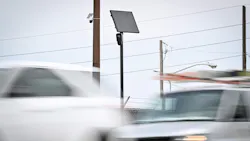
Both bills died in the past week. Lawmakers announced the demise of Senate Bill 70 from the Senate floor on Wednesday, with its backers voluntarily killing a measure that would have limited government access to data collected by license plate-reading camera providers like Flock Safety.
A week earlier, the House Judiciary Committee killed House Bill 1037. The bill — after a late amendment — would’ve asked voters to decide whether Colorado law enforcement should be able to access individuals’ data from third-party brokers without a warrant.
Both bills were bipartisan. HB-1037 was sponsored by one of the House’s most progressive members, Rep. Jennifer Bacon, and one of its most conservative, Rep. Ken DeGraaf.
They’d also brought together unlikely coalitions: Rocky Mountain Gun Owners, a no-holds-barred Second Amendment rights advocacy group that more often criticizes Democrats, backed both measures alongside progressive abortion, immigration and civil rights advocacy groups.
The bills were proposed as polls show American voters have broader concerns about mass data collection by both private companies and the government. A 2023 Pew Research poll, for instance, found that 71% of respondents were concerned about how the government used the data collected on its citizens.
But the bills didn’t have support from law enforcement, which wields significant sway in the Capitol.
Groups representing police officers, chiefs, sheriffs and district attorneys all opposed the measures — arguing they would hamper law enforcement’s ability to investigate crimes.
And SB-70, the license plate reader measure, was also facing a veto threat from Polis.
“All of my constituents are demanding we do something, because they don’t want to live in a world where their movement is being constantly tracked,” Sen. Judy Amabile, a Boulder Democrat sponsoring SB-70, said from the Senate floor. “… You don’t have to do anything wrong to have this data be used against you — in a way that you have no idea was coming.”
Strong opposition from law enforcement
Bacon, a Denver Democrat, said that she, too, was trying to respond to concerns from her constituents. She lamented that the Capitol was unable — or unwilling — to more seriously weigh the public’s concerns about government data collection.
“It’s not about business, it’s not about police; it is about us,” she said in an interview Wednesday. “At this point, we cannot engage in the world without any- and everybody knowing what we’re doing. And I don’t know if I feel comfortable if that is the exchange for me to get gas, go to the grocery store, order food and plan a trip.”
Bacon’s bill died in committee, and it was unclear if Amabile’s measure had the votes to advance. Polis’ veto threat also gave Amabile and her co-sponsor, Republican Sen. Lynda Zamora Wilson, little room to maneuver.
“We had no leverage because law enforcement knew right from the start (that) the governor would veto a bill with anything in it they didn’t like,” Amabile said in an interview. “So they had no incentive to negotiate.”
She added that tech groups similarly had no reason to budge, and lawmakers were unwilling to gut the bill to get over Polis’ objections.
In a statement Wednesday, Polis spokesman Eric Maruyama said that “ensuring that law enforcement have the tools they need to solve crimes and keep the public safe is a top priority for the governor.” Maruyama argued that SB-70 “went much further” than codifying “best practices” around license plate readers.
Amabile and Zamora Wilson’s bill generally would have limited access to license plate-reading cameras’ data, including by any outside agencies, without a warrant or under other specific conditions.
The Capitol debate came amid intense scrutiny, in Denver and elsewhere, of how license plate-reading technology has been used by federal immigration authorities. In late March, the Denver City Council narrowly approved a new contract that retained license plate cameras in the city after the mayor’s office proposed a new provider, replacing Flock.
The initial version of Bacon and DeGraaf’s measure would have prohibited law enforcement from purchasing people’s personal data from third-party brokers without a warrant.
But after initially delaying a full committee vote, Bacon and DeGraaf then shifted to making the bill a ballot proposal, putting the question in voters’ hands. The bill was still defeated in committee 6-5, with two Democrats — Reps. Chad Clifford and Cecelia Espenoza — joining with Republicans to sink it.
‘Personal data should be kept private’
One of those Republicans was House Minority Leader Jarvis Caldwell, who does not sit on the Judiciary Committee.
He subbed himself onto the committee during both of the bill’s hearings, and in the second, he cast a decisive vote to kill the measure. He argued that the ballot measure was too complicated for voters to consider.
In an interview Wednesday, Caldwell said he couldn’t recall why he subbed himself onto the committee when the bill was up for its first hearing there. But he said he joined the committee the second time, when the bill was killed, because Rep. Scott Slaugh — whose committee seat Caldwell temporarily filled — didn’t feel comfortable voting on a bill that he hadn’t heard in the first hearing, which included hours of testimony.
Slaugh, a Johnstown Republican, said he was on the fence but had leaned toward supporting the bill before Caldwell took his place. He said Caldwell “felt strongly opposed to it and wanted to voice that opposition.”
Had Slaugh stayed on the committee and voted for HB-1037, the bill would’ve passed its first vote.
“It’s (a bill) that law enforcement did not like. They feel that it will restrict their ability to do their job, which I don’t like that possibility,” he said. “… That said, I still believe that individuals’ personal data should be kept private from the government unless the government establishes, through due process, a cause to need it, and goes and gets a warrant to get the specific data that they believe they need in prosecution of a crime.”
Both Amabile and Bacon said opposition from law enforcement sank their proposals. In her comments from the Senate floor, Amabile accused the law enforcement lobby of repeatedly mischaracterizing the provisions and resisting “even the most basic, commonsense guardrails.”
In an unsigned statement, the Colorado Association of Chiefs of Police said it appreciated lawmakers halting the license plate readers bill. The organization said its members support privacy protections and accountability standards, but maintaining public safety means investigators need access to “practical, lawful tools.”
The group also warned that the bill would have created “rigid timelines” that could have delayed investigations.
“We recognize that concerns about privacy, data security and public trust are real and deserve thoughtful discussion,” the organization said. “Colorado police chiefs remain committed to working with lawmakers on balanced solutions that protect both privacy and public safety. Coloradans should not be forced to choose between the two.”
Bacon said it was the legislature’s job — not Polis’ or law enforcement’s — to decide what policy to pass and to look out for Colorado residents’ rights.
“The state of Colorado needs to contend with this new world and ask our constituents, ‘What is it you reasonably expect to be private or want to be private?’ ” she said. “And what kind of control do we want to have, and how do we want our data to be used? Especially when it’s being used against us.”
©2026 MediaNews Group, Inc.
Visit at denverpost.com.
Distributed by Tribune Content Agency, LLC.