Panasonic Connect Launches Fully Rugged TOUGHBOOK 34 and TOUGHBOOK G3
What to Know
- Both models feature Intel Core Ultra processors, AI-ready performance, and modular expansion options for versatile deployment.
- The TOUGHBOOK 34 has a 12.4-inch outdoor-readable display with 1,000-nit brightness, ideal for maps and incident data in bright environments.
- The G3 offers a compact, lightweight design with a 10.1-inch display, supporting up to 23 hours of battery life with multiple battery options.
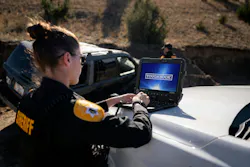

NEWARK, New Jersey — Panasonic Connect North America has expanded its fully rugged computing portfolio with the launch of the TOUGHBOOK 34 and TOUGHBOOK G3, two 2-in-1 mobile computers designed for mission-critical workers, including public safety and federal personnel.
The devices are designed to provide mobile computing across vehicles, field sites and command centers. Both models feature Intel Core Ultra processors, AI-ready performance, modular expansion options and connectivity designed for demanding work environments.
For public safety agencies, the devices support in-vehicle dispatch, records management and mobile command operations. Both models support 5G and priority private networks to provide field connectivity for maintaining situational awareness and coordinating operations.
The TOUGHBOOK 34 features a 12.4-inch full high-definition, outdoor-readable display with a 1,000-nit brightness rating. Panasonic said the larger display provides additional space for maps, incident data and reports.
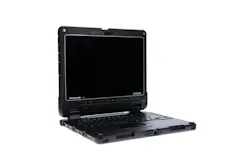
The device also includes four modular expansion areas, including two user-replaceable xPAK areas. An optional second hot-swappable battery can extend operating time to 18 hours, according to Panasonic.
The smaller TOUGHBOOK G3 has a 10.1-inch WUXGA display and a lighter, thinner chassis than previous generations. Its compact form factor is designed for mobile workers operating in space-constrained environments, including public safety personnel working in smaller vehicles.
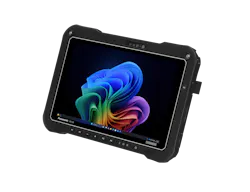
The G3 provides two configurable expansion areas and three battery options. Panasonic lists up to 23 hours of battery life with its 99Wh battery.
Both devices are designed for operation in temperatures ranging from 14 degrees Fahrenheit to 122 degrees Fahrenheit. The devices are rated IP66 and tested to MIL-STD-810H/461G, according to Panasonic.
The TOUGHBOOK 34 is certified to run Red Hat Device Edge (RHEL), while certification for the TOUGHBOOK G3 is in progress. Panasonic Connect previously identified itself as the first rugged device manufacturer to achieve Red Hat Device Edge certification.
Security options include Trusted Platform Module (TPM), OPAL solid-state drives, optional smart card and fingerprint authentication, and a quick-release SSD designed to support data isolation. Both devices are also available with Panasonic's TOUGHBOOK Total Defense security and services offering.
The TOUGHBOOK 34 and G3 support Wi-Fi 7, Bluetooth 5.4 and optional GPS. Cellular connectivity includes 5G Sub-6 with eSIM support, with carrier options listed for Verizon, AT&T, FirstNet, T-Mobile and ANTERIX.
For federal users, Panasonic said the devices support applications including unmanned systems control and unmanned aerial vehicle ground control. Enterprise applications include inventory management, order picking, forklift operations and asset tracking, with optional integrated barcode and radio-frequency identification capabilities.
Both models include a three-year factory warranty, according to Panasonic.
“The people that keep critical services and industries running need technology they can trust in every environment,” said Dominick Passanante, senior vice president and general manager, Mobility Business, Panasonic Connect North America. “The TOUGHBOOK 34 and TOUGHBOOK G3 are engineered to meet those demands by delivering the performance, connectivity and reliability that frontline workers depend on every day. The result is a device that keeps individuals and teams connected, productive and focused on the task at hand, whether they're in a vehicle, on a job site or responding to an emergency, all without compromising long-term reliability and security.”