Taking it to the Streets: Making CAD Mobile to Better Support Officers
What to Know
- OnCall bridges the gap between dispatch and patrol by providing instant access to updated information via mobile devices, reducing delays and improving coordination.
- The platform supports critical use cases such as missing persons and suspect searches by enabling real-time data sharing, including photos and incident details, directly from the scene.
- AI capabilities analyze large volumes of data to identify trends and anomalies, assisting decision-makers during routine operations and large-scale emergencies.
More on Officer.com
This article appeared in the September/October 2026 issue of OFFICER Magazine
Technology is simplifying the way law enforcement agencies handle calls. This has enabled the flow of data between dispatchers and patrol officers to be more connected than ever before. As public safety software solutions are catching up with consumer solutions when it comes to design and usability, the ability to relay information is becoming easier and data is becoming less siloed.
At the APCO International Annual Conference & Expo in San Antonio in August, Octave (formerly part of Hexagon), demonstrated its OnCall platform, which aims to deliver a cohesive, interoperable platform to help public safety agencies improve response through collaboration. For officers on the street, that means being able to see the same information as dispatch as it comes into the system and being able to respond through the same system.
Ben Ernst, VP — Global Public Safety with Octave, along with retired Alexandria, Virginia, Police Sgt. Michael Dunkwu, who now serves as the Technical Director of RMS Delivery for Octave, spoke to OFFICER Magazine during the event about how OnCall is making the lives of both patrol officers and dispatchers easier.
“All of us in our personal lives are used to the flexibility of mobile devices,” says Ernst. “I think the huge opportunity for vendors like us, and others, is how do we make the public safety world as easy to use as a banking app, a hotel app or an airline app. How do we make the public safety world as easy to share data as we do in our day-to-day lives?”
Making CAD mobile
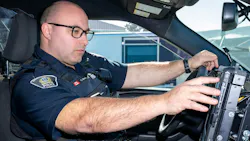
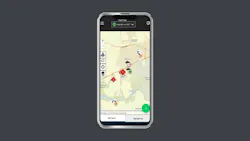
Historically, the ability for officers to be in sync with their agency’s Computer Aided Dispatch (CAD) system has been a difficult problem to overcome. Most agencies have had to use multiple systems, forcing back-and-forth communication to relay information instead of one seamless system. Through the combination of OnCall Dispatch and OnCall Mobile, Dunkwu says that officers now have the access to information — and a way to send information back to dispatch — that he wishes he had before he retired from the force back in 2018. His agency used two separate products for CAD and mobile, which siloed dispatch and patrol. A dispatcher would enter something into the system and the officer would have to wait for it to come through.
“There’s a ton of information out there available but getting it to the officer in the vehicle at the moment that they need it is a pain point in public safety right now,” he says. “OnCall really bridges that gap. If the dispatcher has it, you have instant access to it. If I have a code for a building, you have it. As soon as something is updated, you get it.”
According to Dunkwu, in use cases such as manhunts for suspects and missing persons reports, OnCall can be vital for officers on patrol. “Say you have a missing kid. You can go to the scene, take a photograph of the child and put it into CAD and the CAD has it,” he says. “By moving that information backwards, you’re able to send that to dispatch and dispatch is able to send that out for an Amber Alert without you having to go back to headquarters and hand them the picture. You can do it right there from the scene. It’s really bridging that gap and being able to get information to an officer faster.”
Dunkwu recalls multiple instances where he has to physically carry a photograph back to headquarters so it could be uploaded and sent out for a missing person or a suspect who was on the run. “If I was able to take a picture on the scene and instantly send that out to our officers to be able to start searching and looking for people, that would have been life changing. Seconds matter.”
He also spoke about the importance of being able to quickly find information in the system without having to make a call. “For a patrol officer, your radio is your lifeline; radio time is precious. You never know when something’s going to happen,” he says. “If I’m asking you on the radio, ‘Hey, can you give me the code for this building,’ while at the same time another officer is in a fight and trying to get on the radio to key up to say ‘I need help,’ but I’m talking about the building code,” he says. “We’re able to save that radio time for necessary stuff. I have access, I can go look up all this information that dispatch has. But a lot of agencies right now have to get on the radio to do it.”
AI capabilities
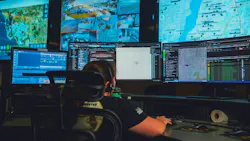
Artificial intelligence plays an important and growing role in OnCall as assistive AI capabilities analyze large volumes of incoming operational data — such as calls for service, sensors, cameras and other connected systems — to detect patterns, surface anomalies and deliver insights that help decision makers act faster and with greater confidence during both daily operations and large-scale emergencies. Octave’s AI-driven insights also surface trends and anomalies while leaving decisions firmly in the hands of trained professionals.
“We are continuing to build out the AI capabilities in the tool,” says Ernst. “Obviously, with a modern architecture and a modern user experience, in the public safety world, there’s an expectation that we continue to bring AI to the officers and dispatchers. Not just for the sake of AI, but to provide them meaningful support to their jobs and make things more efficient.”
Early adoption
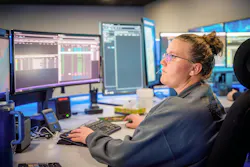
OnCall as a product has only been on the market for a few years, but Octave has already seen a growing number of departments make the switch from their legacy platforms. OnCall is currently being used by more than 20 agencies across the U.S. and Canada and more than 70 globally. Ernst says he expects that number to continue to grow. “Moving into the second half of this year, we continue to roll out the solution to existing customers who are upgrading, but also new customers who are putting their confidence and trust in us to roll out the solution.”
In Lee County, Florida, the hurricane-prone jurisdiction uses OnCall Dispatch to manage both daily public safety operations and complex, high impact incidents requiring continuity of service during severe weather and infrastructure disruptions. In Arlington County, Virginia, OnCall Dispatch is used in the cloud to support public safety operations that help protect the greater Washington, D.C., metropolitan area, demonstrating the platform’s value in highly complex, security sensitive regions.
“The user experience has been widely accepted, and people really like it. The continued evolution of rolling out a mission critical system and continuing to advance the capabilities,” says Ernst. “A lot of our existing customers were coming off a product that was in the market for 30 years. The maturity of it, having seen every single scenario. Now we’re just evolving OnCall to be the same.”
Dunkwu pointed to the UX design of OnCall as a real selling point to newer patrol officers. “It’s the same as what they’re used to in all their personal apps. It moves and feels that way, versus a system that we built 30 years ago, which feels like it was built 30 years ago,” he says. “It’s very easy for officers to navigate. It moves the way that you think it would move. You click on things and it does the things that you expect it to do.”
Ernst says that while the company still provides traditional hand-on training for OnCall, online training is built within the software. “The combination of those two things to address the different types of officer that’s at different points in his or her career, allows us to the way that those officers want to consume data or training.”
About the Author
 Paul Peluso
Paul Peluso
Editor
Paul Peluso is the Managing Editor of OFFICER Magazine and has been with the Officer Media Group since 2006. He began as an Associate Editor, writing and editing content for Officer.com. Previously, Paul worked as a reporter for several newspapers in the suburbs of Baltimore, MD.