Seattle Police Chief Shon Barnes Resigns Over Mass Shooting Fallout
What to Know
- Seattle Police Chief Shon Barnes resigned after Mayor Katie Wilson said a leadership change was needed following criticism of the city's delayed public communication after a fatal shooting at Seattle Center during the Bite of Seattle festival.
- Barnes faced scrutiny over both the department's handling of information following the shooting and his attendance at an out-of-state law enforcement conference when the incident occurred, though he defended his travel record and commitment to Seattle.
- The resignation drew mixed reactions, with business leaders, community activists, police union officials and several City Council members questioning the timing of the move and warning about continued instability within police leadership.
More on OFFICER.com
3 Killed, 4 Wounded in Shooting at Bite of Seattle Food Festival
- Seattle police arrested one suspect and launched a search for another after a shooting at the city's Bite of Seattle festival left three people dead and four others injured, including a toddler.
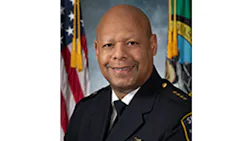
Seattle police Chief Shon Barnes resigned Thursday, following hours of rumors about whether Mayor Katie Wilson would terminate him.
Deputy Chief Andre Sayles will serve as interim.
The decision comes after intense criticism of how long it took the Police Department to provide information about Sunday night's shooting at Seattle Center during the Bite of Seattle. Barnes was at a law enforcement conference at the time, which spurred further scrutiny, this time of how often he is out of state.
Wilson said in an interview that she and Barnes arrived at the decision together. Barnes said in a statement, sent through his employment lawyers, that Wilson requested his resignation and he gave it voluntarily.
“Although Dr. Barnes was surprised by the mayor’s request, he wanted to emphasize his dedication and appreciation to the city, including to the community leaders and the Seattle City Council who have offered their support,” the statement said.
Wilson refused to elaborate on the change in leadership, saying only that she and Barnes agreed Wednesday night and her decision was related to Sunday's events but not exclusively."
"Achieving the public safety goals we have as a city and doing that in a way that builds trust with the public, a change in leadership is the right move in this moment," Wilson said.
"I really believe that Chief Barnes brought to the city and this role many fine qualities and skills, and in many ways has left a really positive mark and legacy in Seattle."
Barnes' dismissal was the subject of fierce speculation and lobbying since rumors started circulating Wednesday night. By Thursday morning, downtown business leaders and Black community members focused on gun violence prevention were calling on the mayor to keep Barnes.
Wilson has been swayed by these voices in the past. After campaigning on a pledge to turn off police surveillance cameras, Wilson took a more middle-of-the-road approach after some of the same leaders approached her to explain why they support using the cameras.
But in an interview Wednesday, Wilson had laid much of the blame for failures in communication about the Sunday shooting — which has driven days of relentlessly critical TV coverage and frustration throughout Seattle — at police leadership's feet.
She and Barnes both said they hope Seattle can now refocus on preventing youth gun violence.
"I think there is a growing pragmatism and desire for real solutions that will make our neighborhoods safer," Wilson said in the interview. "I believe we are in a moment, where with strong leadership, we can move our Police Department and our whole city in a really good direction."
Before the 3:30 p.m. announcement of Barnes' resignation, several council members spoke to members of the press at City Hall, most advocating for Barnes to stay and questioning why Wilson would make such a large change in police leadership now.
Barnes' time in Seattle
Barnes faced mounting pressure this week amid frustrations with the handling of Sunday's shooting aftermath. As stories and videos spread on social media and terrified people huddled behind locked doors, police waited hours before providing information about whether there was an active shooter in the Seattle Center area.
Before an 11 p.m. news conference, the only communication from the Police Department had been a single social media post at 6:30 p.m. confirming that there had been a shooting with multiple victims at Seattle Center.
Wilson's office, meanwhile, put out erroneous information at one point about how many people were in custody.
Barnes was at the National Organization of Black Law Enforcement Executives Conference in Dallas at the time, which angered some who argued there was a trend of Barnes being out of town during major shootings and violent protests.
Barnes said he flew overnight to get back by Monday morning, and stood alongside Wilson at a news conference to give updates about the shooting. Afterward, a reporter for the South Seattle Emerald asked Barnes about the amount of time he spends in Seattle, and Barnes defended himself against past reports that he spent many of his weekends visiting family in Chicago.
“I have been here working as hard as I can for this city, from the day I got here,” Barnes said. “Do you got that?”
“There are reports that you are not in town often,” said Connor Nash, of the Emerald.
Barnes cut him off: “No, no, you listen to me! The reports are wrong.”
“Let’s go,” said his chief of staff, Alex Ricketts, physically separating the two.
Barnes defended his reaction at another news conference later Tuesday, saying he wouldn’t describe the earlier exchange as “heated.” He said his “passion” was on display while he defended his integrity.
Responding to questions about how much time the chief spends away from Seattle, police spokesperson Sgt. Patrick Michaud on Wednesday shared a copy of Barnes’ calendar dating to the end of March. Michaud wrote in an email that the chief has traveled to Chicago four times this year: Feb. 4 to 10, March 13 to 16, June 20 and 21 and July 9 to 13.
Barnes also has traveled to seven conferences, Michaud noted, a common practice for police chiefs to learn what other departments are doing and to recruit officers.
“Some of his responsibilities involve travel to represent the department at professional conferences and law enforcement meetings across the country,” Michaud wrote.
Barnes had been brought to the department in 2025 as a hard reset after the firing of police Chief Adrian Diaz, who was let go by then-Mayor Bruce Harrell amid allegations that Diaz covered up an affair with a subordinate.
After Wilson defeated Harrell by just over 2,000 votes, Wilson announced in December that she was keeping Barnes at the helm. In a statement then, Barnes said he “was extremely honored and grateful to continue in my role” and called public safety “a shared value.”
“These priorities will guide the Seattle Police Department into 2026,” he said at that time. “They will also position us to become a national model for exceptional policing under the leadership of Mayor Wilson and her dedicated staff. Personally, I consider this a once-in-a-lifetime opportunity and one I do not take lightly or for granted.”
Barnes led a department more than twice the size of the one he had led in Madison, Wis. — with roughly 1,000 sworn officers in Seattle — in a much larger city with a much higher crime rate. He promised to offer a “fresh perspective” on policing in Seattle.
Barnes arrived in Seattle on the heels of handling a national tragedy in Madison: a shooting at Abundant Life Christian School in which three people died, including the perpetrator. Madison Mayor Satya Rhodes-Conway called him a “steady, forward-thinking leader throughout his tenure.”
Shooting response
Wilson said in an interview Wednesday that she was unaware of how little information had come from the city and police in the hours after Sunday's shooting at Seattle Center that left three people dead.
While she praised the swift response of police and fire personnel, she said she recognized that many people were left to wait in fear for five hours before she and police officials confirmed that there was no active shooter and the scene was contained.
"The public did need information sooner about whether there was any remaining threat to the public, and about the status of the Seattle Center campus," she said. "That information sharing should not have taken five hours."
A statement her office put out at 8:45 p.m. that day was "meant to complement info from SPD, not replace it."
She placed blame on a breakdown in communication between departments, but declined to comment at the time on Barnes. She would not say whether she had concerns about his leadership, or if he still had her trust.
"I'm not going to be talking about specific individuals at this point," she said.
Still, she suggested that fault lay with the Police Department.
"I was not aware SPD was putting zero out. I assumed that SPD was sharing information as appropriate with the public under a circumstance like this," she said. "At that point, had I fully understood that no information outside of my own statement had been provided to the public or the press, I would have absolutely asked SPD to immediately begin briefing the press."
Wilson said information should have gone out through social media, the city's emergency alert system, the online SPD Blotter and an earlier off-site news conference.
"I think it's accepted practice that our first responders should be the ones taking the lead on communicating with the public in situations like this," Wilson said.
She described the chaos in communication that led to an 11 p.m. news conference.
Gov. Bob Ferguson, who was at that news conference, heard of the shooting around 7 p.m. and was soon talking to Wilson, according to his office. By 8 p.m. he was on the road heading to Seattle, but was told there was still an active crime scene and Wilson did not plan to go there, as police requested.
Ferguson, who was also talking to U.S. Rep. Pramila Jayapal, D- Seattle, was in Seattle shortly before 9 p.m.
Wilson said the Police Department informed her around 9:40 p.m. of a news conference planned for 9:45 p.m., and her office told police officials she would participate.
"The public expects that the mayor would be on the scene and actively updating them, and I felt an obligation to do so," Wilson said, adding that she arrived within 30 minutes, as did Ferguson and Jayapal.
Ferguson said he heard that Wilson was holding a news conference at 10:10 p.m., and immediately headed to the Seattle Center, arriving at approximately 10:30 p.m. The news conference began at 11 p.m.
After performing what she described as a "high-level review," Wilson said she's putting in place processes and protocols to help ensure better communication in a crisis situation, including giving police clear protocol for communications with the media and public, how departments communicate and how her office and staff communicates with the Police Department.
Wilson also said she was wrong to defend not using AlertSeattle, and said the city is adjusting when to activate that system.
"I should not have defended the fact that the city did not get the information out through AlertSeattle," she said. "I've learned that there was a miscommunication between our departments that resulted in no alert going out when it would've been a good tool to use."
She said she wouldn't "point fingers at specific individuals or organizations" but noted that AlertSeattle is in the charge of the office of emergency management.
"It should have been used in this circumstance," she said.
Reactions to the news
Community and council leaders were reacting to the news of Barnes leaving before it was confirmed.
The Downtown Seattle Association, a powerful business lobbying group, sent a statement Thursday morning saying they were disappointed in the firing of Barnes.
"Chief Barnes deserves credit for the progress made under his leadership," the statement read. "From advancing officer hiring to helping reduce violent crime, Seattle has been moving in the right direction."
Councilmember Rob Saka said he was disappointed in Wilson's decision to oust Barnes — before he knew that was confirmed — pointing to the parade of police chiefs in recent years.
"At a time when our department needs stability, consistency and strong leadership, this decision takes us in the exact opposite direction," Saka said.
Saka agreed that "heads needed to roll" after the "bungling of information" Sunday, but said it shouldn't be Barnes.
Saka said he was proud of having a Black police chief and that kind of representation is needed in Seattle.
Powerful leaders in the Black community also rallied for Barnes to stay Thursday morning.
“We need to understand that this African American, Black and brown community is absolutely behind Shon Barnes and we are a strong constituency,” Bishop Reggie Witherspoon of Mount Calvary Christian Center said, standing before a group of about two dozen who sat inside City Hall on the steps to the City Council chambers.
A coalition of about six leaders secured a meeting with the mayor at 9 a.m. Thursday to tell her she needed to “fix her mistake,” Witherspoon said, and reinstate Barnes. They did not say what was said in the meeting afterward.
The Seattle Police Officers Guild slammed Wilson on Thursday afternoon, saying on social media that her administration has "delivered confusion, mixed messages and chaos" instead of "proactive public safety measures that could help prevent tragedies like Sunday's shooting."
In a joint statement made after Barnes resigned, Seattle City Councilmembers Joy Hollingsworth, Dan Strauss, Debora Juarez and Bob Kettle suggested it was not the right time to get rid of Barnes, but instead focus on youth gun violence, drug markets and human trafficking, which takes "strong, stable leadership."
"When communities are grieving, major decisions should be made with great deliberation," the statement said. "Making a significant leadership change in this moment puts our city in a precarious situation. Having cycled through four police chiefs in just two and a half years, our priority must be stability, not further disruption."
Councilmember Eddie Lin said he didn't have a gut reaction either way if he should stay or go, but wanted community buy-in going forward.
"I think the most important thing is if we are having a change in police chief, that we make sure we are having a thoughtful process going forward, we are working with the community to make sure any replacement is supported by the community," Lin said.
Councilmember Maritza Rivera focused on the delay in confirmation of whether Barnes was staying or going, saying it was unacceptable.
"I don't know the reason or rationale for why she would fire him, if she is going to fire him," Rivera said.
Wilson acknowledged the delay in an interview, saying that it was due to legal considerations and that she wanted to ensure she and Barnes were on the "same path forward."
"I understand the desire for information, she said.
Seattle Times staff reporter Kai Uyehara contributed to this story.
______________
© 2026 The Seattle Times.
Visit www.seattletimes.com.
Distributed by Tribune Content Agency, LLC.