LAPD Disbands Gang Unit Amid Bodycam Investigation
What to know
- The LAPD has temporarily disbanded a South Los Angeles gang unit after allegations that officers turned off body cameras and failed to document traffic stops.
- Roughly a dozen officers have been removed from field duties or reassigned as the department investigates, while leaders stress the seriousness of policy compliance and accountability.
- Officials and oversight bodies are examining whether the issue reflects broader cultural or supervisory challenges across specialized units, even as the department emphasizes the critical role gang units play in public safety.
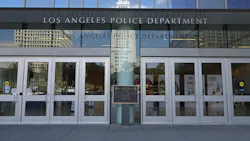
LOS ANGELES—The LAPD has temporarily disbanded a South L.A. anti-gang unit whose members are accused of turning off their body-worn cameras during traffic stops.
Police officials announced the move Tuesday as the department’s civilian watchdog requested a review of behavior by all gang enforcement units citywide.
Members of the 77th Street Division’s specialized gang detail came under internal investigation in recent months for failing to activate their body-worn cameras and pulling people over without documenting the interactions.
“We take this very, very seriously, which is why the entire unit is stood down,” Asst. Chief Scott Harrelson told the Police Commission at its weekly meeting Tuesday.
Several commissioners said they were troubled by the continued instances of officers flouting the department’s rules on the use of body cameras, and asked for a report back about whether the problem is more widespread.
“As you know we spent millions of dollars every year on body-worn cameras, but their effectiveness depends on” officers adhering to policies, commissioner Jeff Skobin said.
Commission President Rasha Gerges Shields said that while she was pleased that the department had uncovered and was investigating the officers’ alleged misconduct, she worried about underlying causes.
“I have a greater concern that there is a culture problem (with) some leadership that this is allowing this to happen,” she said, while adding that she wants to ensure that “this is not just a tip of the iceberg, but also to make sure that other divisions are not having similar problems.”
Some of the specialized details are “doing good work,” Gerges Shields said, but she asked LAPD officials to provide a “better analysis and understanding the purpose on these gang units and their continued utility to the department and also a better understanding in regards to discipline” for officers accused of making improper searches.
Department officials said that about a dozen gang officers have been ordered to have no contact with the public while on duty and several others have been reassigned to other shifts while the department decides whether anyone will be suspended.
Police sources who requested anonymity in order to discuss the ongoing investigation said that the officers under scrutiny were newer members of the unit, and blamed the apparent misconduct on a hyper-competitive culture that prioritizes seizing illegal guns.
The situation echoes another scandal involving so-called “ghost stops” gang unit in the San Fernando Valley in recent years.
The alleged misconduct in that case came to light in late 2022 after a motorist said police had pulled him over and searched his vehicle without consent or probable cause. The motorist filed a complaint, and the ensuing internal investigation turned up other cases of gang officers improperly switching off their cameras or otherwise failing to document stops.
Several officers involved in the Valley stops were fired or resigned before the department could take action. Others, including a gang sergeant, face pending disciplinary hearings.
The department has considered stepping up its audits of officers’ camera use, but LAPD officials admit that most footage that their officers record goes unwatched.
When the Mission Division scandal burst into public view, department officials publicly called it an isolated problem of rogue gang officers.
But a confidential internal audit carried out by leadership at the 77th Street division in September 2023 seemed to suggest body camera misuse was more widespread, finding similar violations among patrol officers in other divisions. The report, which was reviewed by The Times, blamed the issue on lax oversight and confusion among officers about when they were required to press record.
The 77th Street gang unit was mentioned in a recent story in the police union’s monthly magazine, which referred to it as the “best” gang unit in the city. Department officials have defended the work of gang enforcement details, saying officers are carefully vetted and undergo extensive training.
But some in the community have said heavy-handed tactics have persisted, particularly against Black and Latino residents.
An online data dashboard shows that stops by the division’s gang unit have dropped in at least two of the past two years, but its members have disproportionately stopped Black residents. While roughly a third of the population living in neighborhoods patrolled by the 77th Street division is Black, LAPD data show that 962 of the 1,296 people stopped by the gang unit so far so this year.
The disbandment — even temporary — of the gang units in one of the city’s busiest police divisions is an extraordinary step, but one that some observers argued was necessary.
“When cameras were first issued, failing to turn on was a training issue,” said Max Huntsman, a former public corruption prosecutor who later served as inspector general for Los Angeles County Sheriff’s Department. “But repeated coordinated decisions not to record are a corruption problem. Facing that, disbanding a unit is a rational response. However if that coordinated concealing of behavior is widespread, simply disbanding one unit won’t be sufficient.”
___
©2026 Los Angeles Times.
Visit at latimes.com.
Distributed by Tribune Content Agency, LLC.