Federal Appeals Court Blocks California Law Requiring ID Display by Federal Officers
What to Know
- The Ninth Circuit granted a temporary injunction against California’s law requiring federal officers to display visible ID during enforcement activities.
- The court found that the law likely violates the Supremacy Clause by unlawfully regulating federal law enforcement operations.
- The ruling emphasizes the legal distinction between state authority and federal operational control, impacting future interagency cooperation.
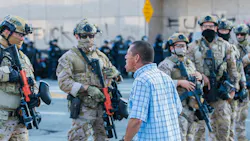
WASHINGTON, D.C. -- A federal appeals court has granted an injunction pending appeal in United States v. State of California, temporarily blocking enforcement of a California law that requires certain federal law enforcement officers to display visible identification while on duty.
In an opinion filed April 22, 2026, the U.S. Court of Appeals for the Ninth Circuit ruled that Section 10 of California’s “No Vigilantes Act” likely violates the Supremacy Clause of the U.S. Constitution. The provision mandates that non-uniformed federal law enforcement officers visibly display identification during enforcement operations, with violations subject to misdemeanor prosecution under state law.
According to the court, the United States is likely to succeed on the merits of its claim that the statute unlawfully attempts to regulate federal law enforcement operations. The panel concluded that the law directly governs how federal officers perform official duties, including decisions about identification during enforcement actions such as arrests, detentions, and crowd control.
The ruling prevents California, Gov. Gavin Newsom, and Attorney General Rob Bonta from applying or enforcing the provision against federal agencies and officers while the appeal proceeds.
The case stems from a lawsuit filed by the U.S. Department of Justice on Nov. 17, 2025, challenging provisions of two California laws: the No Vigilantes Act and the No Secret Police Act. The federal government argued that the statutes interfere with federal operations by imposing state-level requirements on federal personnel.
The Ninth Circuit found that Section 10 imposes conditions on federal officers beyond those established by the federal government, effectively regulating “the manner and conditions” under which federal agents enforce federal law. The court emphasized that such direct regulation of federal functions is prohibited under the Supremacy Clause.
The panel also determined that the remaining factors for injunctive relief—irreparable harm, balance of equities, and public interest—favor the federal government. The opinion states that enforcement of a law likely found unconstitutional constitutes irreparable harm and that preventing a potential violation of the Supremacy Clause serves the public interest.
The district court had previously declined to issue a preliminary injunction, finding insufficient evidence that the law interfered with federal operations. The Ninth Circuit rejected that reasoning, stating the lower court applied the wrong legal standard by focusing on the degree of interference rather than whether the law directly regulates federal activity.
The injunction remains in effect pending further order of the court. The broader legal challenge to California’s laws, including additional provisions related to law enforcement identification and facial coverings, continues in federal court.
For law enforcement agencies, the ruling reinforces longstanding legal boundaries between state authority and federal operational control. The outcome may have implications for interagency coordination, policy development, and operational protocols involving federal personnel operating within state jurisdictions.