Mich. Police Chief Says Anti‑Police Sentiment Fueled Decision to Leave
What to know
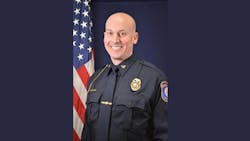
GRAND RAPIDS, MI — Grand Rapids Police Chief Eric Winstrom is acknowledging that anti-police sentiment played a role in his decision to leave.
Winstrom recently spoke to MLive/The Grand Rapids Press about his four-year tenure in Grand Rapids and about a vocal community segment that sometimes brought him frustration.
He was chosen Feb. 3 to become the next Pensacola, Florida police chief and leaves his Grand Rapids position on Sunday, March 1.
“Policing has become very political and one of the challenges I had here was to recognize there were forces that really treated policing politically,” he said.
“There were individuals and groups that don’t seem to be really out for the best policing, it’s just when an incident happens they’re going to use it for their own selfish reasons,” he said.
Winstrom has been clear that family considerations were the main motivation for leaving. His wife has family in Florida and his two children are about to begin high school.
But at a Feb. 6 Grand Rapids media briefing, he did not refute that anti-police sentiment played a role. He more recently clarified his thoughts during an interview with MLive.
When he started in Grand Rapids in early 2022, Winstrom almost immediately was thrust into the hot seat after the police shooting of Patrick Lyoya.
He anticipated and received passionate critical feedback from various people.
But just a month after the Lyoya killing, protesters’ actions went beyond street marches and verbal attacks. Bricks wrapped with newspaper stories about the killing were found outside city commissioners’ homes as well as graffiti.
Winstrom recently told another media source that his home also was targeted.
Tensions rose at City Commission meetings with shouting and arrests after an officer was shoved.
Even after the department made improvements in training and community relations, Winstrom said “there was still a group of people that, for political reasons, just couldn’t let go in attacking the police on a regular basis.”
He said policing shouldn’t be a “left or right issue” but about good public safety and protecting the community.
“We’ve been doing the right thing since I got here, and have a phenomenal police department, but it has been exhausting reacting to political voices so much of my job,” Winstrom said.
Winstrom earlier this month cited a protracted effort to buy drones — a standard policing tool — and criticism about the docuseries “All Access PD: Grand Rapids” as two examples of pushback against police he didn’t anticipate. He said people oddly complained the docuseries made the department look good.
Grand Rapids City Commissioner Drew Robbins, who is stepping down in March to run for state representative, earlier this month wrote a Facebook post that complained about a “loud, extreme, far left minority of voices” speaking ill about Winstrom.
Robbins said the sentiment was evident at certain city commission meetings.
“People will show up and very loudly demand ‘do better’ about the police,” he said. “But never being able to give solutions.”
“I can say I would be frustrated if I was chief,” Robbins said.
In a Facebook post Thursday, Robbins cited a media article about Winstrom leaving as further evidence of issues Winstrom faced.
“Some were quick to say that Chief Winstrom accepted the job in Pensacola solely because he wanted to retire somewhere warm. But when I hear, ‘wanted to see my kids graduate from high school here’, we are remiss to continue denying reality. By one mechanism or another, we failed as a community to cultivate an environment where a very talented, compassionate professional felt comfortable raising his family,” Robbins wrote.
Robbins believes Winstrom bettered the police department in the last four years. He boosted officer morale, according to Robbins, and worked to increase the sworn officer ranks from 260 to 312.
“The chief is nothing but a class act,” Robbins said.
Grand Rapids City Commissioner Marshall Kilgore said he believes city leaders always supported Winstrom.
He acknowledged there was a “healthy tension” sometimes between Winstrom and some in the community.
“But just because someone isn’t waving an ‘I’m your number one fan’ flag doesn’t mean they’re opposing you,” he said.
Willie Gholston, a member of the Grand Rapids Public Safety Committee, also said he believed city leaders supported Winstrom.
“He did an excellent job and he was there for the community,” Gholston said.
Winstrom is moving to a city of about 55,000 people, much smaller than Grand Rapids with a population of 200,000.
He said the city’s size wasn’t a major factor in his decision-making.
“My career goal is not to be the biggest chief in the biggest department in the country,” he said. “I want to be the chief in a city that wants to get policing right, in a city that’s vibrant and in a city that my kids can grow up in and hopefully stay in and make their forever home.”
_____________
©2026 Advance Local Media LLC.
Visit mlive.com.
Distributed by Tribune Content Agency, LLC.