Houston Police Response to Top Priority Calls Improves Slightly
What to know
-
Houston police response times improved slightly in 2025 after major investments in officer pay and patrol staffing, but still missed city benchmarks and remain slower than past targets.
-
Data show nearly 61,000 fewer calls for service drove much of the improvement, including a 16.8% drop in top-priority calls, raising questions about whether staffing changes were the primary factor.
-
Lower-priority calls saw the largest response-time gains, while critics and analysts say shifting resources to patrol has tradeoffs and underscores the need for clearer performance metrics.
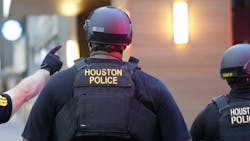
An early focus for Houston Mayor John Whitmire's first term was to improve police response times to boost public safety and make residents feel safer.
After the city in spent almost $1 billion in taxpayer money in 2025 to give officers 36.5% in raises and dissolved the police department's office of community affairs to shift more cops into patrol divisions, the agency's average response times improved slightly compared to 2024, records show.
But the numbers still fall short of the city's own metrics for success, which have themselves trended slower in recent years. Houston community activist Jaison Oliver said he questions whether the improvements were pronounced enough to justify the money city has spent to boost patrols.
"It seems like they're ramping up activity, but in terms of actual improvement, what has changed?" he said.
The improved numbers also coincide with a dramatic drop-off in overall calls for service to the Houston Police Department, which was possibly the biggest factor in the change, according to Andrew Wheeler, a data scientist and former academic who worked with several police agencies in the Dallas-Fort Worth area on response times.
"It seems likely the decrease in response times is entirely attributable to reduced number of calls," Wheeler said.
Officials with the Houston Police Department and representatives from Whitmire's office did not respond to a request for comment about what led to the faster response times. Whitmire's office hasn't responded to a request for comment from the Chronicle since Aug. 17.
Between 2024 and 2025, almost 61,000 fewer people called the Houston Police Department for help, including a decline of around 4,900 top-priority calls, or a 16.8% decrease, according to the agency's data.
Simultaneously, the average response time improved from 6.2 minutes for top priority calls in 2024 to 6 minutes in 2025, 3.2% faster, records show. Internal planning documents show the city aims for top priority response times to be between 4 and 6 minutes.
Despite the decline, call times still trend above where they were as recently as 2019 and are significantly slower than they were years ago, according to a 2023 Chronicle investigation.
A 2014 police department planning document also shows the agency's response time goals have worsened over time. In 2014, police leaders aimed for a response time between 3.5 minutes and 5.5 minutes, and they noted at the time that they'd achieved an average of around 5 minutes, records show.
The police department's internal metrics break up priority responses as follows:
- Priority 1 calls are anything involving potential threat to life or serious bodily injury that are in progress.
- Priority 2 calls are in-progress property crimes or potential threat to human welfare.
- Priority 3 calls are when no active emergency exists, but receive a higher designation because there's the potential for things to escalate.
- Priority 4 calls include minor crashes or delayed reports of serious crimes that aren't active.
- Priority 5 calls are for delayed reports of property crimes and other nonviolent reports.
While Priority 1 and 2 calls had slightly faster response times, Priorities 3, 4 and 5 calls saw more significant improvements between 2024 and 2025. Priority 3 improved from an average of 75.6 minutes to 65 minutes, Priority 4 calls from 95.2 to 81.8 minutes, and Priority 5 calls from 108.4 minutes to 93 minutes, at least 14% faster.
Wheeler noted the stark difference between Priority 2 and Priority 3 response times, 11.4 minutes compared to 65 minutes.
Cities across the country are struggling with response times, with a growing number of agencies struggling to hire enough officers to fill its patrol ranks, Wheeler said.
Whitmire's administration has expended major taxpayer dollars in an attempt to bolster the agency's ranks. In May, he inked a new agreement with the department's officers, which would cost the city around $67 million in 2025 and $832 million over five years. And Chief Noe Diaz did away with the department's office of community affairs, in spite of critics' concerns, and has shifted cops away from investigative divisions into patrol, records show.
Oliver cited Whitmire's traffic enforcement initiative, boosting patrols on certain roads and freeways for set periods of time, and an internal directive to call immigration authorities when officers encounter anyone with a noncriminal administrative warrant as examples of activities that might be occupying officers' time, but not improving response times.
"They need better metrics, but that's just not a conversation they're having right now," he said.
Jay Coons, a Sam Houston State University professor and a retired captain at the Harris County Sheriff's Office, previously told the Chronicle that work to improve response times is a constant battle of resource allocation. Any officers shifted to patrol from other divisions means fewer resources for other purposes, he said.
_________________
© 2026 the Houston Chronicle.
Visit www.chron.com.
Distributed by Tribune Content Agency, LLC.