Chief Warns of Challenges as Wash. Police Force Faces over $3M in Cuts
What to know
• Yakima approved over $3 million in police cuts for 2026, eliminating 12 officer positions, a sergeant slot, most community service officers, all analyst roles and the proactive policing unit.
• Chief Shawn Boyle warned the department will operate with roughly 100 deployable officers next year, well below national per-capita averages, as overtime demands rise and specialized work shifts back to patrol.
• City leaders declined to pursue new tax options after voters rejected a levy, but Boyle argues sustainable public safety funding is essential to staffing, service levels and broader economic development.
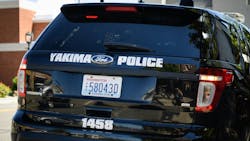
Yakima police are bracing for impacts after the City Council passed a budget with more than $3 million in cuts to the department last week.
For months, council members have been working to address a $9 million shortfall in the city’s 2026 budget. Over the summer, the council approved $3 million in cuts and placed a $6 million levy on the November ballot with hopes taxpayers would bridge the remaining gap. Fifty-one percent of voters rejected the measure, leaving the council to make $3 million in cuts to police, $1.75 million to fire and $1.4 million to parks and recreation. The council finalized the budget on Dec. 2.
Police department cuts include 12 police officer positions, one sergeant position, four community service officer positions, an analyst and analyst supervisor, and reductions to radio purchasing funds and the department’s contract with the Yakima Humane Society. Yakima Police Chief Shawn Boyle said the cuts could have significant impacts, especially on quality-of-life issues like parking, homeless response and animal control.
“I've been trying to review the budget to find out if there's a way I could try to make any of those not be a part of (the cuts),” Boyle said, “and it doesn't appear that we have any flexible money in our discretionary funding to be able to keep those positions.”
Staffing
Yakima’s population has grown over the last decade, but its budgeted police officer positions have moved in the opposite direction.
In 2015, the department had 145 budgeted officers.
In 2025, it has 137 budgeted, with 127 filled.
The lower staffing has monetary impacts — according to a report presented in October, the department logged 9,096 hours in overtime last year to maintain shift minimums, costing around $729,000 — but Boyle said there’s also a human cost for the officers who have to spend extra time away from their families.
The department’s per-capita officers are already below the national average. Under the new cuts, the total budgeted officers for 2026 will be 124. The lost positions will be absorbed through attrition, but Boyle said they still pose a challenge to the department.
Only about 80% of filled officer positions are deployable at any given time due to things like trainings, injuries and paid leave, he said. That means the number of officers available to respond to 911 calls next year could be closer to 100.
If officers leave and a vacancy opens up, Boyle said, it typically takes around a year to fill.
“I think we've just become accustomed to working so understaffed that it's just all we know,” he said. “I think that moving forward, we need to find a way to ... adequately fund public safety for the volume of issues that we address in our community, and I don't know what that looks like, whether it's taxes, it's a levy, but it needs to probably be a priority.”
Proactive unit eliminated
Boyle said the police department’s patrol division, which is made up of the officers who respond to 911 calls, is always the top priority. To maintain staffing levels for that division, the department is dissolving its proactive policing unit and reassigning the officers.
The current proactive policing unit is made up of three officers and a supervisor. The supervisor position is going away due to the sergeant reduction in the 2026 budget cuts.
The change means the city will have more patrol officers available than it has in recent years — but not without a cost.
Historically, the proactive policing unit has dealt with issues like nuisance properties, homeless response and other quality-of-life concerns. Boyle credited the team with significantly reducing service calls and complaints from problem areas downtown, like Naches Avenue.
Now, with the unit disappearing, those issues will instead be dealt with by patrol officers.
“The business owners who have somebody that's unwanted at their business now are gonna have to just call 911, or call the main line at the PD and wait for a police officer to respond, rather than us proactively going out and moving them along every morning,” Boyle said. “You know, that's the impact. And the illegal camping — those are the things that are going to have to be handled by police officers.”
Because patrol officers prioritize calls for violent crimes, the change could result in longer wait times for nuisance calls, and less opportunity for follow-up.
Boyle said when individual units are able to focus on specific issues, it helps the department make a dent in crime, but other units like the gang unit and traffic unit are already understaffed. The department’s crime-free rental housing program was eliminated in the initial round of cuts.
Now, three of the department’s four community service officers and all of its analysts are also being laid off. Community service officers deal with quality-of-life issues like parking enforcement and animal control, while analysts help with data-driven policing and the department’s transparency portal.
“It's my belief that people will be frustrated with our response, but that's a direct relationship between the staffing and funding in the organization to our ability to manage these problems that arise in a community,” Boyle said.
Revenue options
Boyle said the department is working to identify additional funding sources to help patch some of the holes it’s anticipating.
“We have people that we're trying to fund through grants, etc., but there’s just not a lot out there, and those aren't long term,” he said. “If you take on a grant, you want to be able to keep that person, and a lot of them are set up that you have a year or two, and then you have to start paying out of your own pocket or out of your own budget, and we don't have the budget to sustain those people.”
The City Council also had two options for additional revenue through tax increases on its Dec. 2 agenda. A 1/10th of 1% sales tax, which would be used specifically for law enforcement, would have generated an estimated $2.7 million.
Utility tax increases would have generated an additional $600,000 per 1% increase.
Last week, the council voted 4-3 to take those items off the agenda and not vote on them. Some council members emphasized their desire not to increase taxes for their constituents, especially after 51% of voters rejected a property tax increase under the levy proposition.
“There's revenue options, and I was just, I guess, disappointed we didn't hear what those were, so people in the community could be educated on what those were, whether we adopted them or not,” Boyle said. “That's not for me to decide. That's a policy decision on the council. But I think there's a lot of things out there that potentially could help improve public safety in our community, and most candidates run on public safety — they support public safety, and they want to fund public safety ... but a lot of times we don't see the returns.”
Economic development has also been touted as a long-term solution for bringing more revenue into the city.
To Boyle, public safety plays a key role in that.
“Adequately funding public safety is economic development,” he said. “People want to come to a place where they feel safe, where they have adequate services, and we need to work on that, and that needs to be a priority.”
____________________
© 2025 Yakima Herald-Republic (Yakima, Wash.). Visit www.yakima-herald.com. Distributed by Tribune Content Agency, LLC.