Training that Kills
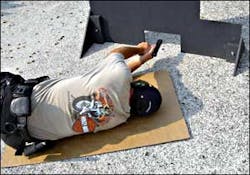
"Train as you fight...fight as you train," this link has been proven in countless battles in foreign lands and the streets of America, in ancient skirmishes by warriors of old to today's wars against terror and crime. But within that absolute truth we still have training failures. Failures of lack of relevancy, realism, intensity and frequency, to name just a few, set the recipient up for operational failure. You see, it is not enough just to train; hard thought must go into what you train (Is the skill worthy?), street performance (Can people actually do it?), and the effects of a SNS response (Can someone perform the skill in fight or flight?). In addition, there is the law of diminishing returns (Skills deteriorate post-training; how much maintenance is necessary to be able to perform the skill?). Throw charlatan instructors, lack of substantive research to support the material taught and just plain goofs in the training mix as well, and what could have been training that saved your life is now something that will fail you when you need it most!
Training Goals
Simply stated, the end goal of your training is that a suspect that attacks you is in more danger from you than you are from them! Training, then should improve performance and give you the advantage in an altercation--otherwise, why train? Almost any untrained citizen on the street can throw wild punches, wrestle around with no technique, swing a baton like a caveman and blaze away ineffectively with a pistol. Once again, improved performance in actual incidents is our desired goal. High performance increases our chances at winning the incident, reduces our potential injury and lessons the impact of luck. To win the altercation we must first win in our training quest.
The Value of Training Activities
Each and every repetition in training is the chance to perfect a lifesaving skill. Take the simple act of loading and unloading your pistol as an example. Now, we can approach these skills as routine, but in addition to setting us up for an unintentional discharge (anytime handling a firearm activity becomes "routine," an accident and tragedy is just around the corner), by engaging in these skills as administrative in nature, you rob yourself of several chances to perform a perfect draw stroke, sight alignment/sight picture, reload, recovery to the holster, and several other skills as well, but that is not the subject of this treatise. If you treat these acts as routine, they have no value and the repetitions you engage in are worthless. Approach these actions and others correctly, and you build a successful motor program. The value of that is priceless!
Training Content
"Advanced techniques are the basics mastered." Dissected, this quote has a few important facets:
- You have to find out what the basics are
- You have to train them
- You keep training to mastery level.
Mastery of skill (besides God-given talent) is what separates LeBron James from a basketball player in a recreational league. Yes, LeBron has been blessed by the Almighty with great genes, but he would not be where he is if not for an intense work ethic. Any military SpecOps operator has the same work ethic at attaining mastery. It's just the field of play is a little "different" and the outcome of the "event" a little more serious, but they still plug away at the basics. A friend of my partner is a covert operator with a lot of experience in the world's hot spots. Once while at the range, I watched as he "ran the pistol." There was nothing fancy; I had learned what he was doing, and pretty much from the same sources. Watching him shoot was like watching a machine operate. There was no extraneous movement; matter-of-fact, it didn't even look fast. His movements were so practiced and so smooth, they looked robotic. My fellow instructor, Chris Cerino from the Ohio Peace Officer's Training Academy--Richfield Campus, has the same mastery of the pistol. Chris, a former Federal Air Marshal firearms instructor, and I have been teaching quite a few firearms and tactics courses for the State of Ohio. What we try to give our students is the foundation upon which they can build skill mastery.
In our programs, there is no "flavor of the month," such as "shoot the pistol like pointing your finger" or "pay no attention to those bumpy things (pistol sights) on the pistol." There are the fundamentals of modern firearms training, developed in a methodical way. These fundamentals range from the modern isosceles two-handed hold, to one-handed eye-level shooting as instructed by the late Col. Rex Applegate, as well as compromise positions such as the CQB position and high ready. We then throw in some positional shooting from Rob Pincus' "Extreme Close Range Tactics" program at Valhalla Training Center. Eye-level shooting is encouraged because its effectiveness is so proven in force-on-force exercises and on the street. In running hundreds and hundreds of shooters through force-on-force training, I, my partners, as well as Chris Cerino in his experiences and other trainers I associate with, have seen misses from students at role-players as close as four to five feet, with hip level shooting. Whenever possible, bring the pistol to eye level, and as Rex Applegate admonished, "Shoot through the pistol."
Suspect Control
Applied to suspect control, the above notion is to learn basic strikes, then learn to hit as hard as you can. Learn where to target your strikes to improve your success probability, and learn those gross motor skills in joint locks and takedowns that you will be able to actually do on the street.
At the Federal Law Enforcement Training Center Non-Lethal Control Training Program a number of years ago, a fellow student asked me the question about a particular technique, "Do you like it because you can make it work, or because your students can make it work?" Good question, and as an instructor, be careful of training material that you can make work because of your skill, power, or size, versus what your students are able to do. When students use the same technique in dynamic confrontation simulation and it continually fails, I think that's a clue that the skill might be too dependent on high levels of training not available to the troops or not conducive to high stress events. Too many instructors invest their ego in the material, versus applying a common sense approach as to what works and what doesn't. Experienced instructors have an open mind about content, but have an extreme focus on what actually works on the street, not just the range or the DT training room, or what they can do.
How to Defeat Any Attacker in One Easy Lesson
Balderdash! Plain and simple, it ain't that easy, and never has been. Advertisements to the contrary, lifesaving skills such as shooting and suspect control cannot be mastered in one easy lesson--or two or three, for that matter. And yet, like fast food, this is what the LE/buying public wants. The admin staff wants a skill set that can be developed with little to no training time and expense, that will reduce injuries to officers and suspects, and will reduce liability. The troops want a skill set that can be developed with little to no training time or effort, that will improve their performance, and reduce their injury potential. Let me state for the record: this animal doesn't exist! There is only the tried and true, and the time spent in preparation.
The End Game is Winning!
Lest we forget, winning is high performance in action and is the result of proper training preparation. Recently while in Los Angeles, I had the opportunity to watch the famed LAPD Special Investigations Squad--a tactical surveillance unit that works the worst investigations in LA. They conduct firearms training at Scott Reitz's I.T.T.S. training facility. Reitz, a multiple gunfight winner now retired from the LAPD, is a former SWAT operator and firearms instructor. He ran the unit through various shooting drills to help prepare them for their mission. The training was everything positive mentioned above, and has worked quite well for this high activity unit in a number of shootings. Nothing fancy or high-speed/low-drag--just hard and effective training.
Agencies train to fail when they fail to train the troops. Officers that don't train deny themselves the very thing that will make a difference in a life and death fight. Agencies and officers that train in ineffective and outdated skills and methods train to fail because those skills will not work on the street. And lack of regular training promotes no-or low-performance and frequently results in officer deaths. This is the training paradigm that kills, and we must defeat this mindset now, lest we be victims to it!