Train to reload...reload to train
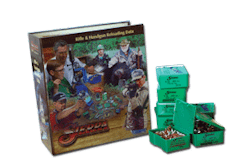
In a recent conversation with a range master from a local agency, I asked what was new with their 2010 firearms training. While I would not have been surprised to find out the budget had been pared down a little, it was painful to hear that the agency had only enough bullets and budget to qualify, not train. In fact each agency I spoke with, both local and out-of-state, shared the same sentiment. At a time when random acts of violence against law enforcement officers are on the rise, training budgets are at an all-time low. One way officers can save money is by reloading their own bullets. Reloading, or metallic cartridge reloading, which is using expanded brass and reloading components to remanufacture cartridges.
Reloading for law enforcement priorities differs from reloading for sporting purposes. Law enforcement reloaders should be making their cartridges for two reasons: price and availability. Sporting arms reloaders often reload to create unique cartridges or capabilities. For this reason, a law enforcement reloader will generally use off-the-shelf components and loads, which duplicate factory cartridges.
The good news is the easiest cartridges to reload are also the ones most commonly used for law enforcement and have the cheapest components. These cartridges include the .38/357, .45 ACP, 9mm and .40 S&W. All four have a fairly good margin for error in loading.
No agency will likely become directly involved in reloading. This is for individual officers to augment their training. Also, reloaded ammunition should never be used for defensive purposes. The purpose of this article is to encourage officers to explore further and become proficient at reloading. One cannot become completely competent by reading a single document, nor should anything here be misconstrued as a full set of instructions.
How it works
Reloading is a four-step process: Sizing and decapping, priming, charging and seating. Everyone knows that shooters who reload save their brass. Fired brass is the best source for reloading. Inspect the brass for cracks and dents. After it lands on the range floor, a quick dust off with fine steel wool or better, a brass tumbler built for this purpose, will make loading easier. After many loadings, the brass must be inspected for other things like excessive length, but one can get several loadings before this kind of treatment. Reloading dies are used in conjunction with a reloading press, a simple device that gives the act of inserting cartridge brass into a steel die a little more leverage and a means of ensuring everything is concentric.
The other three components are primer, propellant and projectile. The primer is the metal button at the head (base) of the cartridge, which is struck by the firing pin. The powder is ignited by the primer, and the bullet is propelled down the barrel from the rapid expansion of gases.
Sizing and decapping
Picture the brass as a cup that fits in the chamber of the firearm bullet-first. In order to work, it has to flex a little to seal the chamber, or expanding gases would escape around it. When the gun is fired, the brass expands, taking the shape of the chamber. In order to smoothly fit into the chamber (and sometimes even the magazine) again, the brass must be resized. This is done by running it into a die which moulds it back to its original size. The sizing die is a simple mandrel with an inside diameter slightly smaller than the brass inserted into it. The sizing die often has a punch, that also removes the spent primer, or decaps the brass in a single operation. The punch is usually a hardened rod which protrudes from the sizing die. It pokes through the primer hole and pushes the primer out the bottom.
Many pistol caliber sizing dies use a carbide sizing button inside the sizing die. This carbide is hard and polished smooth so no lubricant is required for the sizing process. In order to simplify the work, use only carbide pistol dies.
Rifle dies generally do not have a carbide bearing surface and require a little lube to work. This is because a rifle brass (and some calibers like .357 SIG) has a shoulder. I use Lee Resizing Lubricant, which looks and is dispensed like toothpaste. One simply puts an almost invisible coat on with the fingertips.
Priming
Once the brass has been resized and decapped, a new primer must be inserted. Most presses, including the Lee Turret Press (shown on Pages 58–59), have a priming ram built-in. This is simply a mechanism that holds the brass while the ram eases the primer into the primer pocket. Primers are soft metal, usually brass also, an explosive but stable compound and an anvil where the compound is crushed for its flame. They are pushed into the base of the brass by the priming ram.
Charging
With the primer in place, the case mouth can be slightly expanded to accommodate the bullet, and a carefully measured amount of powder is dispensed. The bullet is placed on the top and the cartridge is completed by running it into the seating die. The seating die has an adjustment that pushes the bullet in to a set depth while it closes the brass around the bullet, called crimping.
Powder is measured either by weight or volume. Lee die sets come with little plastic scoops and a powder chart. For users on a low budget, one scoops powder from the can and pours it into the brass. The scoop is calibrated for a wide variety of loads and the user finds the appropriate load based on the recommended load charts and the bullet cartridge combination.
Using the setup in the photos, a scale is used to periodically check the load, but the automated powder measure really does all the work. Provided the loader uses standard loads and bullets, the volume dispensing system will prove to be reliable.
Loads
Deciding which load to use, weight of bullet, amount of powder and overall length of cartridge, is going to require the beginning reloader to consult an experienced one. For law enforcement users, I recommend picking the bullet first. Select a bullet weight that is closest to the duty round. Purchase jacketed commercial bullets from reputable companies. The rifle bullets in the photos are from the Sierra Bullet Co. In my 30-plus years behind a loading bench, Sierra bullets have provided the most consistency, which is why brand name companies use them in their cartridges, too.
There are several powder manufacturers. Consult a load table, which indicates a bullet, primer and powder for a certain caliber for the type and amount of powder to use.
When I called John Lee of Lee Precision about using a progressive (automated) press for this article, he told me that the best setup for a beginner to advanced reloader is a turret press. They are uncomplicated, inexpensive and quick enough to satisfy an officer's practice needs. For the beginning reloader, the turret press will produce a lot of bullets in a sitting without frustrating the user.
A single stage press, the simplest of reloading presses, holds a single reloading die and the user completes a single reloading operation at a time. The turret press in the photos holds up to four dies, and all reloading operations can be done before one needs to remove the brass from the shell holder. The Lee Precision Turret Press shown has automatic indexing, which means a stroke of the lever completes the operation and advances the turret to the next reloading operation automatically.
Lee told me that a good user can crank out a couple hundred cartridges in an hour with this press. After setting it up, I came pretty close, and was satisfied with the results. Not bad for a setup that costs less than a half dozen boxes of duty rounds. Lee Precision Inc. also provides excellent instructional videos at its Web site, www.leeprecision.com. The photo sequences in this article should help the beginning reloader get started.
I generally spend a third of the cost for practice bullets, which means three times the practice and a couple of hours of reloading per practice session. If anyone is wondering how long the equipment will last, about half of my everyday reloading equipment is over 30 years old. All of the recreational reloading equipment uses standard threads and measurements, which means most die sets and shell holders are interchangeable. I buy my reloading components in bulk, usually 500 to 1,000 bullets, several pounds of powder and as many primers as I can purchase.
Several other reloading presses are also available. Dillon Precision's automated presses can load a lot of bullets in a short time. I have used them and can attest to their high volume reliability.
Hornady doesn't just make bullets. The company demonstrated its prototype press at SHOT 2010 for me (but wouldn't let me take it home with me). It fed everything automatically and kicked out cartridges like an action shooter.
What to do with the reloads
If I were keeping myself in training on a limited budget, I would prioritize the type of training based on statistics and training needs. That is, officers should prepare for the most likely armed encounter and assess what skills need the most attention.
A couple of simple drills will work. The simple draw/shoot/failure drill requires the partner who shared the cost of your equipment. This drill trains the shooter to respond smoothly with three different skills: Clearing strike, withdrawal while engaging and target assessment. This training responds to the most statistically likely engagement scenario, which is an armed encounter within touching distance or after a scuffle.
Stand at contact distance from a torso target wearing your duty rig and full magazines. When your training partner yells "threat," thrust the non-firing hand in a simulated strike (throat, junction of mouth and nose, etc.) with an abrupt command ("get down," "drop it"). The non-firing hand meets the draw already in motion. Punch the gun out while stepping back. Fire two to the torso area. If the training partner yells "failure," fire on the face until the training partner announces the target is neutralized.
After the command of cease fire, the shooter must "check their six" or sweep his or her front and rear prior to holstering and make an appropriate decision to keep the firearm stoked with bullets. An appropriate decision could be a speed, tactical or (ahem…) emergency reload. Repeat this drill several times to cause the shooter to reload.
Proficiency is much more important than speed here. Perform these tasks smoothly and a healthy jolt of fight or flight will make the officer much faster when speed counts.
El Presidente
The second drill encourages trigger control through habituation (muscle memory). It is commonly called El Presidente, developed by Col. Jeff Cooper. The best way to utilize this drill is with a stopwatch and a partner who agrees that the loser buys coffee or lunch.
Three targets are placed one meter apart and 10 meters away from the shooter. The shooter begins facing away from the targets with a holstered gun and a reload. On the command to fire, the shooter spins and puts center mass hits in each, reloads and fires two more per target. The time stops when each target has four decisive holes.
The training benefit of this drill is not just the reload at the end of the shot string. If the officer has been training with fewer bullets over the calendar year, trigger feel and control is the first skill to deteriorate. Shooters with good trigger control tend to shoot better shots in less time. For the El Presidente, only good hits win the contest.
Reloading your own cartridges and using those reloads to maintain training standards can save money. Officers should continue to practice, dry fire and put as many practice rounds downrange as possible, whenever possible.
Lindsey Bertomen is a retired police officer who teaches at Hartnell College in Salinas, Calif.
A few rules:
- Use eye protection at all times.
- Use established loads from reputable sources. Most powder and bullet manufacturers publish load data.
- Reloading is for practice only in equipment that meets established standards.
- Any firearm use is inherently risky. One assumes that risk when reloading and shooting.
- Remanufactured ammunition can void some warranties. Be familiar with these limitations.
- Reloading is for practice only. Reloaded bullets are for paper targets only.
- Reloading cannot be done while engaged in any other activity or while impaired.
- Allow adequate time to get everything right. Do not reload under pressure.
About the Author

Officer Lindsey Bertomen (ret.), Contributing Editor
Lindsey Bertomen is a retired police officer and retired military small arms trainer. He teaches criminal justice at Hartnell College in Salinas, California, where serves as a POST administrator and firearms instructor. He also teaches civilian firearms classes, enjoys fly fishing, martial arts, and mountain biking. His articles have appeared in print and online for over two decades.