The Addicted Cop, Pt 4
This is the final installment in our series The Addicted Cop. If you have missed any of the first three articles, they can be easily accessed by clicking on the related links (listed below).
The issue of addiction, particularly in the form of sex addiction, has held a central place in the news since late November 2009. A pair of otherwise routine stories broke that would soon create a media furor. On November 25, The National Enquirer published a story alleging golfer Tiger Woods had had an extramarital affair with a nightclub manager. Woods said nothing publicly at the time, the woman denied the rumor, and the story likely would have given way to the next celebrity scandal in short order. But two days later, Woods was in the news again following a relatively minor, but very peculiar, car accident as he was trying to leave his own driveway at 2:30 in the morning.
Woods' crash was the fender-bender that would not die and, as it turns out, the two stories may have been a) related after all and, b) just the tip of a giant iceberg with huge personal, professional and economic implications for Woods, his many product endorsements, and the PGA. A National Enquirer allegation of infidelity and a car-versus-fire-hydrant crash achieved nuclear fission as over a dozen alleged mistresses surfaced. Woods' iconic image of self-control shattered as revelations of secret self-indulgence emerged. Speculation that Woods was a sex addict followed.
Now, it is not up to us to diagnose whether Woods truly has a sex addiction or not, although he did acknowledge he has been in treatment since the crash and ensuing media storm, and the alleged patterns of behavior that have been revealed certainly seem to point to addiction. The multitude of talking heads on TV, radio, and in print have voiced wide-ranging opinions from absolute certainty that Tiger is addicted to sex to the belief "addiction is just an excuse for bad behavior" to "there is no such thing as sex addiction." Some have even said - we hope just tongue-in-cheek - that "ALL men are sex addicts, then (HA HA HA)!"
Hardly. There is a wide gulf between enjoying or thinking about sex a lot and repeatedly engaging, to the point of apparent obsession, in a behavior that will likely destroy your marriage, family, career and reputation if discovered. The sad fact is, it is just this kind of addicted behavior that has destroyed many such lives, both celebrity and otherwise.
So how can you tell if you, or someone you care about, might have an addiction? And what should your next steps be if the answer might be, Yes?
Attached is a simple 8-step questionnaire we have adapted from an previous adaptation by Dr Kimberly S Young she used in diagnosing internet addiction (she drew on a model of DSM-IV diagnostic criteria for pathological gambling) that may be helpful in determining if you (or someone you care about) may have, or should be screened for, a particular addiction. Simply fill in the blanks with the possible addiction (sex, gambling, internet, shopping/spending, etc) and, if you find yourself answering Yes (and NOT lying about it!) to a majority of the questions, you may want to seek help or additional screening for addiction treatment.
- Do you feel preoccupied with _______ (think about previous _______ activity or anticipate next _______ session)?
- Do you feel the need to use _______ with increasing amounts of time in order to achieve satisfaction?
- Have you repeatedly made unsuccessful efforts to control, cut back, or stop _______?
- Do you feel restless, moody, depressed, or irritable when attempting to cut down or stop _______?
- Do you continue _______ longer than originally intended?
- Have you jeopardized or risked the loss of significant relationship, job, educational or career opportunity because of_______?
- Have you lied to family members, therapist, or others to conceal the extent of involvement with_______?
- Do you uses _______ as a way of escaping from problems or of relieving a dysphoric mood (e.g., feelings of helplessness, guilt, anxiety, depression)?
If you know or think you have an addiction, seeking help is critical. Going into battle alone is a recipe for failure, but there is not one single treatment solution that works best for every person or every addiction.
I have an addiction. Now what?
In the past three articles we have explored the different type of addictions and you have identified, Yeah, that's me, now what? Well, the good news is there are as many different types of treatment options as there are first line defense options. We are going to present some of the options we believe are tried and true.
12-Step Groups
For any addiction possible, whether it be sex, drugs (illegal or prescription), alcohol, eating, shopping, etc... there is a 12-step group available. To find one a helpful resource is www.12stepgroups.com (live link below) or you can Google the type of group you are searching. The general rule of thumb is to start with 90 meetings in 90 days. It will not be easy, you may not feel comfortable, but keep going. In the first 90 days start working Step One by admitting you are powerless over your addiction, obtain a sponsor who is a more experienced person to guide you through the recovery process, and over time become active in the meetings.
Counseling
To find a licensed therapist, word of mouth referral is the best. Ask someone you know who is going or been to therapy. Another option is to ask a pastor, direct line supervisor, police social worker, or chaplain. If that option is not available, call the 800 number on the back of your insurance card or go to your insurance carrier's website to find someone who is accepting new clients. Call the office and make an appointment. Before you arrive begin preparing your mind and your emotions to be exposed. Let the therapist be in control by interviewing you. This is not a time to practice skills learned in the Reid School of Interrogation. The process is ambiguous and one that is not easily defined. Trust the process, be honest, and implement the therapist's feedback. You will only get out of the process what you are willing to put in. If you put in nothing, you will get nothing in return. The therapist is not there to control you, they are there to guide you and if you have concerns regarding your progress, before you stop going, talk to the therapist to work through the conflict. This is part of your treatment process.
Psychopharmacology
This is the study of drug induced changes in mood, sensation, thinking, and behavior. Many addicts turn to their addiction to self medicate due to experiencing feelings of emptiness, loneliness, anger, guilt, depression, anxiety, panic attacks, fears, phobias, insomnia, fatigue, and racing thoughts. In simpler words a clinical depression, anxiety disorder, or bipolar. When seeking treatment for an addiction it is often best to be evaluated by a psychiatrist who is medical doctor who specializes in how the brain functions. By asking you questions about your symptomology, observation, and sometimes ordering medical labs/tests, they can determine if medication would benefit the treatment of your addiction. They will be able to diagnosis if there is a medical benefit and what type of medication will benefit you. It is reported that with counseling and medication management, treatment success often reaches 90%.
Hospital, Residential, & Halfway Houses
When an addiction or mood disorder is severely hindering daily functioning, has medical symptoms of withdrawal attached, aggressive behaviors manifest, or thoughts of death occur, more structured treatment is the best step. If you think this may be you, call your primary care physician or if that is not immediate enough, go to an emergency room to be assessed. Hospitals may offer inpatient, partial and intensive outpatient programs (IOP). The purpose of inpatient is to stabilize the mood, maintain safety, and at times provide medical detox. At partial a patient attends intensive therapy during the day, but unlike inpatient, returns home at night. In IOP, it is for several hours multiple times per week, often in the evening, which often allows the person to work while being in treatment. Traditional residential treatment is an in house program lasting for 30 days. Halfway houses are post inpatient or residential to learn sober skills in a transitional setting before returning to their life triggers that feed the addiction.
Final Words
As a therapist, I can tell you that LEOs are some of the most difficult clients because all the skills that keep you alive on the street and functioning in your job can work against you in the therapeutic process. Also being a cop is not just what you do, but it becomes who you are. Admitting you have a weakness, not to mention an emotion (other than anger at the most recent administrative bullcrap), often goes against the grain. However, our advice to you is that as a human being we are designed to be flawed. Many people from all walks of life have addictions. Treatment is not easy, but often painful. Go slow. Be honest. Get the help you need. Be safe.
About the Author
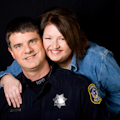
Michael Wasilewski
Althea Olson, LCSW and Mike Wasilewski, MSW have been married since 1994. Mike works full-time as a police officer for a large suburban Chicago agency while Althea is a social worker in private practice in Joliet & Naperville, IL. They have been popular contributors of Officer.com since 2007 writing on a wide range of topics to include officer wellness, relationships, mental health, morale, and ethics. Their writing led to them developing More Than A Cop, and traveling the country as trainers teaching “survival skills off the street.” They can be contacted at [email protected] and can be followed on Facebook or Twitter at More Than A Cop, or check out their website www.MoreThanACop.com.
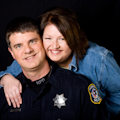
Althea Olson
Althea Olson, LCSW and Mike Wasilewski, MSW have been married since 1994. Mike works full-time as a police officer for a large suburban Chicago agency while Althea is a social worker in private practice in Joliet & Naperville, IL. They have been popular contributors of Officer.com since 2007 writing on a wide range of topics to include officer wellness, relationships, mental health, morale, and ethics. Their writing led to them developing More Than A Cop, and traveling the country as trainers teaching “survival skills off the street.” They can be contacted at [email protected] and can be followed on Facebook or Twitter at More Than A Cop, or check out their website www.MoreThanACop.com.